
Business
Comisaco: The Remarkable Story Behind Uruguay’s Powerful Rice Irrigation Network

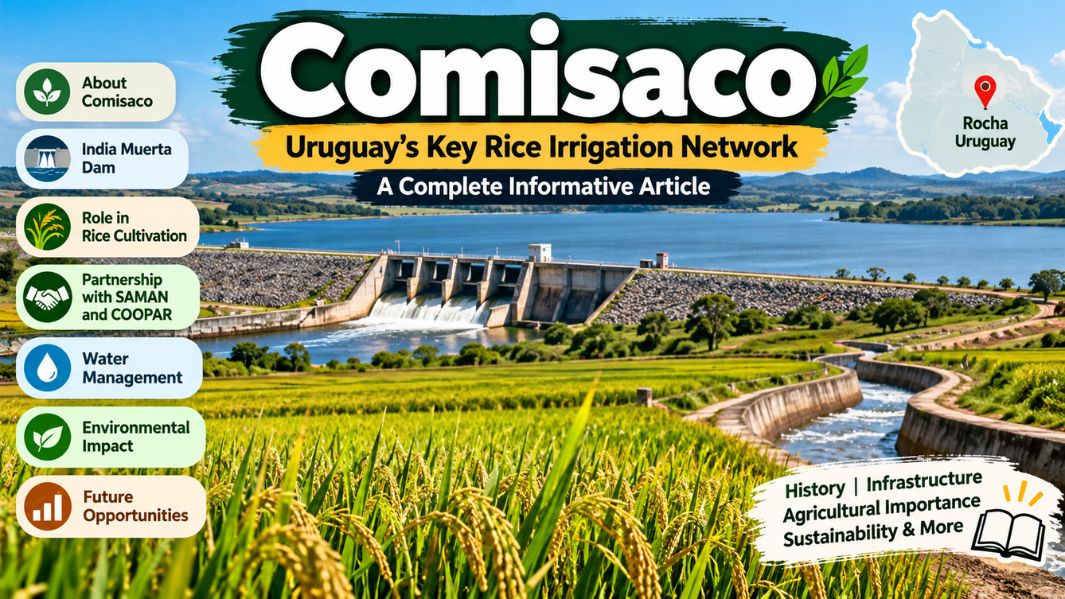
Agriculture depends on much more than fertile soil and hardworking farmers. Reliable water supplies, carefully planned infrastructure, and effective resource management matter just as much, especially in regions where crops require substantial irrigation. Comisaco offers an interesting example of how agricultural businesses can collaborate to support farming through large-scale water infrastructure. Based in Uruguay, the company is closely associated with managing the India Muerta Dam, a key irrigation facility serving rice-producing areas in the country’s eastern region. Although its name may be unfamiliar outside agricultural and water-management circles, its work connects directly with rice cultivation, rural development, and the practical challenges of supplying water across extensive farmland.
This article explores Comisaco’s background, business partnerships, irrigation infrastructure, agricultural significance, environmental considerations, and future challenges.
What Is Comisaco?
Comisaco S.A. is a Uruguayan company that administers the India Muerta Dam and its agricultural irrigation system. The organization operates through a partnership between two companies in Uruguay’s rice industry: SAMAN S.A. and COOPAR S.A. Its primary role is managing infrastructure that stores and supplies water to rice-growing areas. Unlike businesses that focus on manufacturing consumer products or selling agricultural machinery, this company is connected with an essential service that supports crop production. Water management involves coordinating storage, distribution, infrastructure maintenance, and agricultural demand. The organization’s significance becomes clearer when you consider the scale of rice cultivation and the need for dependable irrigation throughout the growing season.
The History and Establishment of Comisaco
The company’s history is closely tied to Uruguay’s efforts to improve agricultural productivity through water-management projects in the twentieth century. The India Muerta Dam emerged from earlier proposals to regulate water flows, improve drainage, and increase agricultural productivity in the department of Rocha. Planning discussions eventually developed into a major infrastructure project involving public authorities, agricultural interests, and private companies.
In 1979, the project tender was awarded to Comisaco, an organization formed by SAMAN and COOPAR to develop and administer the irrigation system. Construction arrangements progressed during the early 1980s, and irrigation services began in 1982. Historical accounts indicate that the principal dam works were completed in 1983. These developments helped establish an agricultural water supply that became an important part of regional rice production. The project also demonstrated the connection between government-supported infrastructure development and private-sector participation.
Where Is Comisaco Located?
Comisaco’s irrigation infrastructure is located in Rocha, Uruguay, a department in the country’s eastern part. The India Muerta Dam lies between the communities of Velázquez and Lascano, within an agricultural landscape that has long been associated with rice production and livestock farming. This location is particularly suitable for understanding the relationship between land, water resources, and agricultural development.
Rocha has low-lying areas where water management has historically created both opportunities and challenges. Excessive water can create drainage problems, while insufficient supplies during cultivation periods can affect agricultural production. Irrigation infrastructure helps address the second challenge by storing and distributing water when crops require it. The area’s rural character also means that agricultural infrastructure performance can influence employment, transportation, farming activity, and related local businesses.
The India Muerta Dam and Its Agricultural Importance
The India Muerta Dam is Comisaco’s central infrastructure project. Built to regulate water and provide irrigation, the reservoir represents a substantial investment in agricultural development. Information published by COOPAR describes a useful storage volume of approximately 127.5 million cubic meters. The dam also includes an extensive earth embankment measuring about 3,200 meters long.
These figures illustrate the scale of the engineering required to store water for agricultural use. A reservoir of this size requires more than a physical barrier to hold back water. Its effectiveness depends on the surrounding network of canals, delivery arrangements, and structures that guide water toward farmland. For rice farmers, the key advantage is not simply having a large reservoir, but receiving sufficient water during critical stages of crop development. Without coordinated delivery, stored water alone would provide limited agricultural benefit.
How Comisaco Supports Rice Cultivation
Rice cultivation depends heavily on effective water management because many production systems require carefully controlled water levels throughout key growing stages. Farmers must consider rainfall, field conditions, crop development, and available irrigation supplies when planning their activities. A properly functioning irrigation network provides greater control over some of these variables.
Comisaco’s connection with the India Muerta system places it within this important agricultural process. The reservoir and its associated canals help provide water to fields served by the network. According to SAMAN, the system irrigates about 10,000 hectares of rice fields annually. This figure reflects the approximate scale reported by the company, not a guaranteed total for every agricultural season.
Reliable irrigation can support crop planning and reduce dependence on rainfall alone. However, actual agricultural results still depend on weather conditions, soil quality, farming methods, and other production factors. Water infrastructure is therefore one essential element within a much larger agricultural system.
The Partnership Between SAMAN and COOPAR
One of Comisaco’s most distinctive features is its connection to two established companies in Uruguay’s rice industry. SAMAN S.A. and COOPAR S.A. are identified as the partners involved in the organization. SAMAN states that it owns 50 percent of Comisaco S.A., while COOPAR also identifies the company as part of its associated business activities.
This arrangement shows how agricultural businesses can cooperate to manage infrastructure that serves a shared economic sector. Rather than viewing irrigation as simply an individual farmer’s responsibility, a large network requires coordinated administration across multiple properties and operations.
The relationship also shows why it helps to distinguish the roles of different businesses in the rice industry. Rice producers grow the crop, industrial businesses process agricultural products, and water-management organizations support access to irrigation resources. These activities are connected but not identical. Comisaco is best understood through its specific role in irrigation administration rather than as a conventional rice-processing or retail company.
Understanding the Scale of the Irrigation Network
The India Muerta system’s reach extends well beyond the immediate surroundings of its reservoir. SAMAN reports a canal network exceeding 200 kilometers, while COOPAR describes an irrigation system associated with an area of approximately 40,000 hectares. These measurements refer to different aspects of the infrastructure and should not be confused with the amount of land actually irrigated with rice in a particular year.
The distinction between service area and annual irrigation matters because agricultural land may change use over time. Not every hectare in the wider system is planted with rice each growing season. Crop rotations, water availability, and farming decisions can shape which land is cultivated each year.
The network demonstrates why water distribution is a major engineering challenge. Water must travel long distances to reach fields, and its movement must be coordinated with agricultural needs. A large reservoir becomes valuable when its associated distribution system can deliver water effectively and consistently.
The Role of Irrigation in Uruguay’s Agricultural Economy
Agriculture plays an important role in Uruguay’s productive economy, and rice cultivation is one of its established agricultural activities. Farmers, processing businesses, transportation providers, equipment suppliers, and other rural enterprises form a network of economic relationships surrounding crop production. Irrigation infrastructure helps support this wider system by making water available to agricultural land.
The India Muerta project matters because it serves an important rice-growing region. Consistent access to irrigation can help producers plan seasonally and organize farm operations. It may also reduce certain production uncertainties associated with irregular rainfall.
For regional communities, productive farmland can contribute to demand for agricultural labor, transport, machinery maintenance, and related commercial services. Nevertheless, these broader economic effects depend on many factors, including international markets, production costs, and farm profitability. Comisaco’s role therefore supports an essential agricultural input rather than directly determining the financial performance of the entire regional economy.
Water Distribution and Infrastructure Management
Operating an irrigation system involves practical responsibilities that are often less visible than dam construction. Reservoirs, embankments, canals, and water-control structures require inspection and maintenance to remain useful over long periods. Sediment accumulation, changing weather conditions, infrastructure wear, and seasonal water demand can all affect irrigation operations.
In a network such as India Muerta, water distribution also requires coordination across agricultural areas. Different farms may need water at different times, depending on planting schedules and field conditions. Effective management balances these requirements with available reservoir supplies and the network’s physical capacity.
These considerations help explain why irrigation administration is a specialized activity. It combines agricultural knowledge, infrastructure planning, operational coordination, and technical decision-making. Comisaco’s importance lies in its role in this complex water-delivery system, where consistent management is necessary to maintain the usefulness of infrastructure built decades ago.
Environmental Responsibilities and Sustainable Water Use
Large irrigation projects can bring agricultural advantages, but they also raise important environmental questions. Reservoirs and drainage networks influence how water moves through surrounding landscapes. In regions with wetlands, waterways, and agricultural land, changes in water distribution can affect ecological conditions and farming opportunities.
Rocha’s water management history includes debates about the relationship between agricultural expansion and the conservation of natural environments. These concerns are relevant when evaluating the broader significance of the India Muerta system. Agricultural productivity is one objective, but responsible water use also requires attention to environmental conditions and competing water demands.
Modern irrigation management increasingly benefits from accurate monitoring, careful allocation, maintenance, and planning for variable rainfall. These are general priorities for sustainable water infrastructure and should not be interpreted as evidence that Comisaco has adopted any particular new technology or environmental program.
Understanding these responsibilities provides a more balanced picture of agricultural irrigation, including both its economic benefits and its potential environmental costs.
Governance, Transparency, and Public Interest
Managing major irrigation infrastructure also raises questions about governance and accountability. Water is a valuable resource, and arrangements governing access, costs, maintenance, and responsibility can affect farmers and the wider community.
Comisaco’s historical role developed within an infrastructure project involving public authorities and private agricultural organizations. In 2020, Uruguay’s Ministry of Transport and Public Works published information on parliamentary questions about the India Muerta Dam. Those questions addressed subjects including ownership, financing, administrative arrangements, irrigation charges, and the amount of agricultural land supplied with water.
These questions demonstrate public interest in how important irrigation facilities are managed. It does not, by itself, establish wrongdoing. For anyone researching Comisaco, it is essential to distinguish documented operational arrangements from assumptions about ownership or finances.
Transparent information about irrigation infrastructure can help farmers, policymakers, and local communities evaluate how shared water resources are administered.
Future Challenges and Opportunities for Comisaco
The future of agricultural irrigation will be shaped by changing farming requirements, water availability, infrastructure conditions, and environmental expectations. For organizations that manage established irrigation networks, maintaining reliable operations will remain a key responsibility.
One potential area for improvement in irrigation is using better measurement and monitoring systems. Accurate information about reservoir levels, water flows, and agricultural demand can help operators plan distribution more effectively. Infrastructure maintenance and long-term investment planning are also essential for systems that have operated for decades.
Climate variability presents another challenge because heavy rainfall and prolonged dry periods can complicate water-management decisions. These issues reinforce the importance of infrastructure resilience and agricultural planning.
There is no basis to assume Comisaco has announced specific modernization projects without supporting documentation. Its future significance is instead connected to the continuing agricultural value of the India Muerta system and the need to manage water carefully.
Why Comisaco Matters Beyond Its Company Name
Comisaco illustrates a business whose significance is better understood through the infrastructure it administers than through public recognition. The organization is not widely known as a consumer brand, yet its role in agricultural water supplies makes it an essential part of regional food production.
The story also shows how cooperation between established industry participants can help support major infrastructure projects. The India Muerta Dam required planning, engineering, investment, and long-term administration before it could become a functioning irrigation system.
Its history reflects decades of changing agricultural needs and the practical importance of controlling water in productive rural landscapes. For readers interested in agricultural business, infrastructure, or water-resource management, the company offers a useful case study of how these fields intersect.
Conclusion
Comisaco is closely associated with one of Uruguay’s important agricultural irrigation systems. Through its partnership with SAMAN and COOPAR and its administration of the India Muerta Dam, the company has a documented role in supporting water distribution for rice cultivation in Rocha. The reservoir’s considerable storage capacity, extensive canal network, and long operating history demonstrate the scale of the infrastructure involved.
Its wider significance lies in the connection between dependable irrigation, agricultural planning, regional economic activity, and responsible resource management. Although the company operates outside the public attention normally given to major consumer brands, its work illustrates why infrastructure administration matters to modern agriculture. As farming faces continuing demands for productivity and sustainable water use, the India Muerta system remains a meaningful example of the relationship between engineering, business cooperation, and agricultural development.
(FAQs)
1. What is Comisaco?
Comisaco S.A. is a Uruguayan company associated with administering the India Muerta Dam and its irrigation system, which provides water for rice-growing areas in the department of Rocha.
2. Who owns Comisaco?
The company is associated with SAMAN S.A. and COOPAR S.A. SAMAN publicly identifies itself as holding a 50 percent ownership interest in the organization.
3. Where is Comisaco located?
Comisaco is connected with the India Muerta Dam in Rocha, eastern Uruguay, between the communities of Velázquez and Lascano.
4. Why is Comisaco important to rice farming?
It is important because it manages infrastructure that stores and distributes irrigation water. This helps support agricultural operations in an established rice-producing region.
5. When did the India Muerta irrigation system begin operating?
Irrigation services began in 1982, during the early development of the India Muerta project. Historical records indicate that construction of the main dam was completed in 1983.

562 Area Code: The Essential Guide to California’s Location, History, and Phone Numbers

Telephone Area Code 304: The Complete Guide to West Virginia’s Historic Calling Code

En Slovakia: Discover the Hidden Beauty, Rich Culture, and Fascinating History of Slovakia

Dough Moulding Compound: A Powerful Guide to Properties, Manufacturing, Benefits, and Industrial Applications

Annapurna Circuit Trek vs. Manaslu Circuit Trek: Routes, Mountain Villages, Local Culture, and Practical Travel Advice

Why Keeping Your PC Drivers Updated Matters More Than You Think?

Jett Hamilton Roberts: The Remarkable Story of Jill Scott’s Son, His Family, and Life Away From Fame

Jorge Bronze: The Inspiring Story of Lucy Bronze’s Brother Who Sparked Her Football Journey

Angie Bautista: The Remarkable Story of Dave Bautista’s Ex-Wife, Her Strength and Private Life

Julie Hallam: The Untold Story of Jeremy Irons’ First Wife and Her Acting Career

Everest Base Camp Trek vs Manaslu Circuit Trek: Routes, Difficulty, Costs, Altitude and Mountain Experience

Classroom 15x: The Ultimate Guide to Free Online Games, Features, Benefits, and Safe Gaming

Crackstube Explained: A Complete Guide to Its Features, Content, Safety, and Digital Publishing Platform

Startup Booted Fundraising Strategy: A Powerful Guide to Smart Funding and Sustainable Business Growth

Provascin: A Complete Guide to Its Ingredients, Potential Benefits, Uses, and Safety

ABS Testauslösung: Bedeutung, Funktion, häufige Fehler und wichtige Sicherheitstipps

Pedal And Post Collapse: The Shocking Closure of Oxford’s Pioneering Green Delivery Company

HMJones.net Explained: A Complete Guide to Business Loans, Funding Options, and Smarter Financial Decisions

Jeremy Yaffe: The Remarkable Untold Story of Alan Arkin’s First Wife and Her Life Beyond Hollywood

Sajar Plastics Inc: The Remarkable Story Behind Its Advanced Plastic Manufacturing Technology
562 Area Code: The Essential Guide to California’s Location, History, and Phone Numbers
Telephone Area Code 304: The Complete Guide to West Virginia’s Historic Calling Code
En Slovakia: Discover the Hidden Beauty, Rich Culture, and Fascinating History of Slovakia
Dough Moulding Compound: A Powerful Guide to Properties, Manufacturing, Benefits, and Industrial Applications
Annapurna Circuit Trek vs. Manaslu Circuit Trek: Routes, Mountain Villages, Local Culture, and Practical Travel Advice
Why Keeping Your PC Drivers Updated Matters More Than You Think?
Jett Hamilton Roberts: The Remarkable Story of Jill Scott’s Son, His Family, and Life Away From Fame
Jorge Bronze: The Inspiring Story of Lucy Bronze’s Brother Who Sparked Her Football Journey
Angie Bautista: The Remarkable Story of Dave Bautista’s Ex-Wife, Her Strength and Private Life
Julie Hallam: The Untold Story of Jeremy Irons’ First Wife and Her Acting Career
-
 Blog3 months ago
Beyond the Cages: How an Artificial Zoo Could Redefine Wildlife Travel
-
 Destination Guides3 months ago
Beyond the Map: Discovering Haslhof in Italy and Bavaria
-
Adventure Travel3 weeks ago
Everest Base Camp Trek vs Manaslu Circuit Trek: Routes, Difficulty, Costs, Altitude and Mountain Experience
-
 Entertainment2 weeks ago
Classroom 15x: The Ultimate Guide to Free Online Games, Features, Benefits, and Safe Gaming