
Business
Pedal And Post Collapse: The Shocking Closure of Oxford’s Pioneering Green Delivery Company

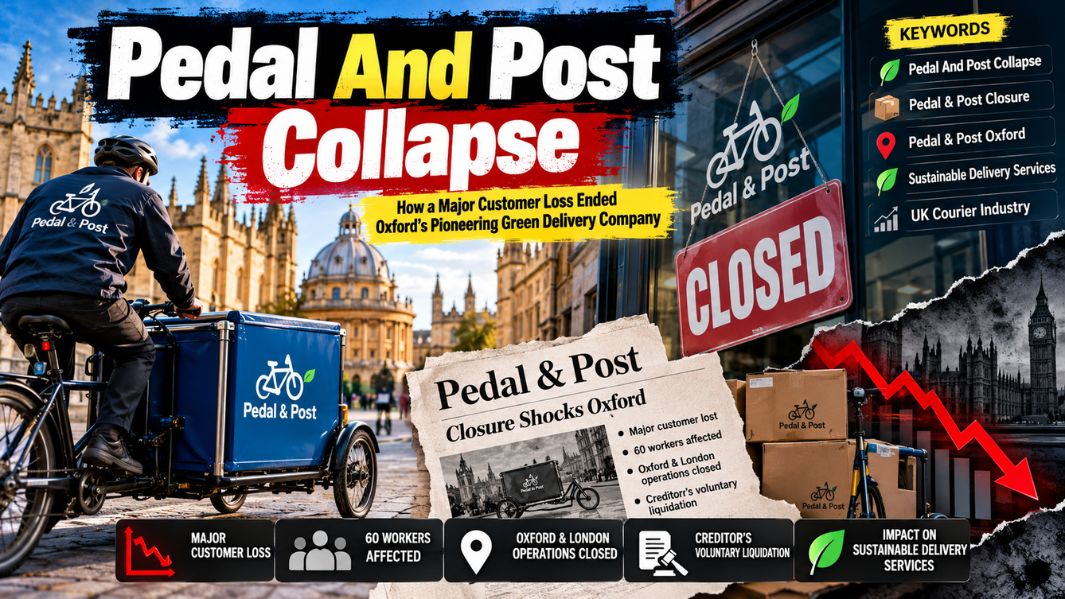
The Pedal And Post Collapse marked a disappointing turning point for sustainable urban delivery services in the United Kingdom. After more than a decade of operating in Oxford, the environmentally focused courier company stopped trading in January 2026, ending a business known for its distinctive cargo bicycles and commitment to cleaner transport. Its closure surprised customers, local businesses and supporters who saw it as an example of how modern logistics could reduce dependence on conventional delivery vans.
Founded by Christopher Benton in 2013, Pedal & Post had developed a delivery network serving businesses, residents, healthcare organizations and national parcel carriers. However, losing a major commercial customer placed the company in a financial position from which it could not recover. It closed its Oxford and London operations, affecting about 60 employed and self-employed workers. The situation highlighted an important problem facing smaller logistics companies: even a respected business with an environmentally beneficial service can struggle when too much revenue depends on a limited number of contracts.
What Happened During the Pedal & Post Collapse?
Pedal & Post announced its closure in January 2026 after concluding that continuing operations was no longer financially sustainable. The company publicly explained that it had lost an important customer and explored ways to keep trading before deciding to close. Founder and chief executive Christopher Benton subsequently confirmed that the decision affected both the established Oxford operation and the newer London business.
A formal insolvency process followed. According to the company’s official record at Companies House, creditors’ voluntary liquidation began on 20 February 2026. This distinction matters because the business had already stopped operating before the formal winding-up began. Creditors’ voluntary liquidation is a procedure in which an insolvent company is wound up, with insolvency practitioners appointed to handle its affairs. The closure therefore represented more than a temporary interruption to delivery services. It marked the end of the company’s normal commercial operations.
The History of Pedal & Post in Oxford
Pedal & Post began in Oxford in 2013, when environmentally friendly urban logistics was still a developing market. The company was built on a straightforward idea: many goods traveling relatively short distances through crowded city streets didn’t necessarily need a conventional delivery van. Cargo bicycles offered a practical alternative, particularly where roads were congested, parking was limited, and delivery destinations were close together.
Over the following years, the business expanded its services beyond ordinary bicycle courier work. It transported parcels, groceries, medical items, and commercial goods, and became involved in projects designed to consolidate deliveries and reduce unnecessary vehicle movements. Its distinctive blue cargo bikes became familiar on Oxford’s streets. The company also developed relationships with established logistics providers, demonstrating how smaller specialist couriers could support national delivery networks.
One notable aspect of its history was its involvement in medical logistics. Pedal & Post explored using cargo bicycles alongside passenger rail to transport medical samples between Oxford and London, showing that alternative delivery methods could support time-sensitive services rather than simply carrying everyday consumer purchases.
Why Did Pedal & Post Collapse?
The principal publicly confirmed reason was losing a major commercial client. Benton explained in an interview with industry publication Zag Daily that the business depended on approximately five or six major customers. Losing one of those relationships could therefore create a serious financial problem, even when other parts of the operation remained active.
This illustrates the risks of customer concentration in a relatively small business. A courier company may handle substantial delivery volumes, employ experienced workers and operate a reliable transport network, yet still depend heavily on a handful of contracts to cover its regular expenses. When an important agreement ends, the revenue loss can create an immediate gap that is difficult to fill.
Benton said the customer had met its contractual obligations. He did not publicly identify the company in that interview or disclose the detailed financial circumstances. Oxford newspaper Cherwell subsequently reported that it understood the lost client to be micromobility operator Voi. However, that identification should be treated as reported information rather than an independently confirmed statement from the founder.
Financial Pressures and the Challenges of Sustainable Logistics
The financial difficulties facing Pedal & Post also highlight the broader economics of urban delivery services. Although cargo bicycles can offer advantages through lower energy consumption, easier access to restricted streets and reduced dependence on fuel-powered vehicles, they do not eliminate the ongoing costs of running a courier business. Operators still need trained staff, suitable equipment, storage facilities, maintenance arrangements, insurance and administrative systems.
A significant challenge is matching these operating costs with dependable revenue. Delivery demand may fluctuate, while contracts can change or disappear. When a company operates through a network of small local routes, maintaining sufficient delivery volume becomes particularly important because reduced activity can undermine the financial efficiency of the entire operation.
Pedal & Post also emphasized responsible employment practices. Benton acknowledged the difficulty of being an ethical employer in an industry where self-employment is common. That commitment was an important part of the company’s identity, although insufficient public evidence shows that employment costs alone caused its failure. The confirmed immediate trigger remains the loss of a major customer.
Did the London Expansion Contribute to the Closure?
In July 2025, Pedal & Post expanded beyond Oxford by launching operations in London. The announcement reflected growing confidence in cargo-bike logistics in densely populated urban areas. The new service was intended to support retail deliveries, medical logistics, food distribution, and other commercial transport needs using electric cargo bicycles, tricycles, and electric vans.
At launch, the business projected that its London operations could eventually complete more than 100,000 zero-emission deliveries annually. This figure was a forecast, not a verified total of completed deliveries. The expansion represented an ambitious attempt to bring an established Oxford operating model to a larger and more competitive market.
However, the company closed only months after entering London. The timing raises reasonable questions about the financial demands of expansion, but it would be misleading to identify the London launch as a proven cause of the collapse. The founder’s public statements identified the lost customer contract as the decisive problem, and no sufficiently detailed financial explanation has shown that London expansion caused the business to fail.
How the Closure Affected Employees and Local Communities
One of the most immediate consequences was the effect on the workforce. Reports indicated that the closure affected approximately 60 employed and self-employed workers across Oxford and London. For riders and support staff, the announcement meant losing their jobs and facing the uncertainty of finding alternative employment in an already competitive delivery sector.
The company had also developed a recognizable presence in Oxford. Residents regularly saw its cargo bicycles, while local businesses relied on its services to move goods through areas where conventional vehicle deliveries were inconvenient. Its activities extended from ordinary parcel distribution to grocery deliveries and support for organizations with specialized transport requirements.
After the announcement, Benton described efforts to support affected team members, including helping people find alternative roles and, where possible, keeping experienced riders connected to employment opportunities. The wider community response reflected the reputation Pedal & Post built during its years of operation, but that goodwill was not enough to overcome the underlying commercial difficulties.
Was Evri Involved in the Pedal & Post Collapse?
Pedal & Post worked with Evri, one of Britain’s major parcel delivery businesses, as part of its local logistics arrangements. Their collaboration included using cargo bicycles to deliver parcels in Oxford’s Zero Emission Zone, helping reduce the need for conventional delivery vehicles to enter certain central streets.
After Pedal & Post stopped trading, some reports confused readers about whether Evri itself had faced financial difficulties. The two businesses were separate companies, however, and the local delivery partner’s collapse did not mean Evri had entered liquidation.
In a statement circulated in March 2026, Evri confirmed that its cargo-bike delivery partner had ceased trading unexpectedly, creating temporary disruption for a small number of customers in the local area. Evri said that it had reorganized deliveries and was restoring normal service. The incident demonstrated how the closure of a smaller subcontractor can affect a larger company’s local operations without threatening the wider national delivery business.
What the Collapse Means for Green Transport
The closure attracted attention because Pedal & Post represented a visible example of low-emission urban logistics. Its bicycles could carry goods through busy streets without producing exhaust emissions during cycling, while consolidated deliveries helped reduce the need for multiple vans to enter restricted areas.
These advantages remain relevant to cities dealing with traffic congestion, air pollution and growing demand for home deliveries. Oxford, in particular, has experimented with policies intended to reduce emissions and manage vehicle access within its historic center. Cargo bicycles can support these objectives when routes, distances and load requirements make them practical.
Nevertheless, environmental advantages do not guarantee commercial success. Businesses must combine sustainability with competitive pricing, reliable customer demand and sufficient financial resilience. The company’s failure demonstrates the difference between a transport model that works operationally and a commercial organization that can remain viable when major contracts change.
Importantly, Pedal & Post itself rejected the suggestion that its closure represented a failure of cargo-bike logistics. Its final public message expressed confidence that cleaner delivery methods would continue developing, even though its own business could not survive.
Lessons for Other Courier and Delivery Businesses
The Pedal And Post Collapse offers several valuable lessons for companies operating in the increasingly complex delivery industry. Perhaps the most significant is the importance of building a diversified customer base. A business with several substantial customers may appear secure, but losing one can create severe pressure if that contract accounts for a large proportion of revenue.
Another lesson concerns the relationship between growth and financial stability. Expansion into new cities can create opportunities, but businesses must understand the costs and stay flexible enough to respond to unexpected setbacks. At the same time, profitability should not be judged by delivery volume alone. A courier company needs sufficient contract income to support its equipment, workforce, and broader operational responsibilities.
The experience also highlights the importance of contingency planning. Companies that depend on large commercial contracts benefit from assessing what would happen if one ended unexpectedly. Maintaining financial reserves, monitoring customer concentration and developing alternative revenue sources can help reduce exposure, although none of these measures guarantees survival.
Could Pedal & Post Return in the Future?
As of October 2026, no verified announcement confirms that the original Pedal & Post delivery business has restarted. The company remains in liquidation, and its Oxford and London operations have ceased trading.
Although an established brand, experienced workforce, and recognizable delivery model may have commercial value, those assets do not prove a rescue or relaunch will occur. Any future return would require a credible business arrangement, appropriate financing and confirmation from those involved.
The broader concept behind the company looks more encouraging. National carriers, independent couriers and city logistics specialists continue exploring bicycles and other lower-emission vehicles for suitable delivery routes. Pedal & Post contributed to that development by demonstrating practical applications of cargo-bike transport in Oxford over many years.
Conclusion
The Pedal And Post Collapse brought an unfortunate end to a company that had spent more than a decade challenging conventional approaches to urban deliveries. Established in Oxford in 2013, Pedal & Post developed from a local cycling-based courier operation into a business involved in parcel distribution, medical logistics, commercial transport and environmentally focused delivery partnerships.
Its closure in January 2026 followed the loss of a major customer, with formal creditors’ voluntary liquidation beginning on 20 February. Approximately 60 workers were affected, and the disappearance of its services left a noticeable gap in Oxford’s local delivery network.
Ultimately, the story is not evidence that sustainable delivery services are commercially impossible. Instead, it demonstrates how vulnerable smaller operators can become when their income depends heavily on a limited number of customers. Pedal & Post may no longer be operating, but its contribution to cleaner urban transport provides an important example for the future of city logistics.

John Playfair: The Remarkable Life of Prue Leith’s Husband and Former Fashion Designer

thealitekeepsafe.com: A Complete Guide to Its Features, Online Safety, Content, and Trustworthiness

Growth Navigate Funding: A Complete Guide to Smart Business Financing and Sustainable Growth

Almawadahit. com Explained: A Complete Guide to Its Content, Features, and Online Reputation

UK Supermarket Fruit Salmonella Recall: Major Safety Warning That Affected Six Leading Retailers

Tracey Knievel: The Remarkable Untold Story of Evel Knievel’s Daughter and Her Life Beyond Fame

Jeremy Yaffe: The Remarkable Untold Story of Alan Arkin’s First Wife and Her Life Beyond Hollywood

Solica Casuto: The Fascinating Story of Andy Griffith’s Second Wife and Her Private Life

Tara Beane: The Remarkable Family Story Behind Billy Beane’s Moneyball Legacy

Wendy Etris: The Inspiring Story of AJ Styles’ Wife, Marriage, Children and Private Life

Everest Base Camp Trek vs Manaslu Circuit Trek: Routes, Difficulty, Costs, Altitude and Mountain Experience

Crackstube Explained: A Complete Guide to Its Features, Content, Safety, and Digital Publishing Platform

ABS Testauslösung: Bedeutung, Funktion, häufige Fehler und wichtige Sicherheitstipps

Classroom 15x: The Ultimate Guide to Free Online Games, Features, Benefits, and Safe Gaming

Nomurano: Discover the Powerful Meaning Behind Modern Creativity, Design, and Intentional Living

HMJones.net Explained: A Complete Guide to Business Loans, Funding Options, and Smarter Financial Decisions

Nigel Mackintosh: The Remarkable Business Career, Family Heritage and Life of Millie Mackintosh’s Father

Provascin: A Complete Guide to Its Ingredients, Potential Benefits, Uses, and Safety

Ruschek: The Fascinating History, Meaning, Origins and Legacy of a Rare European Surname

Mindset Energy: The Powerful Secret to Better Focus, Confidence, and Personal Growth
John Playfair: The Remarkable Life of Prue Leith’s Husband and Former Fashion Designer
thealitekeepsafe.com: A Complete Guide to Its Features, Online Safety, Content, and Trustworthiness
Growth Navigate Funding: A Complete Guide to Smart Business Financing and Sustainable Growth
Almawadahit. com Explained: A Complete Guide to Its Content, Features, and Online Reputation
UK Supermarket Fruit Salmonella Recall: Major Safety Warning That Affected Six Leading Retailers
Tracey Knievel: The Remarkable Untold Story of Evel Knievel’s Daughter and Her Life Beyond Fame
Jeremy Yaffe: The Remarkable Untold Story of Alan Arkin’s First Wife and Her Life Beyond Hollywood
Solica Casuto: The Fascinating Story of Andy Griffith’s Second Wife and Her Private Life
Tara Beane: The Remarkable Family Story Behind Billy Beane’s Moneyball Legacy
Wendy Etris: The Inspiring Story of AJ Styles’ Wife, Marriage, Children and Private Life
-
 Blog3 months ago
Beyond the Cages: How an Artificial Zoo Could Redefine Wildlife Travel
-
Adventure Travel2 weeks ago
Everest Base Camp Trek vs Manaslu Circuit Trek: Routes, Difficulty, Costs, Altitude and Mountain Experience
-
 Destination Guides3 months ago
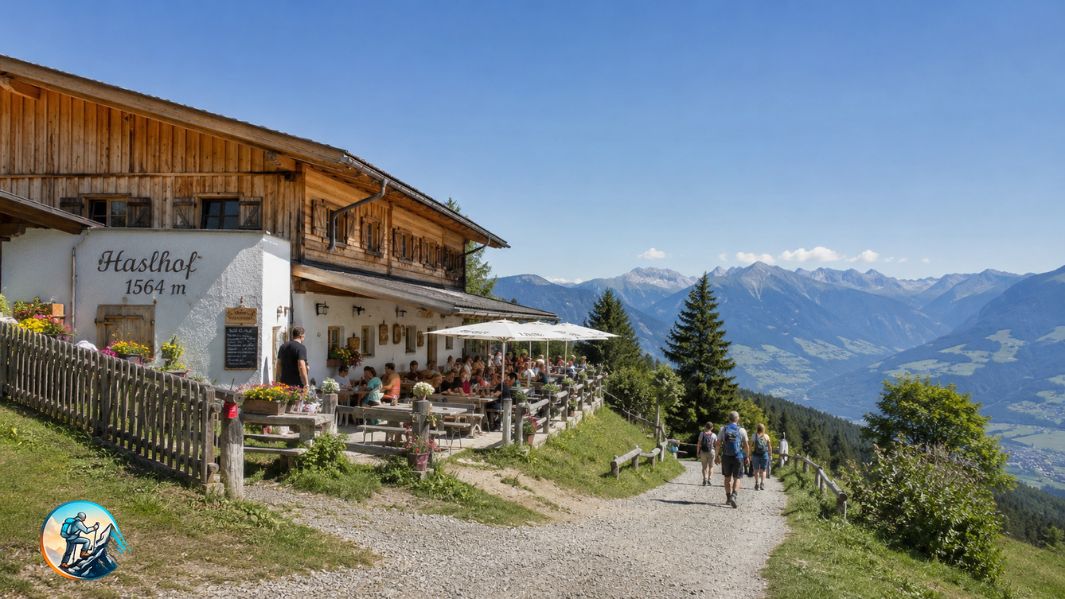
Beyond the Map: Discovering Haslhof in Italy and Bavaria
-
Technology6 days ago
Crackstube Explained: A Complete Guide to Its Features, Content, Safety, and Digital Publishing Platform