
Business
Sajar Plastics Inc: The Remarkable Story Behind Its Advanced Plastic Manufacturing Technology

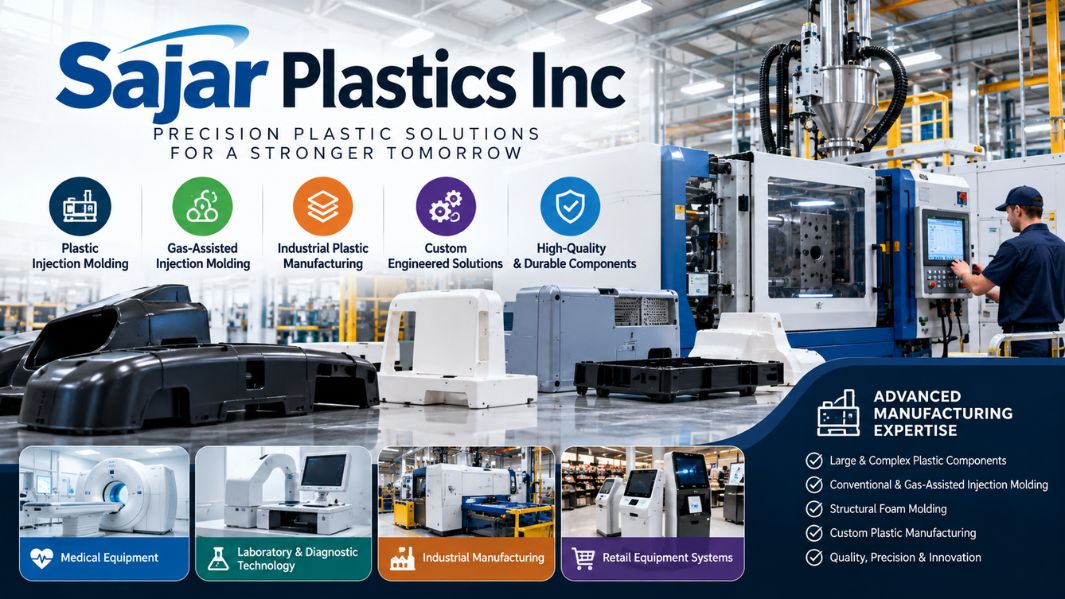
The manufacturing industry depends on companies that can transform complex engineering ideas into practical, durable products. Sajar Plastics Inc. is an American plastics manufacturer known for producing large, technically demanding plastic components. Established in 1949 in Middlefield, Ohio, the company developed expertise in specialized injection molding processes, particularly gas-assisted injection molding. Its manufacturing history reflects the evolution of plastic production from traditional molding methods to technologies that create intricate components with demanding structural and appearance requirements.
Today, the former Sajar operation is part of Universal Plastics, following a 2017 acquisition and a 2020 branding integration. Its experience in manufacturing large plastic parts remains relevant to industries such as healthcare equipment, laboratory technology, industrial machinery, and commercial systems. Understanding the company’s history, production methods, and technical capabilities shows the important role specialized manufacturers play in modern industrial supply chains.
What Is Sajar Plastics Inc?
Sajar Plastics Inc. is best known as a Custom plastic injection molding manufacturer serving original equipment manufacturers (OEMs). Unlike companies that sell finished consumer goods directly to shoppers, Sajar concentrates on manufacturing specialized components designed for other businesses. These components can become part of medical equipment, laboratory instruments, commercial machines, and industrial products. The company translates engineering specifications into physical parts that meet requirements for appearance, strength, dimensional accuracy, and functionality.
One characteristic that distinguishes this manufacturing operation is its ability to handle large, complex designs. Producing sizeable plastic components requires careful coordination between product design, tooling, material selection, and molding conditions. Even relatively small dimensional variations can affect how a component fits into a larger assembly. Through its experience in conventional injection molding, structural foam molding, and gas-assisted processes, the Middlefield facility has developed capabilities suited to demanding industrial applications.
The History and Establishment of Sajar Plastics
Sajar Plastics began in 1949 in Middlefield, Ohio, where the business initially operated three plastic injection molding machines. In its early years, the company focused on conventional injection molding, a manufacturing technique that was becoming increasingly important as businesses adopted plastic components for industrial and commercial use. Over time, Sajar expanded its production capabilities and manufacturing facilities to accommodate larger, more complex products.
A key development occurred in the early 1980s, when Sajar became involved in the early development of gas-assisted injection molding technology. The company identifies itself as one of three original businesses involved in developing this approach. This expertise helped establish its reputation for manufacturing large plastic parts requiring both structural integrity and high-quality visible surfaces. By its 2017 acquisition, Sajar reported commercializing more than 500 gas-assisted components for original equipment manufacturers across several industries.
Advanced Injection Molding Technology
Injection molding heats plastic until it melts and injects it into a specially designed mold. After the material cools and solidifies, operators remove the finished component. Although the basic principle is straightforward, manufacturing large or intricate products requires precise control of material flow, temperature, pressure, and cooling conditions. The method can produce repeatable components with detailed shapes, integrated features, and controlled dimensions.
The Middlefield operation uses conventional injection molding, gas-assisted injection molding, and structural foam molding. These processes offer different advantages depending on a product’s size, shape, appearance, and mechanical requirements. Conventional injection molding works well for many detailed components, while alternative molding techniques may offer advantages when manufacturers need thicker sections, large structures, or improved surface characteristics. The right process can affect manufacturing costs, tooling requirements, material consumption, and the amount of finishing work needed.
Gas-Assisted Injection Molding: A Major Specialty
One of Sajar Plastics’ most significant capabilities is gas-assisted injection molding. In this process, pressurized gas, typically nitrogen, is introduced during molding to control how molten plastic fills the mold. Internal gas-assisted molding can create hollow channels inside thicker regions of a component, while external gas-assisted methods use gas pressure to improve the finish of a visible surface. Both approaches can help engineers address challenges in manufacturing large or complex plastic products.
This technology offers several potential advantages, including reduced material requirements, improved dimensional stability, and fewer visible surface defects. Hollow internal sections can reduce a component’s weight without eliminating the structural features needed for its intended application. Gas pressure can also help minimize sink marks, surface depressions that sometimes appear when thick plastic sections cool unevenly. These characteristics make gas-assisted molding particularly useful for equipment covers, handles, cabinets, doors, and other large components where both function and appearance matter.
Structural Foam Molding and Its Industrial Benefits
Another manufacturing technique available at the Middlefield facility is structural foam injection molding. This method introduces a blowing agent into the plastic, creating a cellular structure as the material fills the mold. The resulting component typically contains a relatively solid outer skin surrounding a cellular interior. This structure can provide useful stiffness for certain large industrial parts while reducing the amount of solid plastic required.
Structural foam molding is especially relevant when manufacturers need substantial, rigid components that don’t require a highly polished surface immediately after molding. Manufacturers can use the process for equipment housings, supports, covers, and other structural applications. Visible surfaces may need additional sanding, painting, or finishing, depending on the product’s requirements. Compared with other manufacturing methods, structural foam molding can provide a practical option for producing large components, although the best choice depends on engineering specifications, appearance standards, and production economics.
Manufacturing Facilities and Production Capabilities
The former Sajar manufacturing operation is located in Middlefield, Ohio, and remains identified as Universal Plastics Middlefield. According to the parent company’s published facility information, the location has approximately 150,000 square feet of manufacturing space and operates 17 molding machines with clamping capacities ranging from 85 to 1,500 tons. The facility can manufacture components with dimensions up to approximately 70 by 80 inches.
This capacity allows the operation to accommodate projects that require different machine sizes and molding methods. Large plastic parts often require substantial equipment, carefully designed tooling, and specialized material-handling procedures. Beyond molding, the facility offers secondary services, including painting, finishing, and assembly. These capabilities can help customers who need completed components rather than unfinished molded parts. Combining production and finishing services under one manufacturing organization can simplify coordination across an industrial project’s stages.
Industries Served by Sajar Plastics
Sajar Plastics’ manufacturing expertise supports several industrial markets. Its established areas of activity include medical equipment, laboratory and diagnostic technology, industrial manufacturing, and retail equipment systems. These industries often require plastic components that combine structural performance with precise dimensions and professional-looking exterior surfaces.
Medical and laboratory equipment, for example, often contains large protective housings, access panels, instrument covers, and molded exterior structures. Such parts may need to accommodate internal mechanical assemblies while providing a consistent appearance. Industrial machines may require covers, handles, and access doors that fit precisely around complex equipment. Commercial systems, including registers and dispensing machines, may also use molded components that incorporate openings, mounting points, and surface textures. Each application presents distinct engineering requirements, making Custom manufacturing an important part of the product-development process.
Product Design, Engineering, and Material Selection
Successful plastic manufacturing begins before material enters a molding machine. Engineers must consider how a part will function, how it will be assembled, and what physical conditions it may experience during use. Wall thickness, structural ribs, attachment points, surface geometry, and material properties can all influence whether a finished component performs as expected. Design decisions also affect how efficiently a mold fills and how consistently parts are produced.
For large molded products, pay close attention to shrinkage, warping, and cooling. A design that looks straightforward in a digital model may create manufacturing difficulties if its dimensions, wall sections, or reinforcement features don’t match the selected process. Specialized molding experience can help identify these issues during product development. Gas-assisted molding, for instance, can incorporate certain structural features while controlling visible surface defects. This approach balances practical manufacturing constraints with customers’ requirements for appearance, strength, weight, and assembly.
Commitment to Manufacturing Quality
Quality control is a major consideration in producing engineered plastic components. Customers purchasing industrial parts typically expect consistent dimensions, reliable fit, and surfaces that satisfy agreed specifications. Maintaining these characteristics across production runs requires controlled manufacturing processes, inspection procedures, and effective communication between technical teams.
The Universal Plastics Group identifies Sajar as ISO 9001 registered, reflecting its use of a recognized quality-management framework. The broader company’s published equipment information also describes inspection resources such as three-dimensional scanning, dimensional measurement systems, and instruments for assessing color and gloss. These tools support evaluations of large molded parts where appearance and dimensional accuracy are essential. ISO 9001 registration concerns quality-management systems and should not be confused with product-specific regulatory approval. Particular applications, especially medical ones, may require additional testing, documentation, or compliance procedures.
Acquisition by Universal Plastics in 2017
A significant milestone occurred in July 2017, when Universal Plastics announced its acquisition of Sajar Plastics. The Massachusetts-based buyer already had expertise in heavy-gauge thermoforming and viewed the acquisition as an opportunity to expand into large-part injection molding. By combining different manufacturing processes, the business aimed to offer customers a wider range of solutions as their production requirements developed.
The acquisition was particularly relevant because thermoforming and injection molding can serve different needs during a product’s commercial life. Thermoforming may suit certain designs and production volumes. At the same time, injection molding can become advantageous when a product needs integrated features or a different balance between tooling investment and per-part costs. Bringing these capabilities within a common manufacturing group offered opportunities for coordinated engineering support. In January 2020, Universal Plastics announced that Sajar and its other manufacturing operations would operate under the Universal Plastics name, while retaining their specialized production capabilities.
Why Specialized Plastic Manufacturing Matters
Modern industrial products often contain plastic components that must do far more than provide basic protection. A single molded part may need to protect sensitive equipment, support mechanical loads, accommodate electronic assemblies, and maintain an attractive exterior. Meeting these expectations becomes harder as components grow in size and design complexity.
Sajar Plastics’ experience illustrates why specialized manufacturing knowledge remains valuable. Advanced processes such as gas-assisted molding can help manufacturers meet complex design requirements, but the benefits depend on selecting the right engineering and process. A lighter component isn’t automatically stronger, and a manufacturing technique that reduces material consumption may still require significant tooling investment. Reliable results require manufacturers to weigh these trade-offs against each application’s needs.
The Future of Sajar’s Manufacturing Expertise
The industrial plastics sector continues to face changing expectations involving product performance, material efficiency, manufacturing costs, and supply-chain reliability. For established molding operations, adapting to these demands involves maintaining technical expertise while evaluating new materials, production practices, and customer requirements.
Within Universal Plastics, the Middlefield facility retains a clearly defined role in large-part injection molding, structural foam molding, and gas-assisted manufacturing. Its historical expertise complements the wider group’s thermoforming and blow-molding services. Although businesses should not assume future investments or expansion plans without official announcements, the operation’s existing capabilities remain relevant to companies developing large, complex engineered plastic products.
Conclusion
Sajar Plastics Inc. represents a longstanding chapter in American plastic manufacturing. From its 1949 founding to its involvement in developing gas-assisted injection molding, the company built specialized capabilities to produce complex industrial components. Its work across medical, laboratory, commercial, and manufacturing applications shows how technical knowledge can turn challenging designs into practical finished products.
The 2017 acquisition by Universal Plastics and the subsequent branding integration marked a new stage in the company’s history. Today, its manufacturing legacy continues through the Middlefield operation, which offers conventional injection molding, gas-assisted molding, structural foam production, and related finishing services. The company’s history shows how engineering expertise, manufacturing innovation, and long-term industrial experience can build specialized production capabilities.

John Playfair: The Remarkable Life of Prue Leith’s Husband and Former Fashion Designer

thealitekeepsafe.com: A Complete Guide to Its Features, Online Safety, Content, and Trustworthiness

Growth Navigate Funding: A Complete Guide to Smart Business Financing and Sustainable Growth

Almawadahit. com Explained: A Complete Guide to Its Content, Features, and Online Reputation

UK Supermarket Fruit Salmonella Recall: Major Safety Warning That Affected Six Leading Retailers

Tracey Knievel: The Remarkable Untold Story of Evel Knievel’s Daughter and Her Life Beyond Fame

Jeremy Yaffe: The Remarkable Untold Story of Alan Arkin’s First Wife and Her Life Beyond Hollywood

Solica Casuto: The Fascinating Story of Andy Griffith’s Second Wife and Her Private Life

Tara Beane: The Remarkable Family Story Behind Billy Beane’s Moneyball Legacy

Wendy Etris: The Inspiring Story of AJ Styles’ Wife, Marriage, Children and Private Life

Everest Base Camp Trek vs Manaslu Circuit Trek: Routes, Difficulty, Costs, Altitude and Mountain Experience

Crackstube Explained: A Complete Guide to Its Features, Content, Safety, and Digital Publishing Platform

ABS Testauslösung: Bedeutung, Funktion, häufige Fehler und wichtige Sicherheitstipps

Classroom 15x: The Ultimate Guide to Free Online Games, Features, Benefits, and Safe Gaming

Nomurano: Discover the Powerful Meaning Behind Modern Creativity, Design, and Intentional Living

HMJones.net Explained: A Complete Guide to Business Loans, Funding Options, and Smarter Financial Decisions

Nigel Mackintosh: The Remarkable Business Career, Family Heritage and Life of Millie Mackintosh’s Father

Provascin: A Complete Guide to Its Ingredients, Potential Benefits, Uses, and Safety

Ruschek: The Fascinating History, Meaning, Origins and Legacy of a Rare European Surname

Mindset Energy: The Powerful Secret to Better Focus, Confidence, and Personal Growth
John Playfair: The Remarkable Life of Prue Leith’s Husband and Former Fashion Designer
thealitekeepsafe.com: A Complete Guide to Its Features, Online Safety, Content, and Trustworthiness
Growth Navigate Funding: A Complete Guide to Smart Business Financing and Sustainable Growth
Almawadahit. com Explained: A Complete Guide to Its Content, Features, and Online Reputation
UK Supermarket Fruit Salmonella Recall: Major Safety Warning That Affected Six Leading Retailers
Tracey Knievel: The Remarkable Untold Story of Evel Knievel’s Daughter and Her Life Beyond Fame
Jeremy Yaffe: The Remarkable Untold Story of Alan Arkin’s First Wife and Her Life Beyond Hollywood
Solica Casuto: The Fascinating Story of Andy Griffith’s Second Wife and Her Private Life
Tara Beane: The Remarkable Family Story Behind Billy Beane’s Moneyball Legacy
Wendy Etris: The Inspiring Story of AJ Styles’ Wife, Marriage, Children and Private Life
-
 Blog3 months ago
Beyond the Cages: How an Artificial Zoo Could Redefine Wildlife Travel
-
Adventure Travel2 weeks ago
Everest Base Camp Trek vs Manaslu Circuit Trek: Routes, Difficulty, Costs, Altitude and Mountain Experience
-
 Destination Guides3 months ago
Beyond the Map: Discovering Haslhof in Italy and Bavaria
-
Technology6 days ago
Crackstube Explained: A Complete Guide to Its Features, Content, Safety, and Digital Publishing Platform