

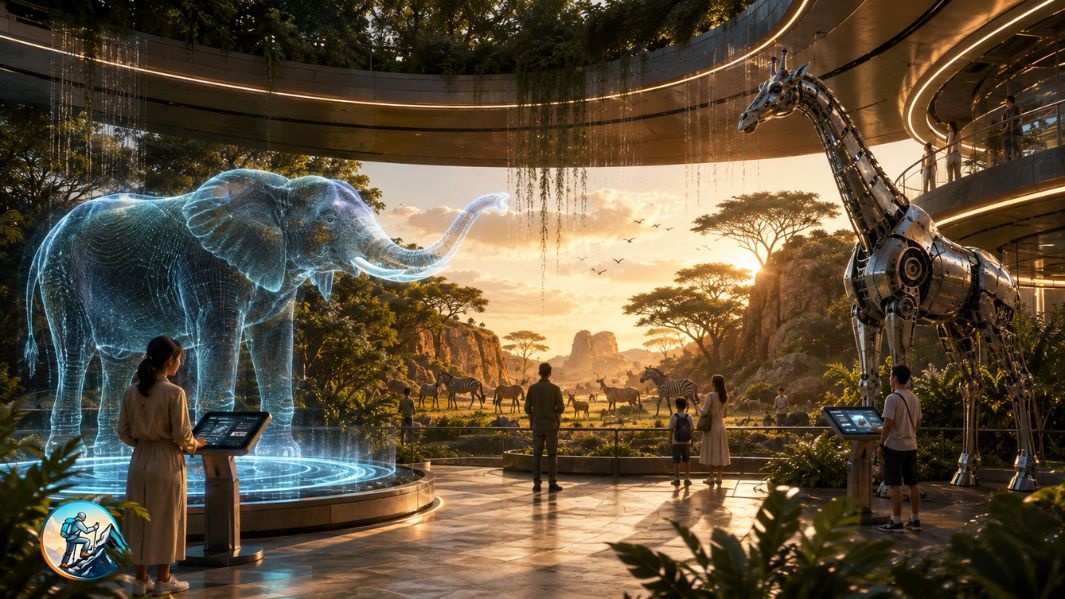
Travelers have long visited zoos to see animals they might never encounter in the wild, yet many people now feel uneasy about watching creatures behind barriers. An Artificial Zoo offers a different path. Instead of relying only on captive wildlife, it can use holograms, robotic animals, virtual reality, projection mapping, sound design, and built habitats to create convincing encounters. The result can feel part museum, part theme park, and part conservation classroom, giving travelers a fresh way to experience nature without placing every species in a physical enclosure.
This article explores what an Artificial Zoo is, how a visit may work, what travelers should expect, and why this emerging attraction could become an exciting part of future tourism.
What Is an Artificial Zoo?
An Artificial Zoo is an immersive attraction that recreates animals and ecosystems through technology rather than depending entirely on live exhibits. Visitors might walk beside a life-sized digital elephant, watch an animatronic tiger move through artificial grass, or enter a virtual safari where extinct and endangered species appear at realistic scale. Some venues may combine limited live-animal areas with digital installations, while others may be completely simulated. The central idea is creating memorable wildlife education through experiences that are safer, flexible, and less stressful for animals.
How Does an Artificial Zoo Create Realistic Encounters?
The strongest experiences use several senses. Surround sound can reproduce distant bird calls, moving floors can imitate a rumbling herd, and panoramic screens can transform a dark room into a rainforest or Arctic coast. Augmented reality may allow visitors to point a device toward a landscape and see animals appear in context. Robotic creatures add physical presence, while interactive displays explain migration, hunting behavior, climate threats, and habitat loss. When the storytelling is thoughtful, visitors stop focusing on the machinery and respond to the world being presented.
Why Travelers Are Interested in Artificial Zoo Experiences
The appeal is convenience. A digital wildlife attraction can operate in a city center, resort, or indoor entertainment complex. Weather becomes less important, accessibility may be easier, and children can see animals from several continents in one visit. These attractions can also show scenes traditional zoos cannot easily reproduce, such as deep-ocean movement, prehistoric wildlife, seasonal migrations, or nocturnal hunting.
The most compelling possibility is choice. Visitors may select a gentle educational route, an adventurous safari, or a sensory-friendly session with lower sound and lighting. That flexibility makes the experience more inclusive and supports self-paced learning.
Planning Your Visit to an Artificial Zoo
Before booking, check whether the attraction is fully digital, partly robotic, or mixed with live animals. This will help you understand the experience and decide whether it suits children, older relatives, or visitors who dislike intense screens. Look for estimated duration, age guidance, wheelchair access, motion effects, flashing-light warnings, and whether headsets are required.
Book an early session because interactive areas feel better when less crowded. Wear comfortable shoes, keep your phone charged if the venue uses an app, and allow extra time for children who repeat games or simulations. Travelers sensitive to sound should carry ear protection, while anyone prone to motion sickness should ask which virtual experiences can be skipped.
Is an Artificial Zoo Suitable for Children?
Usually, yes, when the attraction balances spectacle with clear explanations. Younger children may love large moving creatures, while teenagers may engage with conservation games, digital challenges, and simulations. Parents should review age recommendations because dark rooms, sudden sounds, or enormous animal projections can frighten young visitors. A calm explanation before entering can make the experience exciting rather than overwhelming.
Can an Artificial Zoo Support Conservation?
An Artificial Zoo cannot replace protected wilderness, ethical rescue centers, or responsible conservation work. It can, however, help visitors understand why habitats matter. Digital exhibits can show environmental change over time, demonstrate how plastic affects marine life, and explain why animals need space beyond human-controlled environments. Attractions can update content quickly, meaning new research and conservation messages can be added without rebuilding enclosures.
The best venues should be transparent and avoid pretending simulation alone solves wildlife loss. As the saying goes, “We protect what we learn to love.” A powerful artificial encounter can become the first step toward genuine interest, responsible travel choices, and support for real-world conservation.
The Future of Wildlife Tourism
The Artificial Zoo is evolving, but its potential is clear. It combines immersive tourism, environmental education, family entertainment, and ethical discussion in one accessible space. When designed with accuracy and care, it can inspire wonder without depending entirely on captivity. Travelers should approach it not as a replacement for nature, but as a creative doorway into it. A digital whale, robotic leopard, or simulated rainforest may be artificial, yet the curiosity it awakens can be completely real.
You May Read Also: Beyond the Map: How Levison Wood Changed Adventure Travel