
Luxury Travel
Everest Adventure Guide: Trekking, Helicopter Tours and Island Peak Climbing

Introduction: Three Ways to Experience the Everest Region
Planning a trip to the Everest region sounds easy until you start comparing the options. Do you walk for a couple of weeks? Fly in and be back in Kathmandu for lunch? Or go all the way and try to stand on a summit? These are three very different trips, with different costs, risks and rewards, and that’s exactly what makes the choice so hard.
This guide looks at three popular ones. The Everest Base Camp Trek with Helicopter Return lets you walk up through the villages and then skip the long slog back down. The Everest Base Camp helicopter tour swaps the walking for a few hours of mountain views from the air. Island Peak climbing asks for real mountaineering skills. We’ll go through routes, difficulty, safety and practical planning so you can pick what fits your fitness, your calendar and your appetite for adventure.
1. Everest Base Camp Trek with Helicopter Return: Trek In, Fly Back
How the Trek and Helicopter Return Work
Most trekkers start with a flight to Lukla, then walk through Phakding, Namche Bazaar, Tengboche, Dingboche, Lobuche and Gorakshep before reaching Everest Base Camp. Rest days matter here, especially around Namche Bazaar and Dingboche, because your body needs time to catch up with the altitude. The helicopter return replaces the multi-day walk back down the same trail. Sounds simple, but the details matter. Pickup points, passenger weight limits and weather all shape the plan, so ask your operator how flights are arranged and what happens if the sky doesn’t cooperate.
Difficulty, Duration, and Physical Preparation
Let’s be clear about one thing: the helicopter only helps on the way down. You still have to walk up, day after day, at altitude, and that’s the hard part. Even very fit people can struggle if they rush, which is why acclimatization matters more than raw fitness. Good broken-in boots, layers you can add or remove easily, plenty of water and a slow, steady pace will do more for you than any training plan. Start your preparation weeks ahead with long hikes carrying a daypack.
Who Should Consider This Adventure?
This option suits people who want the traditional trek but can’t spare the extra days for the return walk. Photographers and adventure travelers tend to love it, as do those who enjoy climbing through Sherpa villages and big mountain scenery but don’t feel the need to repeat it all in reverse. Before booking, check what’s actually included: permits, accommodation, meals, a guide and the helicopter transfer. Weather can delay flights, so build in a spare day or two, or agree on a backup way back to Lukla.
2. Everest Base Camp Helicopter Tour: A Mountain Experience in Less Time
What Happens During an Everest Base Camp Helicopter Tour?
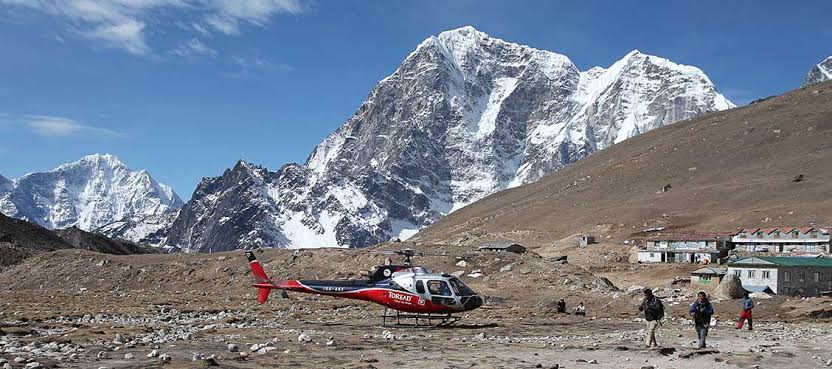
An Everest Base Camp Helicopter Tour gives you the views without the multi-day trek. You fly from Kathmandu toward the Khumbu, sometimes with a stop or refuelling break depending on the operator. Out the window you’ll see Everest, Lhotse, Nuptse and the tangled ice of the Khumbu Glacier. A landing at Everest Base Camp or Kala Patthar sounds amazing, but it’s never guaranteed. Wind, weather and safety rules decide what’s possible on the day.
Flight Duration, Landing Rules, and Passenger Limits
Plan on several hours in total, though schedules vary by operator. Helicopters have seat limits and passenger weight limits, and at high altitude there are sometimes shuttles in smaller groups. Visibility, wind, snow and aircraft performance can all change the itinerary at short notice. Before you pay, confirm where you will actually land, how long you get on the ground, whether breakfast is included and what the cancellation and refund terms are.
Who Is This Tour Best For?
It’s a good fit for people short on holiday time, families who’d like a scenic flight, and visitors who simply can’t commit to a long trek. Just know that seeing the mountains from a helicopter is not the same as earning them on foot. It’s a different kind of experience. And don’t assume it’s risk-free either: if you land at high altitude, you can still feel the effects, even on a short tour.
3. Island Peak Climbing: Moving Beyond Trekking
Where Is Island Peak, and How Does the Climb Fit into an Everest Adventure?
Island Peak, also called Imja Tse, sits in the Everest region and tops out at just over 6,000 metres. Climbers usually reach it through the Khumbu trekking trails, often spending time acclimatizing around Chhukung first. Reaching Everest Base Camp is a trek. Island Peak is a summit attempt, and that changes everything. You’ll need technical preparation on top of ordinary trekking fitness.
Technical Skills, Equipment, and Climbing Preparation
Depending on the route and conditions, expect to use crampons, an ice axe, a harness, a helmet and fixed ropes. Knowing how to use them properly is not optional, so learn the basics of mountaineering before you go. A qualified climbing guide, solid insurance and an honest look at your own fitness all count. Trekking experience helps, no doubt, but it doesn’t automatically make you ready for a technical summit day.
Weather, Acclimatization, and Summit-Day Expectations
Gradual altitude gain is the backbone of any climb here. Weather, snow conditions and visibility decide when, or whether, a summit attempt happens. Nobody can promise you the top, and sometimes turning back is the smartest call you’ll make. Leave contingency days in your schedule, and ask the operator how emergencies are handled before you commit.
4. Comparing the Three Everest Adventures
Time, Difficulty, Experience, and Travel Style
| Factor | Everest Base Camp Trek with Helicopter Return | Everest Base Camp Helicopter Tour | Island Peak Climbing |
| Main experience | Trekking with an aerial return | Scenic helicopter flight | Technical mountain climbing |
| Time commitment | Multiple days | Usually several hours | Multiple days, often longer with acclimatization |
| Physical demand | Sustained high-altitude walking | Limited walking, but altitude exposure is possible | High physical demand with technical skills |
| Main attraction | Trails, villages, and Everest Base Camp | Aerial mountain views | The challenge of a climbing objective |
| Preparation | Trekking fitness and acclimatization | Flight and altitude awareness | Trekking fitness, climbing skills, and acclimatization |
| Main uncertainty | Weather and helicopter logistics | Weather and landing restrictions | Weather, route conditions, and summit safety |
These three are not interchangeable. Each one gives you a different relationship with the Everest landscape: walking through it, looking down on it, or climbing up into it. Think about how much time you really have, how prepared your body is, what you can spend, and what you want to come home with.
5. Best Time, Costs, Permits, and Practical Planning
Best Seasons for Everest Trekking, Helicopter Tours, and Climbing
Spring and autumn are the favorites for trekking and for clear mountain views. Wind, snowfall and visibility still affect helicopter flights and climbing plans, though. Check current conditions with your operator rather than trusting the season alone.
Understanding the Main Costs
Trekking costs usually cover accommodation, meals, a guide and porter, permits and the helicopter return. Helicopter tours depend on aircraft sharing, passenger weight, landing arrangements and airport transfers. Island Peak Climbing adds guides, climbing equipment, permits, lodging, meals and logistics. Compare what’s included in each package, not just the headline price.
Permits, Insurance, Packing, and Safety
Permit rules vary by activity and itinerary, so verify the current requirements before you leave. Make sure your travel insurance clearly covers your planned altitude and activity, including helicopter evacuation where it applies. Pack proper layers, sun protection, good footwear, personal medication and basic emergency supplies. Learn the early signs of altitude sickness and ask for help quickly if they show up. Finally, read the cancellation policy, find out how emergency communication works and have a weather plan B.
6. How to Choose the Right Everest Adventure for Your Trip
Match the Experience to Your Goals
If you love walking but want a shorter way home, the trek with helicopter return is your answer. If your time is tight and mountain views are the main goal, the helicopter tour makes sense. If you’re ready for something more demanding, with technical mountaineering involved, Island Peak climbing is the one. Whatever you lean toward, weigh your fitness, altitude experience, time, budget and tolerance for risk first.
Conclusion: Three Adventures, One Remarkable Himalayan Region
Trekking gives you the villages and the slow build-up. A helicopter gives you the big picture in a short window. Island Peak gives you a proper climbing challenge. The right one depends on your experience, preparation, schedule and expectations. Whichever you pick, put acclimatization and safety first, choose reliable logistics, and stay flexible, because in the Himalaya the mountain always has the final word.
Frequently Asked Questions
1. How long does an Everest Base Camp trek with helicopter return take?
It depends on your walking pace, acclimatization days and helicopter arrangements. Ask your operator for a realistic itinerary and a spare day for weather.
2. Can a helicopter land at Everest Base Camp?
Flying over the area and landing are two different things. A landing depends on operational and safety conditions, so it is never a sure thing.
3. Is an Everest Base Camp helicopter tour suitable for beginners?
Yes, since there’s little trekking involved. Still, high-altitude exposure can affect anyone, even on a short stop.
4. Do you need climbing experience for Island Peak climbing?
You need technical skills, proper preparation and a qualified guide. Trekking alone is not enough.
5. What is the best season for an Everest adventure?
Spring and autumn are the usual trekking seasons. Always check weather conditions for your specific activity before you go.

Yeat Net Worth in 2026: The Remarkable Rise of a Million-Dollar Rap Star

BabyTron Net Worth 2026: The Impressive Rise of a Michigan Rap Star

How to Choose the Right HR Support Model for a Growing Business

Annapurna Circuit Trek: A Complete Guide to One of Nepal’s Greatest Mountain Adventures

Everest Adventure Guide: Trekking, Helicopter Tours and Island Peak Climbing

Accessible Login Experiences: A Practical Checklist For Clearer, Safer Forms

How To Design Useful Conversational AI Avatars For Learning And Customer Support

Tobiko: The Colorful Japanese Delicacy That Makes Sushi More Delicious and Exciting

Reviews of Competitors: A Powerful Guide to Understanding Customer Feedback and Winning Business Strategies

InstaPV: The Ultimate Guide to Anonymous Instagram Viewing, Features, Privacy, and Safety in 2026

How Dental Implant Quotes Are Built: A Practical Cost Guide for Maple Grove, Minnesota

Classroom 15x: The Ultimate Guide to Free Online Games, Features, Benefits, and Safe Gaming

Crackstube Explained: A Complete Guide to Its Features, Content, Safety, and Digital Publishing Platform

Jeremy Yaffe: The Remarkable Untold Story of Alan Arkin’s First Wife and Her Life Beyond Hollywood

ABS Testauslösung: Bedeutung, Funktion, häufige Fehler und wichtige Sicherheitstipps

Startup Booted Fundraising Strategy: A Powerful Guide to Smart Funding and Sustainable Business Growth

Provascin: A Complete Guide to Its Ingredients, Potential Benefits, Uses, and Safety

Nippybox Explained: What Happened to the Popular File-Sharing Platform in 2026?

HMJones.net Explained: A Complete Guide to Business Loans, Funding Options, and Smarter Financial Decisions

Pedal And Post Collapse: The Shocking Closure of Oxford’s Pioneering Green Delivery Company
Yeat Net Worth in 2026: The Remarkable Rise of a Million-Dollar Rap Star
BabyTron Net Worth 2026: The Impressive Rise of a Michigan Rap Star
How to Choose the Right HR Support Model for a Growing Business
Annapurna Circuit Trek: A Complete Guide to One of Nepal’s Greatest Mountain Adventures
Everest Adventure Guide: Trekking, Helicopter Tours and Island Peak Climbing
Accessible Login Experiences: A Practical Checklist For Clearer, Safer Forms
How To Design Useful Conversational AI Avatars For Learning And Customer Support
Tobiko: The Colorful Japanese Delicacy That Makes Sushi More Delicious and Exciting
Reviews of Competitors: A Powerful Guide to Understanding Customer Feedback and Winning Business Strategies
InstaPV: The Ultimate Guide to Anonymous Instagram Viewing, Features, Privacy, and Safety in 2026
-
 Destination Guides4 months ago
Beyond the Map: Discovering Haslhof in Italy and Bavaria
-
 Blog3 months ago
Beyond the Cages: How an Artificial Zoo Could Redefine Wildlife Travel
-
 Adventure Travel1 month ago
Everest Base Camp Trek vs Manaslu Circuit Trek: Routes, Difficulty, Costs, Altitude and Mountain Experience
-
 Health2 weeks ago
How Dental Implant Quotes Are Built: A Practical Cost Guide for Maple Grove, Minnesota