
Budget Travel
Smarter Journeys with WhatsOnTech: A Practical Guide to Travel Tech

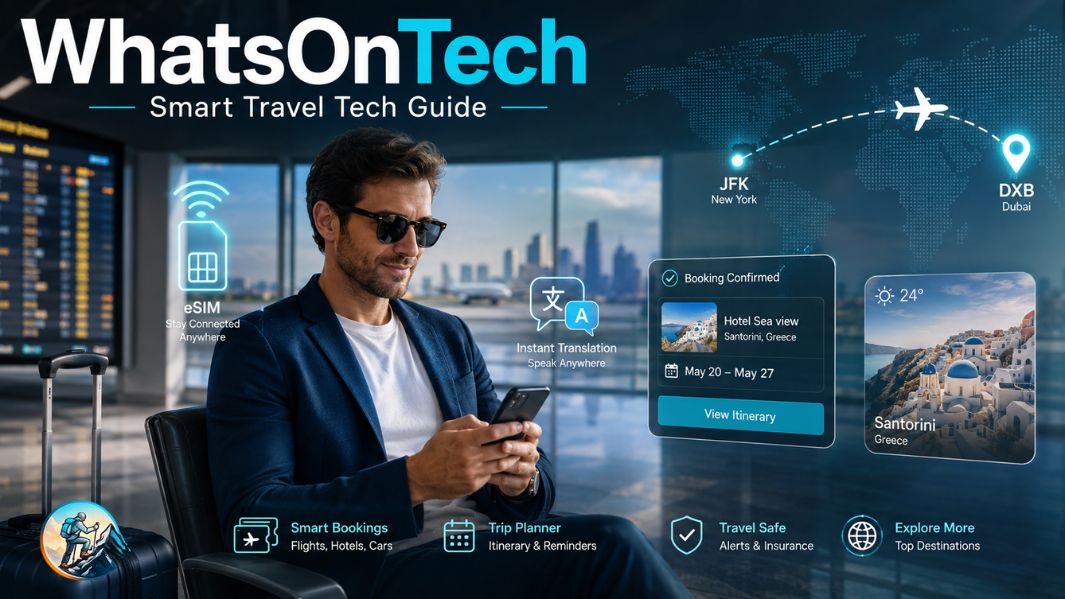
Travel feels easier when technology solves real problems instead of adding another screen to manage. WhatsOnTech can be a starting point for travelers who want to understand digital tools shaping modern trips. The value is not in packing every gadget you see; it is in choosing tools that reduce stress, save time, and help you make better decisions as you move through unfamiliar places today.
This article explains how travelers can use WhatsOnTech-style travel technology guidance sensibly. It is comprehensive, factual, and plagiarism-free; it separates verified travel-tech principles from hype where relevant, and it helps readers and search engines understand the topic clearly. The focus is simple: practical planning, safer digital habits, smoother logistics, and smarter choices without turning a holiday into a technology project.
Why WhatsOnTech Matters for Modern Travelers
The best travel technology works quietly in the background. Before departure, digital tools can compare routes, organize reservations, store tickets, estimate transport time, and build an itinerary. During the trip, offline maps, eSIMs, translation tools, weather alerts, mobile wallets, and cloud-backed documents can remove frustrations. A useful rule is to ask, “Will this tool solve a problem I am genuinely likely to face?” If the answer is no, leave it behind. Travelers often enjoy a trip more when their setup is simple and tested before reaching the airport.
WhatsOnTech and AI-Powered Trip Planning
AI-powered travel planning is useful when it saves time on research, but it should not replace common sense. Ask an AI planner to suggest neighborhoods, daily routes, transport options, or an itinerary draft, then verify important details such as opening hours, visa rules, train schedules, restrictions, and booking policies with official sources. This gives you speed without relying unthinkingly on automated suggestions. I find AI most helpful at the beginning of planning, when a destination feels overwhelming, and you need structure rather than another hundred browser tabs.
Build a Travel Tech Kit That Actually Helps
A strong travel tech kit does not need to be expensive. For most trips, a reliable smartphone, a compact power bank, a universal adapter, a charging cable, headphones, and a secure internet option cover the essentials. Add gear only when the journey demands it. A hiking trip may justify a rugged battery or GPS device; a work trip may need a laptop stand; a long rail journey may benefit from extra storage and entertainment downloads. Pack technology around the trip, not the other way around. As the old travel wisdom goes, “Take only memories, leave only footprints”—and today, perhaps carry only the technology that earns its place in your bag.
Solve Common Digital Travel Problems Before Departure
Many travel headaches are predictable. Download offline navigation before landing, save accommodation addresses in your phone and on paper, take encrypted backups of documents, and enable device tracking. Check roaming costs before the trip. Install transport or airline apps in advance and sign in while you still have reliable Wi-Fi. If you use an eSIM, activate it according to the provider’s instructions and keep your primary number available for authentication messages. These small preparations matter more than flashy gadgets because they protect the basic systems your trip depends on.
Keep Your Data Safer on the Road
Public Wi-Fi is convenient, but travelers should avoid treating every network as trustworthy. Keep devices updated, use strong screen locks, enable multi-factor authentication, and, when possible, avoid sensitive financial activity on unknown networks. A personal hotspot or cellular connection is often a simpler choice. Also consider what would happen if your phone disappeared tomorrow: could you access your bookings, contact your bank, find your hotel, and recover your accounts? Good travel technology is not only about convenience; it is also about resilience when plans go wrong.
Use Technology Without Missing the Destination
There is a strange travel trap in which people optimize every minute and stop noticing where they are. Let your phone handle directions, bookings, and quick translations, then put it away when the task is finished. Leave gaps in your itinerary for wandering, local conversations, long meals, and unexpected discoveries. Technology should create more space for those moments, not compete with them. A perfectly optimized schedule can still produce a forgettable trip if you view every experience through the lens of notifications, ratings, and checklists.
Final Thoughts: Make WhatsOnTech Part of Smarter Travel
The most useful way to think about WhatsOnTech in a travel context is as a gateway to smarter decisions about the technology you carry and use. Focus on tools that improve planning, communication, navigation, security, and flexibility. Test them before you leave, back up important information, and verify time-sensitive travel details through authoritative sources. When technology removes friction rather than demanding attention, it becomes genuinely valuable. Travel should still feel spontaneous, human, and memorable; the smartest digital setup helps you explore with more confidence and then gets out of the way.
You May Read Also: A Smarter Travel Brand Guide to Customer Success Unmanaged Webflow

Sulina Frost: A Closer Look at Adam Frost’s Wife, Family Life and Business Career

Sam Handel: Inside His Creative Career, Family Life, and Marriage to Lauren Ambrose

Naples travel guide: discover art, history and panoramic views

Jake Moritt: The Inspiring Story of Krista Allen’s Son, His Acting Career and Life in Hollywood

Park & Fly Long Term Parking: How to Book Early and Travel With Less Stress

Which Wildlife Trips in India Actually Suit You?

Bilieter Explained: The Surprising Meaning, Digital Ticketing Connection, and Complete Guide

Portar Leisa: The Surprising Truth About Its Meaning, Origins, and Modern Significance

Trafficos Explained: A Powerful Guide to Smarter Traffic Growth and Digital Marketing

Trastullami: Discover the Amazing Stretch Tulle Fabric for Fashion, Crafts, and Creative Designs

Everest Base Camp Trek vs Manaslu Circuit Trek: Routes, Difficulty, Costs, Altitude and Mountain Experience

Classroom 15x: The Ultimate Guide to Free Online Games, Features, Benefits, and Safe Gaming

Crackstube Explained: A Complete Guide to Its Features, Content, Safety, and Digital Publishing Platform

Startup Booted Fundraising Strategy: A Powerful Guide to Smart Funding and Sustainable Business Growth

Provascin: A Complete Guide to Its Ingredients, Potential Benefits, Uses, and Safety

HMJones.net Explained: A Complete Guide to Business Loans, Funding Options, and Smarter Financial Decisions

Jeremy Yaffe: The Remarkable Untold Story of Alan Arkin’s First Wife and Her Life Beyond Hollywood

ABS Testauslösung: Bedeutung, Funktion, häufige Fehler und wichtige Sicherheitstipps

Pedal And Post Collapse: The Shocking Closure of Oxford’s Pioneering Green Delivery Company

Volglaswanden: The Ultimate Guide to Stylish, Modern Glass Wall Solutions
Sulina Frost: A Closer Look at Adam Frost’s Wife, Family Life and Business Career
Sam Handel: Inside His Creative Career, Family Life, and Marriage to Lauren Ambrose
Naples travel guide: discover art, history and panoramic views
Jake Moritt: The Inspiring Story of Krista Allen’s Son, His Acting Career and Life in Hollywood
Park & Fly Long Term Parking: How to Book Early and Travel With Less Stress
Which Wildlife Trips in India Actually Suit You?
Bilieter Explained: The Surprising Meaning, Digital Ticketing Connection, and Complete Guide
Portar Leisa: The Surprising Truth About Its Meaning, Origins, and Modern Significance
Trafficos Explained: A Powerful Guide to Smarter Traffic Growth and Digital Marketing
Trastullami: Discover the Amazing Stretch Tulle Fabric for Fashion, Crafts, and Creative Designs
-
 Blog3 months ago
Beyond the Cages: How an Artificial Zoo Could Redefine Wildlife Travel
-
 Destination Guides3 months ago
Beyond the Map: Discovering Haslhof in Italy and Bavaria
-
Adventure Travel3 weeks ago
Everest Base Camp Trek vs Manaslu Circuit Trek: Routes, Difficulty, Costs, Altitude and Mountain Experience
-
 Entertainment2 weeks ago
Classroom 15x: The Ultimate Guide to Free Online Games, Features, Benefits, and Safe Gaming