
Blog
Jar Mason Jars: The Ultimate Guide to Smart Storage, Safe Canning, and Creative Uses

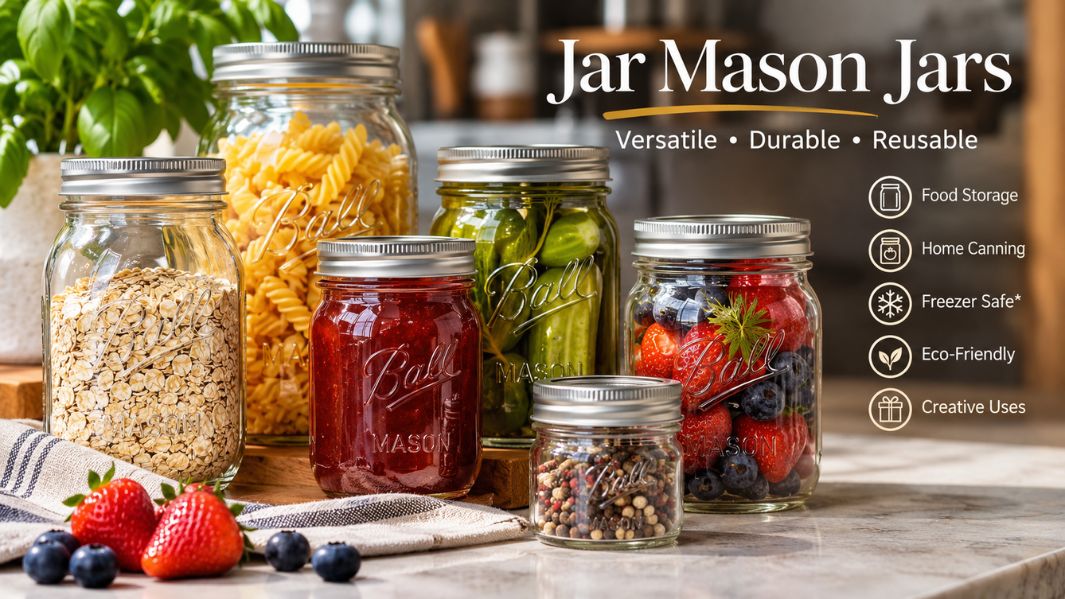
Mason Jars have become an essential household item because of their practical design, attractive appearance, and wide range of uses. These reusable glass containers are commonly associated with homemade jams, pickles, and preserved foods, but their usefulness extends far beyond traditional food preservation. Today, Mason jars are found in modern kitchens, cafés, craft rooms, and home organization systems.
Their transparent glass construction makes it easy to identify stored contents, while their convenient lids help protect food and other items from dust and contamination. Whether you need containers for dry ingredients, homemade beverages, decorative arrangements, or carefully processed preserves, Mason jars provide a versatile solution.
This article explores the different types, sizes, benefits, and practical applications of Mason jars, including essential advice on choosing, maintaining, and safely using them.
What Are Mason Jars?
Mason jars are glass containers traditionally designed for home food preservation. Their defining features include a threaded neck, durable glass body, and a closure system that commonly consists of a flat metal lid and a separate screw band. This two-piece design allows a suitable lid to form a vacuum seal when the jar is processed correctly using an approved canning method. The name comes from John Landis Mason, who patented an important screw-threaded jar design in 1858. Over time, Mason jars became widely recognized as dependable containers for preserving food at home. Modern versions are manufactured in different shapes, capacities, and colors, making them suitable for both functional and decorative purposes. Although many glass containers resemble Mason jars, not every decorative jar is designed to withstand the temperatures and conditions involved in home canning.
Different Types of Mason Jars Available
Understanding different Mason jar styles makes it easier to choose a container for a particular task. Traditional regular-mouth Mason jars have a narrower opening, making them suitable for liquids, sauces, jams, and other foods you can pour or spoon into the container. Wide-mouth jars have a larger opening, which makes filling, emptying, and cleaning more convenient. They are especially useful when storing whole fruits, sliced vegetables, or bulky dry ingredients.
Some Mason jars feature straight sides, while others have rounded shoulders near the opening. Straight-sided designs are particularly useful for certain freezer-storage applications when the manufacturer identifies them as freezer-safe. Decorative versions may include embossed patterns, coloured glass, handles, or unusual shapes. These can be attractive choices for serving drinks, displaying flowers, and organizing household objects. However, their suitability for canning must be confirmed separately rather than assumed from their appearance.
Common Mason Jar Sizes and Their Uses
Choosing the right jar size matters for efficient storage and food preparation. Mason jars are available in several common capacities, including 4-ounce, 8-ounce, 12-ounce, pint, quart, and half-gallon formats. Smaller jars are popular for homemade spreads, spices, sauces, and gift portions, while medium-sized containers are convenient for snacks, overnight oats, and pantry ingredients. Pint jars hold approximately 473 milliliters, making them a practical choice for individual food portions or small batches of preserved products.
Quart jars hold approximately 946 milliliters and provide additional room for foods such as dry pasta, grains, or appropriately prepared preserves. Half-gallon jars offer greater storage capacity but have limited approved applications in home canning. Storing food in a larger jar does not automatically mean a safe canning process exists for that food-and-jar combination. For shelf-stable canning, the jar size must match a scientifically tested recipe.
Why Mason Jars Are Popular for Kitchen Storage
One of the biggest advantages of glass Mason jars is their ability to organize ingredients while keeping the contents visible. Flour, rice, sugar, dried beans, lentils, tea, and other pantry staples can be arranged in matching containers to create a cleaner and more accessible kitchen environment. Clear glass allows users to see what is running low without repeatedly opening packages. Reusable jars may also reduce reliance on disposable packaging when they are incorporated into an established refill or bulk-buying routine.
Another practical benefit is that glass does not absorb food colors and odors as readily as some plastic materials. Mason jars can also be washed and reused as long as their surfaces remain undamaged. However, ordinary lids do not necessarily produce an airtight vacuum seal simply because they are screwed onto a jar. Dry pantry storage, refrigeration, and shelf-stable canning have different safety requirements. Proper cleaning, appropriate lids, and suitable storage conditions remain essential.
How to Use Mason Jars for Safe Home Canning
Home canning is one of the traditional uses of Mason jars, but it requires more than filling a container with hot food and tightening the lid. Safe canning depends on the food’s acidity, the processing method, the jar size, and the instructions in a scientifically tested recipe. High-acid foods, including many properly formulated fruit preserves and pickled products, may be processed using an approved boiling-water canning method. Low-acid foods, such as plain vegetables and meats, require pressure canning using an appropriate pressure canner because boiling-water temperatures alone cannot reliably control the relevant botulism hazard.
Before processing, inspect jars for chips, cracks, or damage around the sealing rim. Follow the recipe’s instructions for preparing jars, filling them, removing trapped air bubbles, and leaving the required headspace. A standard two-piece canning lid normally requires a new flat lid for each canning cycle, although the glass jar and an undamaged screw band can be reused. Processing time and pressure must match the food, jar size, and altitude. A lid that looks sealed does not mean the contents were safely processed. Home canning should always follow validated preservation instructions, not improvised methods.
Creative Ways to Use Mason Jars Around the Home
Mason jars can perform several practical functions beyond food storage. Their clear surfaces and simple shapes make them useful for displaying fresh flowers, holding stationery, organizing small craft materials, or arranging decorative stones and other household objects. A collection of similarly sized jars can create an organized appearance on shelves, desks, and bathroom counters. Larger containers may accommodate brushes, kitchen utensils, or lightweight accessories, while smaller jars provide convenient storage for buttons, beads, and sewing supplies.
Mason jar decorations are also popular for parties and home events. Decorate jars with ribbon, labels, or removable embellishments to create table centerpieces, gift packaging, or seasonal displays. Battery-operated LED lights can provide an attractive decorative effect without introducing an open flame. If a jar has been used for non-food crafting with paint, glue, or other potentially unsuitable materials, it should not subsequently be returned to food storage or canning use.
Mason Jars for Meal Preparation and Refrigerated Foods
Many households use Mason jars to prepare convenient meals and snacks ahead of time. Overnight oats, yogurt parfaits, fruit combinations, and layered salads can be assembled in suitable jars and placed in the refrigerator. Wide-mouth containers make it easier to add ingredients and clean the jar afterward. Transparent glass also makes individual portions visible, helping users organize meals for the coming days.
However, meal preparation in Mason jars does not automatically extend food’s shelf life. Prepared meals containing dairy, cooked grains, meat, or other perishable ingredients must be refrigerated promptly and consumed within an appropriate food-safe period. A tightly closed lid does not make unrefrigerated food safe. For layered salads, keeping wet ingredients separate from delicate leaves until serving can help maintain texture. When transporting prepared meals, use suitable insulated storage if refrigeration is otherwise unavailable.
Can Mason Jars Be Used in the Freezer?
Certain Mason jars can be frozen, but not every jar shape is appropriate. Manufacturers commonly identify straight-sided or tapered jars as suitable options for freezer storage. Jars with pronounced shoulders are more vulnerable to breakage when freezing liquids expand against the narrowing glass. Even with a freezer-safe jar, leave enough space above the contents to allow expansion.
Temperature changes also require attention. Avoid pouring extremely hot contents into cold glass or placing a hot jar directly onto a freezing surface. Allow food to cool using safe food-handling procedures before transferring it to suitable freezer containers. When thawing frozen contents, follow food-safe thawing practices and avoid sudden temperature changes. The safest approach is to consult the specific manufacturer’s instructions before freezing food in any glass jar.
How to Clean and Maintain Mason Jars
Proper maintenance helps reusable Mason jars remain functional and attractive. After use, remove the lid and screw band, empty the contents, and wash the glass thoroughly with warm water and dishwashing detergent. A suitable bottle brush can help reach the bottom of taller or narrow-mouth containers. Many modern canning jars are dishwasher-safe, but lids and bands may have different care instructions. Always check the guidance supplied with the product.
After cleaning, inspect the glass for cracks, chips, or rough edges, particularly around the rim. Any jar with structural damage should be removed from canning use. Wash metal bands, dry them completely, and store them in a dry place to reduce corrosion. For shelf-stable canned products that have been processed and sealed correctly, bands are generally removed after cooling and seal checks before the jars are stored. Keeping jars clean, dry, and protected from impacts helps prolong their useful life.
Important Mistakes to Avoid When Using Mason Jars
Several common mistakes can reduce the usefulness or safety of Mason jars. One is assuming that every glass jar is suitable for home canning. Decorative jars, ordinary food packaging jars, and jars with unsuitable closure systems should not be treated as interchangeable with purpose-made home-canning jars. Another mistake is placing Mason jars in the oven for baking or dry-heat preservation. Standard Mason canning jars are not designed as oven-safe bakeware, and exposure to dry oven heat may cause the glass to break.
Reusing conventional single-use flat canning lids for another canning cycle is another avoidable error because you can’t rely on their sealing performance. Similarly, increasing a recipe’s jar size without approved processing instructions can create a safety problem. For normal household storage, overfilling jars, exposing them to abrupt temperature changes, or failing to clean lids properly can also cause difficulties. Following each product’s intended use matters more than relying on its appearance or popularity.
How to Choose the Best Mason Jars
Selecting the best Mason jars begins with identifying their intended purpose. For dry pantry ingredients, consider capacity, ease of access, lid fit, and shelf space. Wide-mouth jars are generally easier to clean and are convenient for foods that cannot easily pass through a narrow opening. Smaller jars work well for limited portions and compact storage areas, while larger jars may offer easier access to frequently used ingredients.
For home canning, the selection criteria are more specific. Choose purpose-made canning jars in sizes supported by tested preservation recipes, with compatible two-piece lids. When purchasing decorative jars, check whether the manufacturer permits their use for food, freezing, or other specific purposes. Compare glass quality, replacement-lid availability, practicality, and cleaning requirements rather than selecting solely on visual design. Durable, appropriately used jars can provide value through repeated household use.
Conclusion
Mason Jars remain useful because they combine a traditional container design with numerous modern applications. They can help organize pantry ingredients, hold prepared meals, display decorative objects, and support home food preservation when used correctly. Their reusable construction and straightforward appearance make them suitable for households seeking practical storage solutions without unnecessary complexity.
The most important consideration is choosing the right jar for the intended task. Pantry storage, refrigeration, freezing, and home canning each have different requirements. By understanding jar sizes, lid designs, cleaning practices, and preservation safety, households can use Mason jars better while protecting both the containers and their contents.
Frequently Asked Questions
1. What are Mason jars mainly used for?
Mason jars are traditionally used for home canning and food preservation. They are also popular for pantry organization, refrigerated meal preparation, storing dry ingredients, and household decorations. Their suitability depends on the jar’s design and the manufacturer’s instructions.
2. Are Mason jars better than plastic containers?
Mason jars offer advantages such as clear visibility, reusable glass construction, and resistance to retaining many food odors and stains. However, glass can break, is generally heavier than plastic, and may not be the most convenient choice for every storage situation.
3. Can Mason jars be used for storing hot liquids?
Some Mason jars can hold hot contents when used according to their manufacturer’s instructions. The jars should be appropriately preheated when required, and sudden temperature changes must be avoided. Standard Mason jars should not be treated as oven-safe cookware.
4. How long do Mason jars last?
With careful handling and regular inspection, a Mason jar may remain usable for many years. Its useful life depends on glass condition, frequency of use, temperature exposure, and physical damage. Conventional single-use flat canning lids must be replaced for each new canning cycle.
5. Are all Mason jars suitable for canning?
No. Only jars specifically suitable for home canning should be used with an approved preservation method. Decorative glass jars, unsuitable lid designs, and unsupported jar sizes may create sealing or breakage problems. Always follow a scientifically tested canning recipe and the manufacturer’s directions.

Internet Chicks Explained: The Surprising Truth Behind Digital Fame, Online Identity, and Internet Culture

Importpellet: The Essential Guide to Its Meaning, Websites, Wood Pellet Imports, and Benefits

Highit: Powerful IT Solutions for Smarter, Safer, and More Reliable Business Operations

amandeuce: The Fascinating Story Behind InflightXperience and Its Aviation Videos

Isabella Loggins: The Inspiring Life, Family Story, and Musical Legacy of Kenny Loggins’ Daughter

Lisselle Kayla: The Inspiring Life, Career and Remarkable Story of Naomie Harris’s Mother

Nicholas Cowell: The Remarkable Property Mogul Who Built His Own Successful Business Empire

Joss Winslet: The Fascinating Story of Kate Winslet’s Private Younger Brother

Bobby Horan: The Inspiring Story of Niall Horan’s Humble and Supportive Father

Riaze Foster: The Remarkable Life, Career and Untold Story of Idris Elba’s Eldest Son

How Dental Implant Quotes Are Built: A Practical Cost Guide for Maple Grove, Minnesota

Classroom 15x: The Ultimate Guide to Free Online Games, Features, Benefits, and Safe Gaming

Crackstube Explained: A Complete Guide to Its Features, Content, Safety, and Digital Publishing Platform

Jeremy Yaffe: The Remarkable Untold Story of Alan Arkin’s First Wife and Her Life Beyond Hollywood

ABS Testauslösung: Bedeutung, Funktion, häufige Fehler und wichtige Sicherheitstipps

Nippybox Explained: What Happened to the Popular File-Sharing Platform in 2026?

Provascin: A Complete Guide to Its Ingredients, Potential Benefits, Uses, and Safety

Pedal And Post Collapse: The Shocking Closure of Oxford’s Pioneering Green Delivery Company

icpfit: false Explained: Meaning, Common Causes, and Smart Ways to Fix ICP Fit Issues

HMJones.net Explained: A Complete Guide to Business Loans, Funding Options, and Smarter Financial Decisions
Internet Chicks Explained: The Surprising Truth Behind Digital Fame, Online Identity, and Internet Culture
Importpellet: The Essential Guide to Its Meaning, Websites, Wood Pellet Imports, and Benefits
Highit: Powerful IT Solutions for Smarter, Safer, and More Reliable Business Operations
amandeuce: The Fascinating Story Behind InflightXperience and Its Aviation Videos
Isabella Loggins: The Inspiring Life, Family Story, and Musical Legacy of Kenny Loggins’ Daughter
Lisselle Kayla: The Inspiring Life, Career and Remarkable Story of Naomie Harris’s Mother
Nicholas Cowell: The Remarkable Property Mogul Who Built His Own Successful Business Empire
Joss Winslet: The Fascinating Story of Kate Winslet’s Private Younger Brother
Bobby Horan: The Inspiring Story of Niall Horan’s Humble and Supportive Father
Riaze Foster: The Remarkable Life, Career and Untold Story of Idris Elba’s Eldest Son
-
 Destination Guides4 months ago
Beyond the Map: Discovering Haslhof in Italy and Bavaria
-
 Blog3 months ago
Beyond the Cages: How an Artificial Zoo Could Redefine Wildlife Travel
-
 Health2 weeks ago
How Dental Implant Quotes Are Built: A Practical Cost Guide for Maple Grove, Minnesota
-
 Adventure Travel1 month ago
Everest Base Camp Trek vs Manaslu Circuit Trek: Routes, Difficulty, Costs, Altitude and Mountain Experience