

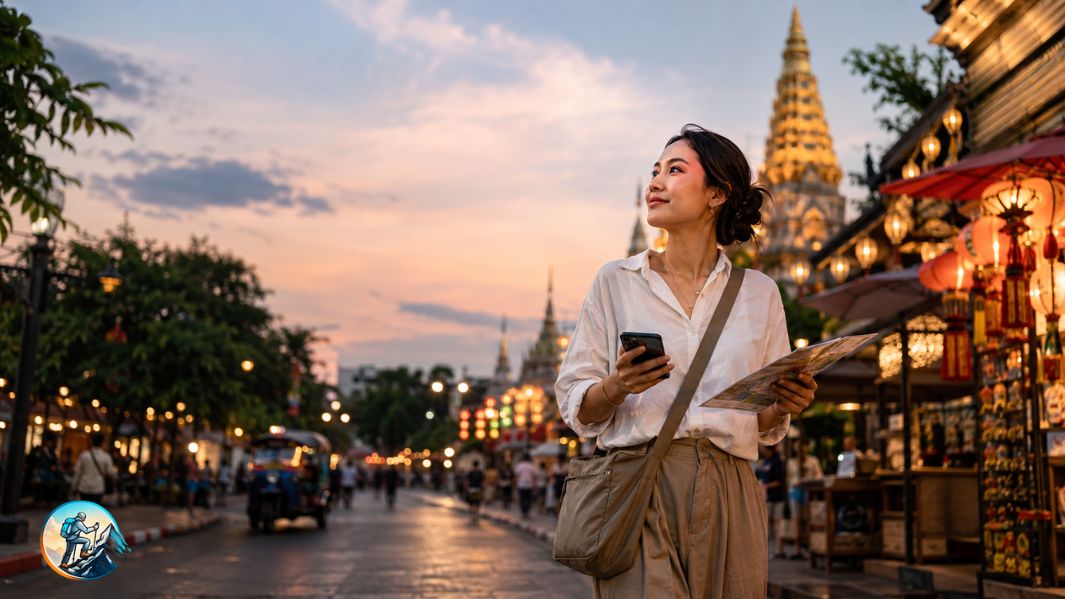
Thailand can feel easy for a woman traveling alone: transport is plentiful, tourist infrastructure is mature, and destinations such as Bangkok, Chiang Mai, Phuket and Krabi welcome independent visitors daily. The honest answer is yes: Thailand is generally suitable for solo female travel, provided you exercise sound judgment in unfamiliar surroundings. Official advice varies across governments, but it consistently highlights specific regions, road dangers, nightlife risks, theft, and scams rather than describing mainstream tourist areas as universally unsafe.
The Honest Answer: Is Thailand Safe For Solo Female Travellers?
Most women are more likely to face an inflated taxi fare, a dishonest rental claim, bag theft or an uncomfortable late-night situation than serious violence. Sensible planning can reduce many common problems. Keep cash and your phone secure, avoid isolated streets after dark, and never leave your passport with a scooter or jet-ski rental operator. Road danger, alcohol-fuelled nightlife and scams are the key risks, especially around major parties where crowds and unfamiliar transport create vulnerability. UK guidance warns that sexual assaults and unprovoked attacks can occur near bars and nightlife events, so arrange your journey home before drinking and stay connected to someone you trust.
Choosing Safer Places to Stay
Book your first night at a well-reviewed hotel, hostel, or guesthouse near reliable transport. Look for 24-hour reception, secure locks, lockers, good lighting and recent reviews. A female-only dorm can make a first solo trip feel less overwhelming, although a private room in a reputable property offers more privacy. Avoid choosing accommodation solely because it is cheap; saving a little is not worthwhile if the location leaves you reliant on dark lanes or unreliable transport.
Is Thailand Safe For Solo Female Travellers at Night?
Busy districts are often lively well into the evening, but “busy” does not mean risk-free. Use licensed taxis or a recognized ride-hailing app, confirm the driver’s registration number, sit in the back seat, and share your trip details. Do not accept unexpected lifts or tell casual acquaintances that nobody knows where you are staying. In bars, watch drinks being prepared, keep them in sight, and leave when a person or atmosphere feels wrong. Your instincts are information, not an inconvenience.
Transport Is the Biggest Everyday Risk
Road accidents deserve more attention than many travelers give them. Official Australian guidance identifies road crashes as a significant cause of injury and urges the use of helmets on motorcycles and motorcycle taxis. Unless you are properly licensed, experienced and insured, skip the scooter and use trains, ferries, transfers or cars. On overnight buses and trains, keep valuables attached to you rather than stored loosely while you sleep. When taking ferries, respect weather warnings and avoid operators that appear overcrowded or poorly maintained.
Scams, Money and Personal Boundaries
Common tourist traps often begin with excessive friendliness: a driver says an attraction is closed, someone recommends a “special” gem shop, or a rental company claims you caused damage. Photograph the rented equipment before use, agree on prices beforehand, and calmly decline pressure. Carry two payment methods, store backup cash separately, and use indoor or bank-affiliated ATMs. Travel insurance, including medical treatment and evacuation, is essential.
Current Regional Warnings Matter
Thailand is not one uniform risk zone. As of July 2026, official advisories warn of heightened danger near parts of the Thailand–Cambodia border due to armed conflict, while Yala, Pattani, and Narathiwat in the far south remain subject to increased caution due to unrest. These areas are not part of most first-time itineraries, but travelers should check current government advice before departure and during the trip.
Health, Heat and Cultural Awareness
Heat exhaustion, dehydration, mosquito-borne illness and stomach problems can disrupt a journey faster than crime. Health and weather risks deserve attention, so drink sealed water, use mosquito repellent, carry essential medication legally and choose food stalls with high turnover. During the wet season, heavy rain can affect roads, boats and local services. Dress respectfully at temples, remove shoes when required and avoid public arguments. Courtesy usually opens doors, while confrontation can escalate misunderstandings.
A Simple Solo Safety Routine
Send your itinerary and accommodation details to a trusted person, activate location sharing when traveling late, keep offline maps, and save emergency contacts. Thailand’s Tourist Police number is 1155; police can be reached on 191 and medical emergencies on 1669. A useful travel mantra is: “Courage is not traveling without fear; it is traveling with preparation.”
Thailand Rewards the Prepared Traveler
Solo travel in Thailand can be freeing, social and memorable. Preparation does not diminish adventure; it creates confidence to enjoy night markets, temples, beaches and mountain towns without feeling exposed. Choose reputable transport, protect your drinks and belongings, respect regional warnings, and trust your judgment. With practical boundaries and an adaptable plan, Thailand can become much more than a safe destination: the place where you discover your own capability.
You May Read Also: Above the Pacific: A Family Guide to Dinosaur Caves Park