
Blog
Coralline Reef: The Remarkable Underwater Ecosystem That Protects Marine Life

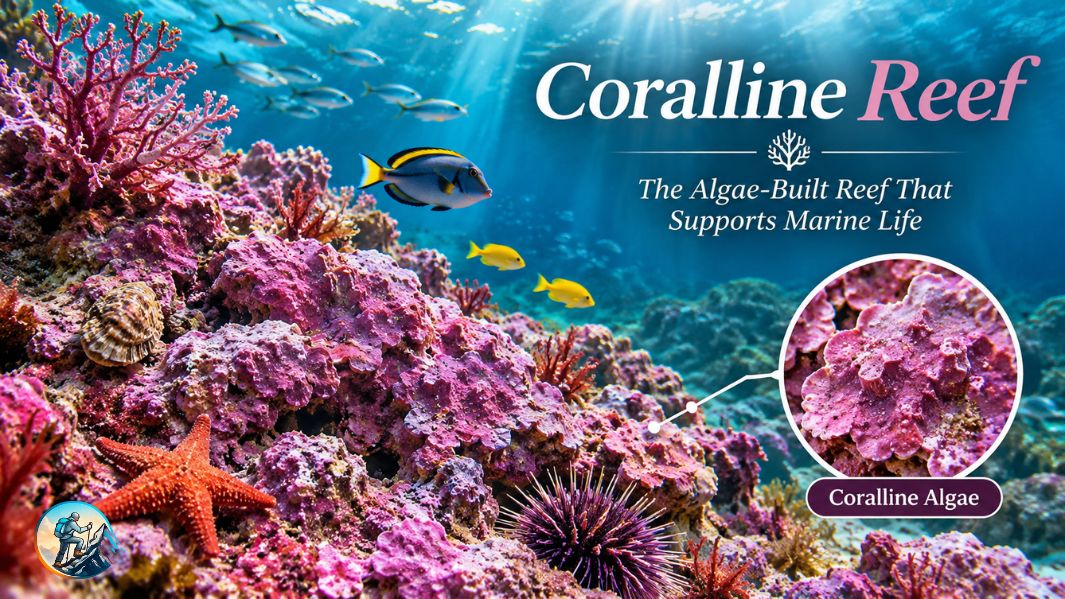
Beneath the ocean’s surface lies a fascinating natural environment shaped by organisms that rarely receive the attention given to colorful corals and tropical fish. The coralline reef is an important marine habitat associated with coralline algae, a group of calcifying red algae that can create and strengthen hard underwater structures. These remarkable organisms contribute to coral reef stability, provide living space for marine species, and help maintain the ecological balance of coastal environments. Although they may resemble ordinary rocks or patches of pink and purple coloring on the seabed, coralline algae perform essential functions in ocean ecosystems.
Unlike conventional coral reefs, which are primarily built by colonies of coral animals, coralline algal structures develop through the growth and accumulation of algae that contain calcium carbonate. Their formation depends on suitable environmental conditions, including available light, seawater chemistry, and stable underwater surfaces. Some coralline algae form hard crusts over existing reefs, while others create distinctive ridges, branching structures, and loose nodules that develop into extensive seabed habitats.
This article explores the formation, characteristics, ecological importance, biodiversity, environmental threats, and conservation of coralline reef habitats, explaining why these underwater ecosystems deserve greater attention.
What Is a Coralline Reef?
A coralline reef generally refers to a reef-like marine formation built or strongly influenced by coralline algae. The term can describe several related habitats rather than a single, universally defined reef category. Coralline algae belong to a diverse group of red seaweeds that deposit calcium carbonate within their cell walls, producing a hard, mineralized structure. This trait lets them survive in environments where softer algae might struggle and makes them important contributors to underwater geological formations.
Coralline algal habitats occur in tropical, temperate, and even colder marine environments. Their appearance varies according to species and growing conditions, but they commonly display shades of pink, purple, red, or lavender. Some form thin coatings on underwater rocks and coral skeletons, while others develop complex structures that shelter small marine organisms. Their biological importance extends beyond their physical appearance because they influence reef stability, marine biodiversity, habitat formation, and coral recruitment. Understanding these algae is therefore essential for understanding how many marine reef systems develop and remain ecologically functional.
How Coralline Reefs Are Formed
Coralline reef development involves gradual biological growth, mineral deposition, and interactions between organisms and their surroundings. Coralline algae absorb dissolved inorganic carbon from seawater and use calcium and carbonate chemistry to build mineralized structures. As individual algae grow, they may spread across rocks, dead coral, shells, and other suitable surfaces. Over time, repeated growth can strengthen existing structures or contribute to new reef-like formations.
One particularly important group is crustose coralline algae, which form tightly attached layers over underwater surfaces. These algae help bind loose reef materials together, reducing movement and strengthening the overall framework. In wave-exposed environments, certain coralline algae can form resistant ridges that help protect underlying reef habitats.
Not every coralline algal habitat develops into a continuous reef. Some species grow as unattached, rounded structures called rhodoliths, which may accumulate across the seabed to form extensive beds. Their development depends on factors such as water movement, sediment conditions, light availability, and the surrounding biological community. Because formation is generally gradual, established coralline habitats can take considerable time to recover from damage.
The Different Types of Coralline Algal Habitats
Coralline algae create several distinctive marine habitats, each possessing particular physical characteristics and ecological functions. Encrusting coralline algae grow directly across hard surfaces, forming dense mineralized coverings that strengthen rocks and coral frameworks. These are particularly important in tropical reef ecosystems, where they help consolidate the structure produced by reef-building corals.
Another group includes articulated coralline algae, which have flexible joints between calcified segments. Their branching forms provide additional living surfaces and shelter for small organisms. Although these algae add habitat complexity, they do not necessarily build substantial reef frameworks.
Rhodolith beds represent another significant habitat. Rhodoliths are unattached nodules composed largely or entirely of coralline algae and often resemble irregular pink stones. Where environmental conditions permit, they accumulate into extensive seabed communities that support numerous marine species. Related habitats are sometimes described as maerl beds, particularly in parts of the northeastern Atlantic.
These different forms demonstrate that coralline ecosystems are not limited to one shape or setting. Their diversity contributes to the wide ecological influence of calcifying red algae throughout the world’s oceans.
Why Coralline Reefs Are Important to Marine Ecosystems
Coralline reefs matter because they create, strengthen, and maintain habitats for many organisms. Coralline algae act as natural reef stabilizers, helping bind together fragments of coral skeletons and other hard materials. This process reduces the movement of loose structures and contributes to the physical durability of many coral reef systems.
Their role in coral reproduction is equally significant. Certain crustose coralline algae, together with microorganisms associated with their surfaces, can provide chemical cues that encourage coral larvae to settle. Once larvae attach to a suitable surface, they can develop into new coral colonies. The presence of appropriate coralline algae therefore influences the recovery and continued development of some coral reef communities.
These organisms also create additional surfaces for marine life to colonize. Small invertebrates, microorganisms, and other algae may inhabit the spaces around coralline structures. By supporting multiple biological processes, coralline algae help maintain underwater biodiversity, ecological connectivity, and reef resilience. Their contribution is often less visible than that of larger coral colonies, but it remains fundamental to many marine environments.
Marine Life Found Around Coralline Reef Habitats
Coralline reef habitats can support an impressive variety of marine organisms. Fish, mollusks, crustaceans, worms, echinoderms, and microorganisms may occupy these environments, depending on geographical location and water conditions. The irregular surfaces and spaces formed by calcified algae provide shelter from predators, feeding opportunities, and suitable locations for reproduction or juvenile development.
In rhodolith beds, the spaces between branching algal structures can function as small protective environments for young invertebrates and fishes. These habitats may support species that are less abundant on surrounding sandy seabeds. In tropical areas, crustose coralline algae frequently occur alongside stony corals, sea urchins, sponges, and numerous reef-associated organisms.
Grazing animals also influence these ecosystems. Certain fish and sea urchins remove fast-growing fleshy algae from underwater surfaces, potentially preventing them from overwhelming slower-growing coralline species. However, excessive grazing can damage coralline habitats, depending on the organisms and environmental conditions involved. This relationship shows that marine ecosystem balance depends on interactions among different species, not the actions of one organism alone.
Where Are Coralline Reefs Found?
Coralline algae have a broad global distribution, occurring in marine waters from tropical regions to high latitudes. They are especially prominent in habitats where sufficient light reaches the seabed, although the depth at which they can survive varies with species, water clarity, and local environmental conditions.
Tropical coral reef systems throughout the Pacific Ocean, Indian Ocean, and Caribbean Sea contain crustose coralline algae that contribute to reef consolidation and development. These organisms frequently grow along reef slopes, shallow rocky surfaces, and wave-exposed areas.
Temperate regions also contain extensive coralline habitats. Rhodolith and maerl beds occur in parts of the northeastern Atlantic, Mediterranean Sea, and other coastal waters. Some coralline algae grow in deeper, relatively low-light environments where conditions are suitable.
In the Gulf of Mexico, for example, coralline algal reefs and algal nodule habitats have been documented within the Flower Garden Banks National Marine Sanctuary. Their presence illustrates how coralline algae can create important underwater structures beyond the familiar shallow tropical reef environment.
Coralline Reef and Coral Reef: Understanding the Difference
The terms coralline reef and coral reef are closely connected but should not be treated as identical. Traditional coral reefs are primarily built by stony coral animals, which produce calcium carbonate skeletons as their colonies grow. These structures can develop into extensive reef systems that support thousands of interacting organisms.
Coralline algal formations, by contrast, are created or substantially influenced by calcifying red algae. Although these organisms are sometimes mistaken for corals because of their hard structures and colorful appearance, they are photosynthetic algae, not animals.
The two systems frequently overlap. Crustose coralline algae cover exposed surfaces within coral reefs, cement structural materials, and influence coral settlement. In certain high-energy marine environments, coralline algae themselves can become major builders of resistant reef formations.
This distinction is important because both groups contribute to marine ecosystem development in different ways. Corals create much of the prominent three-dimensional framework in tropical reefs, while coralline algae strengthen those structures and may also generate complex marine habitats independently.
Environmental Threats Facing Coralline Reefs
Despite their mineralized structures, coralline reefs are vulnerable to environmental changes and human disturbances. One major concern is ocean acidification, which occurs as seawater absorbs additional carbon dioxide from the atmosphere. This process alters seawater chemistry and can make it harder to build and maintain calcium carbonate structures.
Coralline algae are particularly sensitive because many produce mineral skeletons containing high-magnesium calcite, a form of calcium carbonate that can be vulnerable to dissolution under changing chemical conditions. The severity of effects varies by species and environment.
Rising ocean temperatures present another challenge. Prolonged warming can alter growth, reproduction, physiological performance, and the composition of coralline algal communities. Sedimentation, pollution, nutrient enrichment, and coastal development may further reduce habitat quality by limiting available light or encouraging the growth of competing algae.
Physical disturbance from destructive fishing practices, dredging, and other seabed activities can damage established rhodolith beds and other coralline habitats. Because many formations grow slowly, recovery after serious disturbance may be prolonged. Protecting these habitats therefore requires attention to both global climate pressures and local environmental conditions.
The Role of Coralline Algae in Reef Recovery
Coralline algae contribute to reef recovery by creating stable surfaces and supporting the settlement of certain marine organisms. Following physical disturbances or coral mortality, exposed hard surfaces may become colonized by different algae. Where suitable coralline species establish themselves, they can help consolidate loose material and provide habitat conditions favorable to the settlement of some coral larvae.
However, successful recovery depends on more than the presence of coralline algae. Water temperature, grazing pressure, pollution, sedimentation, coral larval supply, and surrounding ecosystem health all influence the outcome. Some coralline algal species encourage coral settlement more effectively than others, and particular algal communities may not provide the same ecological benefits.
This complexity makes coralline reef conservation an important component of broader marine restoration strategies. Protecting existing coralline communities may support natural recovery processes, while restoring appropriate environmental conditions can improve the opportunities for long-term habitat development.
How Scientists Study Coralline Reefs
Marine researchers use several methods to investigate coralline reefs and understand their ecological condition. Underwater photography, diving surveys, remotely operated vehicles, and seabed mapping allow scientists to document habitat distribution, structure, and associated biodiversity. These approaches are especially valuable in environments where direct observation is difficult.
Laboratory studies help researchers examine growth rates, mineral composition, reproductive biology, and responses to changing seawater conditions. Scientists may also analyze the chemical characteristics of coralline skeletons to investigate environmental influences over time.
Accurate identification can be challenging because different coralline algae sometimes look very similar. Microscopic examination and genetic analysis can help distinguish species that cannot reliably be separated by appearance alone.
Long-term monitoring is particularly important because changes in reef composition may occur gradually. By combining biological observations with measurements of temperature, acidity, water clarity, and physical disturbance, researchers can better understand how coralline habitats respond to environmental pressures.
Conservation and Protection of Coralline Reef Ecosystems
Protecting coralline reefs requires an approach that addresses marine habitat damage, pollution, biodiversity loss, and climate change. Marine protected areas can help reduce certain local pressures when they are appropriately designed, managed, and enforced. Restrictions on destructive seabed activities are particularly relevant to vulnerable rhodolith beds and other slowly developing coralline structures.
Improving coastal water quality is another essential measure. Reducing excess nutrients, sediment runoff, and chemical pollution can support healthier underwater conditions and limit the dominance of competing algae in some habitats.
Climate action also has an important role because reducing carbon dioxide emissions can help limit long-term warming and ocean acidification. These global measures complement local conservation programs rather than replacing them.
Scientists and conservation organizations increasingly recognize that coralline algae deserve attention alongside more familiar reef-building organisms. Mapping previously undocumented habitats, monitoring ecological change, and understanding species-specific vulnerabilities can improve conservation decisions.
Public awareness is equally valuable. Greater recognition of these understated marine ecosystems may encourage stronger environmental policies and more responsible human activities in sensitive coastal environments.
The Future of Coralline Reefs
The future of coralline reef ecosystems will depend on changing ocean conditions and the effectiveness of conservation measures. Continued warming, acidification, and habitat disturbance could alter the distribution and ecological performance of vulnerable coralline species. However, responses are unlikely to be uniform, as different species possess different environmental tolerances and biological characteristics.
Advances in genetic research, marine mapping, and experimental ecology are helping scientists better understand these differences. Research into habitat resilience may also reveal which environmental conditions allow particular coralline communities to persist despite increasing pressures.
Protecting existing habitats remains especially important because mature structures may represent many years of biological development. Their ecological value extends beyond individual algae to the diverse communities that depend on them.
Maintaining healthy coralline ecosystems will require sustained scientific observation, effective coastal management, and wider efforts to protect marine biodiversity.
Frequently Asked Questions About Coralline Reefs
1. What is a coralline reef made of?
A coralline reef is primarily associated with calcifying red algae that incorporate calcium carbonate into their cell walls. These organisms develop hardened structures that may form reef-like habitats or reinforce existing coral reefs.
2. Are coralline reefs the same as coral reefs?
No. Coral reefs are primarily formed by coral animals, while coralline algal reefs are built or strongly influenced by calcifying red algae. However, the two frequently occur together and contribute to the same marine ecosystems.
3. Why are coralline algae important for marine life?
Coralline algae help stabilize reef structures, create habitats for marine organisms, and provide suitable settlement conditions for certain coral larvae. They also contribute to underwater biodiversity.
4. What are the biggest threats to coralline reefs?
Major threats include ocean acidification, rising seawater temperatures, pollution, excessive sedimentation, destructive seabed activities, and changes in marine ecological balance.
5. Can coralline reef habitats recover after damage?
Some habitats can recover naturally when environmental conditions are favorable. However, recovery may be slow because many coralline algae grow gradually, and severe physical damage can disrupt established habitats for extended periods.
Conclusion
Coralline algae are an important component of marine biodiversity and underwater habitat development. Through their mineralized structures, coralline algae strengthen coral frameworks, create living spaces for marine organisms, and support ecological processes that help maintain healthy reef environments. Their presence across tropical and temperate oceans demonstrates their extensive influence on marine ecosystems.
Although these habitats are often overshadowed by colorful coral colonies, their contribution to reef stability, coral recruitment, and marine habitat diversity is substantial. Increasing environmental pressures, particularly ocean acidification, warming waters, and physical habitat disturbance, make their protection increasingly important.
Understanding coralline reef ecosystems offers a broader view of the complex relationships that support ocean life. Continued research, effective conservation, and responsible environmental management are essential for protecting these remarkable underwater habitats for future generations.

Internet Chicks Explained: The Surprising Truth Behind Digital Fame, Online Identity, and Internet Culture

Importpellet: The Essential Guide to Its Meaning, Websites, Wood Pellet Imports, and Benefits

Highit: Powerful IT Solutions for Smarter, Safer, and More Reliable Business Operations

amandeuce: The Fascinating Story Behind InflightXperience and Its Aviation Videos

Isabella Loggins: The Inspiring Life, Family Story, and Musical Legacy of Kenny Loggins’ Daughter

Lisselle Kayla: The Inspiring Life, Career and Remarkable Story of Naomie Harris’s Mother

Nicholas Cowell: The Remarkable Property Mogul Who Built His Own Successful Business Empire

Joss Winslet: The Fascinating Story of Kate Winslet’s Private Younger Brother

Bobby Horan: The Inspiring Story of Niall Horan’s Humble and Supportive Father

Riaze Foster: The Remarkable Life, Career and Untold Story of Idris Elba’s Eldest Son

How Dental Implant Quotes Are Built: A Practical Cost Guide for Maple Grove, Minnesota

Classroom 15x: The Ultimate Guide to Free Online Games, Features, Benefits, and Safe Gaming

Crackstube Explained: A Complete Guide to Its Features, Content, Safety, and Digital Publishing Platform

Jeremy Yaffe: The Remarkable Untold Story of Alan Arkin’s First Wife and Her Life Beyond Hollywood

ABS Testauslösung: Bedeutung, Funktion, häufige Fehler und wichtige Sicherheitstipps

Nippybox Explained: What Happened to the Popular File-Sharing Platform in 2026?
Provascin: A Complete Guide to Its Ingredients, Potential Benefits, Uses, and Safety

Pedal And Post Collapse: The Shocking Closure of Oxford’s Pioneering Green Delivery Company

icpfit: false Explained: Meaning, Common Causes, and Smart Ways to Fix ICP Fit Issues

HMJones.net Explained: A Complete Guide to Business Loans, Funding Options, and Smarter Financial Decisions
Internet Chicks Explained: The Surprising Truth Behind Digital Fame, Online Identity, and Internet Culture
Importpellet: The Essential Guide to Its Meaning, Websites, Wood Pellet Imports, and Benefits
Highit: Powerful IT Solutions for Smarter, Safer, and More Reliable Business Operations
amandeuce: The Fascinating Story Behind InflightXperience and Its Aviation Videos
Isabella Loggins: The Inspiring Life, Family Story, and Musical Legacy of Kenny Loggins’ Daughter
Lisselle Kayla: The Inspiring Life, Career and Remarkable Story of Naomie Harris’s Mother
Nicholas Cowell: The Remarkable Property Mogul Who Built His Own Successful Business Empire
Joss Winslet: The Fascinating Story of Kate Winslet’s Private Younger Brother
Bobby Horan: The Inspiring Story of Niall Horan’s Humble and Supportive Father
Riaze Foster: The Remarkable Life, Career and Untold Story of Idris Elba’s Eldest Son
-
 Destination Guides4 months ago
Beyond the Map: Discovering Haslhof in Italy and Bavaria
-
 Blog3 months ago
Beyond the Cages: How an Artificial Zoo Could Redefine Wildlife Travel
-
 Health2 weeks ago
How Dental Implant Quotes Are Built: A Practical Cost Guide for Maple Grove, Minnesota
-
 Adventure Travel1 month ago
Everest Base Camp Trek vs Manaslu Circuit Trek: Routes, Difficulty, Costs, Altitude and Mountain Experience