
Sports
Martin O’Neill: The Remarkable Career, Major Achievements and Inspiring Celtic Comeback

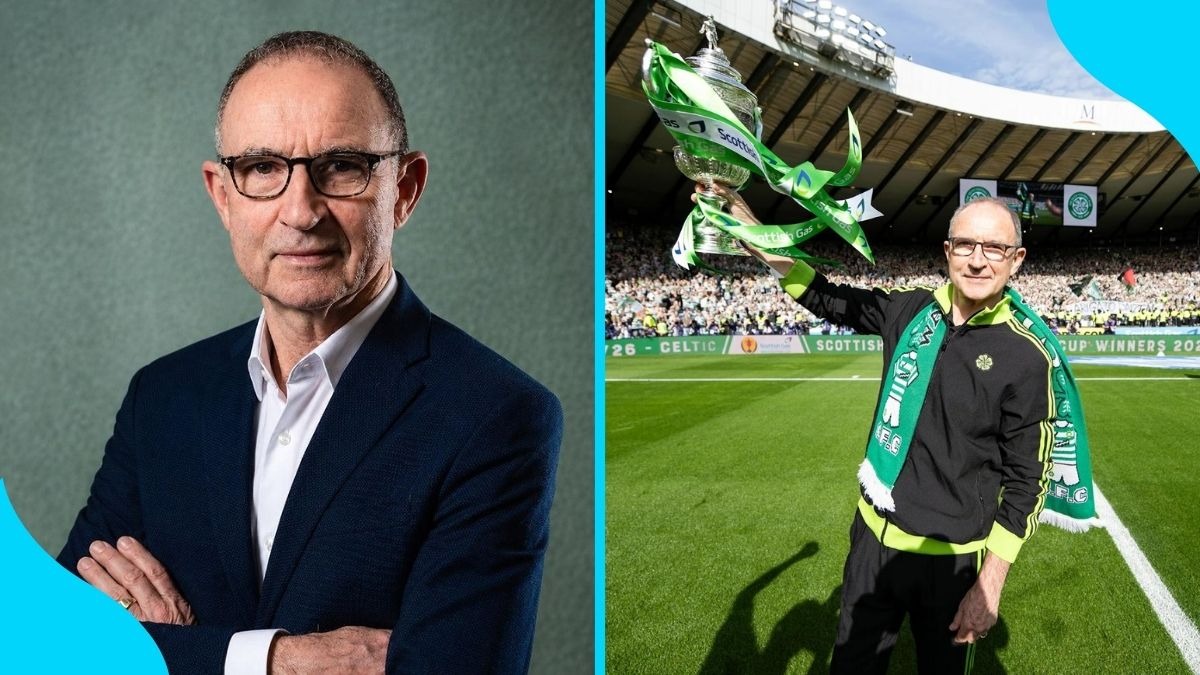
Martin O’Neill is one of the most respected figures in British and Irish football, having built an extraordinary career as both a professional player and a successful manager. Born in Northern Ireland, he gained international recognition with Nottingham Forest, represented his country at the FIFA World Cup, and later became a prominent manager. His leadership, competitive personality, and ability to guide teams through challenging periods have shaped a decades-long career. Although many supporters remember his outstanding achievements during his first spell at Celtic, his dramatic return to the Scottish club in 2025 introduced another remarkable chapter in his football story. At 74, O’Neill secured a domestic league and Scottish Cup double in 2026 before accepting a permanent managerial contract for the following season.
This article explores Martin O’Neill’s early life, playing career, managerial achievements, Celtic comeback, leadership style, and lasting influence on professional football.
Martin O’Neill Quick Bio
- Full Name: Martin Hugh Michael O’Neill
- Date of Birth: March 1, 1952
- Age: 74 years (as of October 2026)
- Birthplace: Kilrea, Northern Ireland
- Nationality: Northern Irish
- Profession: Football Manager and Former Professional Footballer
- Playing Position: Midfielder
- Current Club: Celtic F.C.
- International Team: Northern Ireland
- International Appearances: 64
- Notable Playing Club: Nottingham Forest
- Major Honor: Officer of the Order of the British Empire (OBE)
- Known For: European Cup Success, Celtic Trophies, and International Football Management
Early Life and Football Beginnings
Martin Hugh Michael O’Neill was born on March 1, 1952, in Kilrea, County Londonderry, Northern Ireland. Growing up in a community with a strong sporting tradition, he developed an interest in football during his childhood. His sporting background also included Gaelic football, a popular Irish game that demands athleticism, coordination, and tactical awareness. These early experiences shaped his development before he began pursuing opportunities in association football. O’Neill attended St Malachy’s College in Belfast and showed considerable sporting ability. His early football experience included playing for Rosario and later Distillery, where his performances attracted attention. In 1971, he scored twice for Distillery in their Irish Cup final victory, a milestone in his development. Later that year, he joined Nottingham Forest, beginning the English football career that would eventually bring him major European honors.
Nottingham Forest and His Successful Playing Career
Joining Nottingham Forest in 1971 became a defining moment in Martin O’Neill’s career. Initially, he was a young midfielder attempting to establish himself in competitive English football. His most successful years came after Brian Clough became Nottingham Forest’s manager in 1975. Under Clough, O’Neill became part of a team that grew from a Second Division side into one of Europe’s most successful clubs. Forest gained promotion to the First Division in 1977 and won the English league championship in the 1977–78 season, an extraordinary achievement for a newly promoted team. The club then won the European Cup in 1979 and defended it in 1980. O’Neill contributed to this historic period, experiencing the demands of elite European competition and learning from a manager renowned for his distinctive approach to football. His years at Forest helped establish his reputation as a determined, intelligent midfielder and gave him experiences that would later influence his managerial career.
International Career With Northern Ireland
Alongside his club achievements, Martin O’Neill represented Northern Ireland internationally, earning 64 senior appearances between 1971 and 1984. His international career included one of the country’s most memorable football achievements: participation in the 1982 FIFA World Cup in Spain. O’Neill captained Northern Ireland during that tournament, demonstrating the leadership qualities that would become an important part of his professional identity. Northern Ireland produced a historic 1–0 victory over the hosts, Spain, and progressed beyond the opening group stage. That performance remains an important moment in the country’s international football history. Facing strong opponents at a major tournament gave O’Neill valuable experience in high-pressure competition, team organization, and the responsibilities of captaincy. His international service strengthened his standing in Northern Irish football and contributed to his reputation as a player who understood the significance of representing a national team.
The Beginning of His Football Management Career
After retiring from professional football, Martin O’Neill began developing a second career in management. His early managerial appointments included Grantham Town, Shepshed Charterhouse, and Wycombe Wanderers, where he gained experience organizing teams, developing players, and managing the daily responsibilities of competitive football. His spell at Wycombe Wanderers proved particularly important. O’Neill guided the club to promotion to the Football League for the first time in its history, securing promotion from the Football Conference in 1993. He then achieved another promotion in 1994, taking Wycombe into the third tier of English football. These achievements attracted attention from higher-level clubs and demonstrated his ability to build competitive teams without the financial resources of established top-flight sides. His success at Wycombe laid the foundation for the managerial opportunities that followed.
Leicester City and His Rise in English Football
Martin O’Neill became Leicester City manager in December 1995 after a brief spell at Norwich City. He arrived during a difficult period, but his management eventually transformed Leicester into a competitive Premier League club. He guided the team to promotion through the First Division play-offs in 1996, providing the foundation for several successful seasons. Under his leadership, Leicester won the Football League Cup in 1997 and 2000 and reached the 1999 final. These achievements were particularly impressive because Leicester operated against clubs with significantly greater financial strength and larger squads. O’Neill built a reputation for assembling organized, hardworking teams that could compete effectively against more established opponents. His years at Leicester also showed his ability to build strong relationships with players, set clear tactical expectations, and build confidence through collective performances. By the time he left in 2000, he was among the most highly regarded managers in English football.
Martin O’Neill’s First Successful Spell at Celtic
In 2000, Martin O’Neill took over as manager of Celtic Football Club, beginning one of the most successful periods of his career. His first season produced an exceptional achievement as Celtic won the Scottish Premier League, Scottish Cup, and Scottish League Cup, completing a domestic treble in 2001. It was the club’s first treble in 32 years and represented a significant turning point. O’Neill later guided Celtic to additional league titles in 2002 and 2004, strengthening the team’s position in Scottish football. His squad included prominent players such as Henrik Larsson, Chris Sutton, Neil Lennon, and Stiliyan Petrov, who contributed to a period remembered for its determination and attacking quality. Across his first five seasons, Celtic collected seven major domestic trophies under O’Neill. His 2005 departure ended a period of considerable success and helped restore the club’s prominence in European competition.
The Historic 2003 UEFA Cup Final
One of the most memorable achievements of Martin O’Neill’s first Celtic spell was guiding the club to the 2003 UEFA Cup final in Seville, Spain. Celtic’s journey included important victories against established European opponents, including Liverpool, before reaching the final against Porto. The match became a dramatic contest, with Celtic eventually losing 3–2 after extra time. Despite the defeat, the run was a major achievement, as Celtic reached their first European final since 1970. Henrik Larsson scored both of Celtic’s goals in the final, reflecting his importance to O’Neill’s team throughout that period. The campaign also demonstrated Celtic’s ability to compete internationally under his leadership. For many supporters, the journey to Seville remains a defining memory of O’Neill’s management, representing ambition, competitive spirit, and strong performances against experienced European opposition.
Aston Villa, Sunderland and Republic of Ireland Management
After leaving Celtic, Martin O’Neill returned to English football when he became Aston Villa manager in 2006. Over his four seasons at Villa Park, he guided the club to three consecutive sixth-place finishes in the Premier League and a 2010 Football League Cup final appearance. His work helped establish Villa as a competitive top-flight side during that period. He later managed Sunderland between 2011 and 2013, taking responsibility for another demanding Premier League assignment. In November 2013, O’Neill became manager of the Republic of Ireland national team, beginning an important international chapter. Under his leadership, Ireland qualified for UEFA Euro 2016, reaching the round of 16 before losing to host nation France. He ended his international tenure in 2018, then briefly returned to Nottingham Forest as manager in 2019. These positions demonstrated the breadth of his managerial experience across domestic leagues and international competitions.
The Remarkable Return to Celtic in 2025 and 2026
Martin O’Neill’s return to Celtic in October 2025 marked an unexpected development in his long managerial career. After Brendan Rodgers left, Celtic appointed him on an interim basis to provide experienced leadership during a difficult period. He initially stepped aside when Wilfried Nancy was appointed, but returned in January 2026 after Nancy’s departure. What followed was an impressive revival that ended with Celtic winning both the Scottish Premiership and Scottish Cup. Celtic secured the league title with a dramatic final-day win over Hearts, then completed the double by defeating Dunfermline Athletic in the Scottish Cup final. On June 11, 2026, the club confirmed O’Neill’s permanent appointment on a one-year contract with an option for a further season.
Leadership Style and Lasting Football Legacy
Throughout his managerial career, Martin O’Neill has been recognized for his motivational ability, competitive approach, and emphasis on strong team organization. His achievements at Leicester City, Celtic, and at the international level demonstrate his ability to work with different squads and respond to demanding circumstances. Although Celtic struggled in the opening months of the 2026–27 season, O’Neill reaffirmed his commitment to the club in October 2026. His career reflects the value of experience, adaptability, and sustained leadership in professional football.
Conclusion
Martin O’Neill has established an outstanding football legacy through his achievements as a European Cup-winning player and successful manager. From representing Northern Ireland at the World Cup to winning major trophies with Celtic and Leicester City, his career has included remarkable sporting milestones. His return to Celtic and the 2026 domestic double added another memorable chapter to that story. His influence remains closely connected with the clubs, players, and supporters who have experienced his leadership over several decades.
Frequently Asked Questions About Martin O’Neill
1. How old is Martin O’Neill in 2026?
Martin O’Neill is 74 years old as of October 2026. He was born on March 1, 1952, in Kilrea, Northern Ireland.
Which football club does Martin O’Neill currently manage?
Martin O’Neill manages Celtic F.C. He signed a permanent one-year managerial contract in June 2026, with an option for an additional year.
What major trophies did Martin O’Neill win as a player?
He was part of Nottingham Forest’s successful team that won the English league championship and consecutive European Cups in 1979 and 1980.
How many Scottish league titles has Martin O’Neill won with Celtic?
Martin O’Neill has won four Scottish top-flight league titles as Celtic manager, including three during his first spell and another in 2026.
Did Martin O’Neill manage the Republic of Ireland?
Yes. Martin O’Neill managed the Republic of Ireland national football team from 2013 to 2018 and guided the country to UEFA Euro 2016, where Ireland reached the round of 16.
You May Read Also: Billie Henry: The Remarkable Life, Family Story and Private World of Dawn French’s Daughter

Top 6 Companies to Book Vietnam Tour Packages

Claire Nicholson: The Remarkable Story of Les Dennis’s Wife, Career and Family Life

Ronald Henry Brand: The Surprising Family Story of Russell Brand’s Father

John Britton: The Fascinating Story of Connie Britton’s First Husband, Career and Private Life

Play Blooket: The Ultimate Guide to Fun Learning, Game Codes, and Winning Strategies

Blooket Play: The Ultimate Guide to Fun Learning, Joining Games, and Winning Strategies

Gabrielle Haaland: The Remarkable Life of Erling Haaland’s Sister and Viral World Cup Sensation

Aidan Keane: The Remarkable Story of Roy Keane’s Son, His Wedding, Wife and Family Life

Theresa Doyle: The Inspiring Story of Roy Keane’s Wife, Marriage, and Private Family Life

Charlotte Searle: The Remarkable Story of Brendan Rodgers’ Wife, Her Career and Family Life

Everest Base Camp Trek vs Manaslu Circuit Trek: Routes, Difficulty, Costs, Altitude and Mountain Experience

Classroom 15x: The Ultimate Guide to Free Online Games, Features, Benefits, and Safe Gaming

How Dental Implant Quotes Are Built: A Practical Cost Guide for Maple Grove, Minnesota

Crackstube Explained: A Complete Guide to Its Features, Content, Safety, and Digital Publishing Platform

Startup Booted Fundraising Strategy: A Powerful Guide to Smart Funding and Sustainable Business Growth

Jeremy Yaffe: The Remarkable Untold Story of Alan Arkin’s First Wife and Her Life Beyond Hollywood

Provascin: A Complete Guide to Its Ingredients, Potential Benefits, Uses, and Safety

HMJones.net Explained: A Complete Guide to Business Loans, Funding Options, and Smarter Financial Decisions

ABS Testauslösung: Bedeutung, Funktion, häufige Fehler und wichtige Sicherheitstipps

Pedal And Post Collapse: The Shocking Closure of Oxford’s Pioneering Green Delivery Company
Top 6 Companies to Book Vietnam Tour Packages
Claire Nicholson: The Remarkable Story of Les Dennis’s Wife, Career and Family Life
Ronald Henry Brand: The Surprising Family Story of Russell Brand’s Father
John Britton: The Fascinating Story of Connie Britton’s First Husband, Career and Private Life
Play Blooket: The Ultimate Guide to Fun Learning, Game Codes, and Winning Strategies
Blooket Play: The Ultimate Guide to Fun Learning, Joining Games, and Winning Strategies
Gabrielle Haaland: The Remarkable Life of Erling Haaland’s Sister and Viral World Cup Sensation
Aidan Keane: The Remarkable Story of Roy Keane’s Son, His Wedding, Wife and Family Life
Theresa Doyle: The Inspiring Story of Roy Keane’s Wife, Marriage, and Private Family Life
Charlotte Searle: The Remarkable Story of Brendan Rodgers’ Wife, Her Career and Family Life
-
 Blog3 months ago
Beyond the Cages: How an Artificial Zoo Could Redefine Wildlife Travel
-
 Destination Guides3 months ago
Beyond the Map: Discovering Haslhof in Italy and Bavaria
-
Adventure Travel4 weeks ago
Everest Base Camp Trek vs Manaslu Circuit Trek: Routes, Difficulty, Costs, Altitude and Mountain Experience
-
 Entertainment3 weeks ago
Classroom 15x: The Ultimate Guide to Free Online Games, Features, Benefits, and Safe Gaming