
Travel
Why Travelers Want Voice-to-Voice Translation Tools More Than Ever

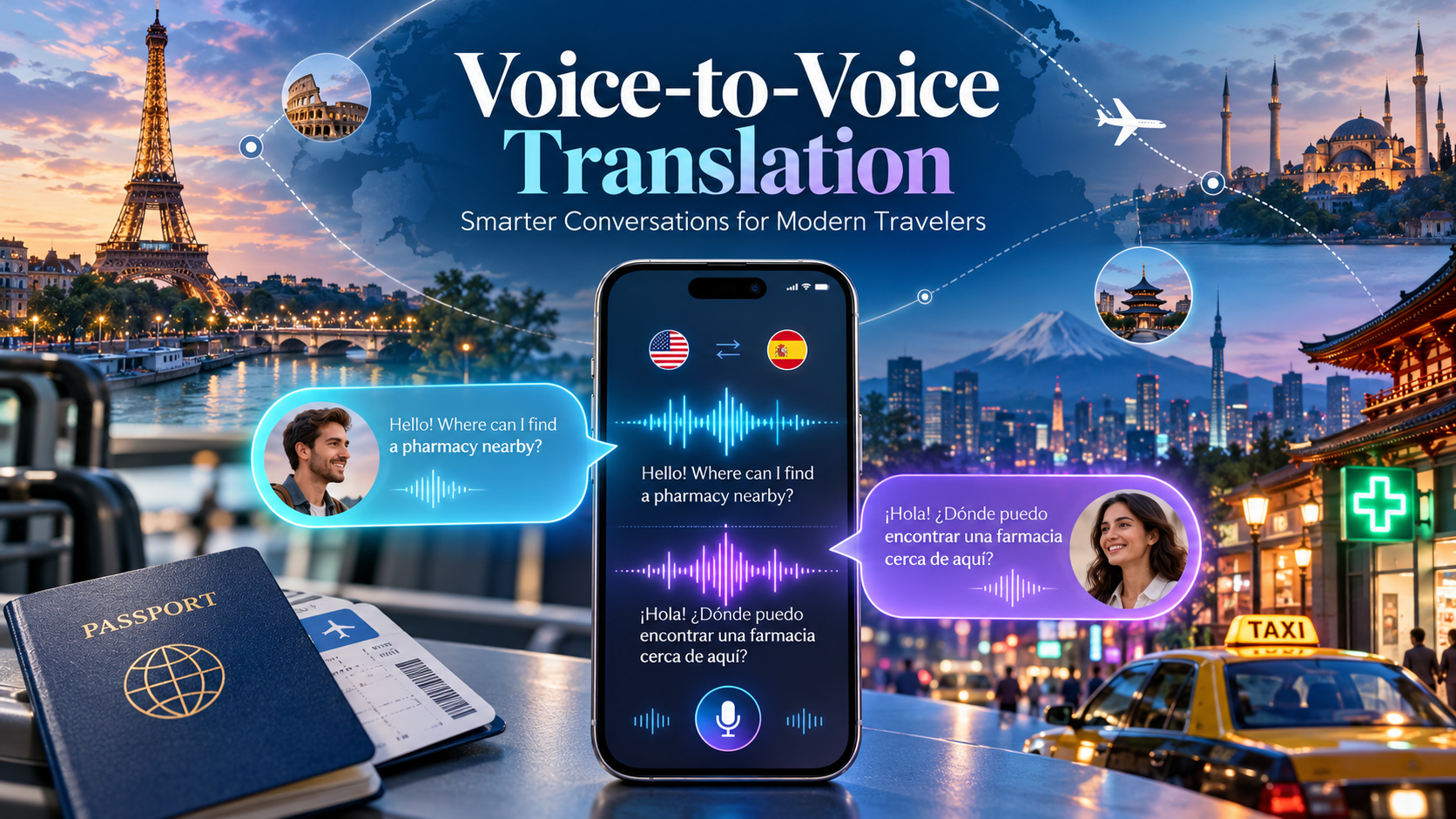
A trip rarely goes wrong at the airport. It goes wrong at a pharmacy counter in Osaka at 11pm, in the back of a taxi outside Lisbon when the driver asks a question nobody can answer, or at a family dinner in rural Georgia where the host keeps offering something and the guest keeps smiling. Voice-to-voice translation has moved from a novelty into the one tool travelers now check before they leave, and the reason has less to do with technology than with the small moments that decide how a journey feels.
What Voice-to-Voice Translation Actually Does on a Trip
Most travelers already carry a translation app. The older generation of them works on text: you type, the screen shows the other language, and both people lean over a phone reading in silence. Real-time speech translation changes the shape of that exchange. You speak normally, and the tool speaks the translation aloud in the other person’s language. They answer, and their reply comes back in yours.
The difference sounds small on paper and feels enormous in a doorway or a market stall. Nobody passes a phone back and forth. Nobody waits while somebody else types with wet hands. The conversation keeps its rhythm, and the person you are speaking with stays a person rather than a reader.
These tools are software rather than gadgets. An AI voice translator runs on the phone or laptop already in your bag, which matters when luggage space and budget are both finite. Some of them carry the original speaker’s tone into the translated audio, so a warm question still arrives as a warm question instead of a flat machine reading.
Where Travelers Feel the Language Gap Most
Guidebooks prepare you for menus and museums. The gap shows up somewhere else entirely.
Pharmacies and walk-in clinics come first, where a traveler needs to describe a symptom accurately and understand a dosage correctly. Transport comes next, especially outside major cities, where a driver may need to confirm a route change or explain that a road is closed. Markets and small shops follow, where bargaining, sizing, and ingredients all live in rapid local speech. Then come the administrative moments nobody plans for: a lost passport, a question at a border desk, a police report for a stolen bag.
Business travelers hit a different version of it. A supplier factory tour, a site visit, or a dinner with a regional distributor often happens entirely in the host’s language, with a single overworked colleague interpreting in fragments. The traveler leaves with a polite summary and no real sense of what anyone actually said.
The Moments Text Translation Cannot Rescue
Typing fails in the exact situations that matter most. Hands are full of luggage. It is raining. An elderly shopkeeper has no interest in holding a stranger’s phone. Somebody is speaking quickly in a regional accent, and a reply is needed within two seconds rather than 2 minutes. Travel translation apps built around a keyboard quietly assume a calm room and a free hand, and travel supplies neither.
What Makes a Travel Translation Tool Worth Carrying
Not every app that advertises voice support delivers a usable conversation. A few things separate the ones travelers keep from the ones they delete at the first airport.
- Spoken output in both directions: The tool should speak the translation aloud, not merely transcribe it. Check that it handles replies coming back as well as questions going out.
- Honest language coverage: Vendors often advertise the number of languages they can display as captions, which runs far higher than the number they can actually speak. Confirm your destination language appears on the spoken list.
- Speed over polish: A translation that arrives 10 seconds late has already lost the moment. Short, quick, slightly imperfect output beats a beautiful sentence delivered after the shop has closed.
- Tone and politeness levels: Japanese, Korean, and several South Asian languages carry formality built into the grammar. A tool that lets you ask for a polite register saves a traveler from sounding unintentionally rude to a host or an official.
- Behavior on weak connections: Rural roads, ferries, and old stone buildings all break mobile data. Know in advance what the app does when the signal drops.
- Battery and offline planning: Translation runs hard on a phone. Travelers who rely on a single device for maps, tickets, payments, and translation should carry a power bank and treat it as essential gear.
Common Mistakes Travelers Make With Translation Apps
The first mistake is downloading an app at the departure gate and trusting it blindly. Test it at home with a friend who speaks the language, or at minimum run it against a video in that language and check whether the output makes sense.
The second is treating machine translation as reliable for anything legal or medical. It handles directions, menus, prices, and ordinary conversation well. Serious medical consultations, contracts, and formal statements still need a professional interpreter, and a traveler who understands that boundary avoids a genuinely expensive misunderstanding.
The third mistake is letting the tool replace basic courtesy. Learning hello, thank you, please, and sorry in the local language costs an evening and changes how every interaction begins. The app should carry the complicated part of a conversation while the traveler still carries the manners.
I believe the best travelers use these tools to start conversations rather than to avoid them. A phone that handles the difficult sentence often gives somebody the confidence to attempt the easy ones unaided, and that is where the actual travel happens.
The Future of Travel Feels Like a Conversation
Translation technology has spent years solving the written word while travel kept happening out loud. That gap is closing. Modern voice-to-voice translation tools now speak translations aloud across 100+ languages and can carry the speaker’s own voice into the translated audio, which turns a transaction back into an exchange between two people.
A Czech proverb holds that you live a new life for every new language you speak. Software will never deliver that life in full. What it can do is remove the wall that stops a traveler from asking the second question, the one that turns a direction into a recommendation and a shopkeeper into a conversation worth remembering.
Pack the power bank, learn the greetings, and let the tool handle the rest. The journeys people describe years later rarely involve the monuments. They involve somebody who took the time to explain something, and the traveler who found a way to understand it.

Samara Zane: The Remarkable Story of Lorraine Toussaint’s Daughter, Family Life and Background

Beau Laughlin: The Remarkable Career, Marriage, and Inspiring Success Story of Lindsey Gort’s Husband

Michael Rabe: The Remarkable Journey of Lily Rabe’s Talented Brother and Playwright

Sulina Frost: A Closer Look at Adam Frost’s Wife, Family Life and Business Career

Sam Handel: Inside His Creative Career, Family Life, and Marriage to Lauren Ambrose

Naples travel guide: discover art, history and panoramic views

Jake Moritt: The Inspiring Story of Krista Allen’s Son, His Acting Career and Life in Hollywood

Park & Fly Long Term Parking: How to Book Early and Travel With Less Stress

Which Wildlife Trips in India Actually Suit You?

Bilieter Explained: The Surprising Meaning, Digital Ticketing Connection, and Complete Guide

Everest Base Camp Trek vs Manaslu Circuit Trek: Routes, Difficulty, Costs, Altitude and Mountain Experience

Classroom 15x: The Ultimate Guide to Free Online Games, Features, Benefits, and Safe Gaming
Crackstube Explained: A Complete Guide to Its Features, Content, Safety, and Digital Publishing Platform

Startup Booted Fundraising Strategy: A Powerful Guide to Smart Funding and Sustainable Business Growth

Provascin: A Complete Guide to Its Ingredients, Potential Benefits, Uses, and Safety

HMJones.net Explained: A Complete Guide to Business Loans, Funding Options, and Smarter Financial Decisions

Jeremy Yaffe: The Remarkable Untold Story of Alan Arkin’s First Wife and Her Life Beyond Hollywood

How Dental Implant Quotes Are Built: A Practical Cost Guide for Maple Grove, Minnesota

ABS Testauslösung: Bedeutung, Funktion, häufige Fehler und wichtige Sicherheitstipps

Pedal And Post Collapse: The Shocking Closure of Oxford’s Pioneering Green Delivery Company
Samara Zane: The Remarkable Story of Lorraine Toussaint’s Daughter, Family Life and Background
Beau Laughlin: The Remarkable Career, Marriage, and Inspiring Success Story of Lindsey Gort’s Husband
Michael Rabe: The Remarkable Journey of Lily Rabe’s Talented Brother and Playwright
Sulina Frost: A Closer Look at Adam Frost’s Wife, Family Life and Business Career
Sam Handel: Inside His Creative Career, Family Life, and Marriage to Lauren Ambrose
Naples travel guide: discover art, history and panoramic views
Jake Moritt: The Inspiring Story of Krista Allen’s Son, His Acting Career and Life in Hollywood
Park & Fly Long Term Parking: How to Book Early and Travel With Less Stress
Which Wildlife Trips in India Actually Suit You?
Bilieter Explained: The Surprising Meaning, Digital Ticketing Connection, and Complete Guide
-
 Blog3 months ago
Beyond the Cages: How an Artificial Zoo Could Redefine Wildlife Travel
-
 Destination Guides3 months ago
Beyond the Map: Discovering Haslhof in Italy and Bavaria
-
Adventure Travel3 weeks ago
Everest Base Camp Trek vs Manaslu Circuit Trek: Routes, Difficulty, Costs, Altitude and Mountain Experience
-
 Entertainment2 weeks ago
Classroom 15x: The Ultimate Guide to Free Online Games, Features, Benefits, and Safe Gaming