
Technology
Jposting: The Powerful Recruitment Technology Transforming Modern Hiring

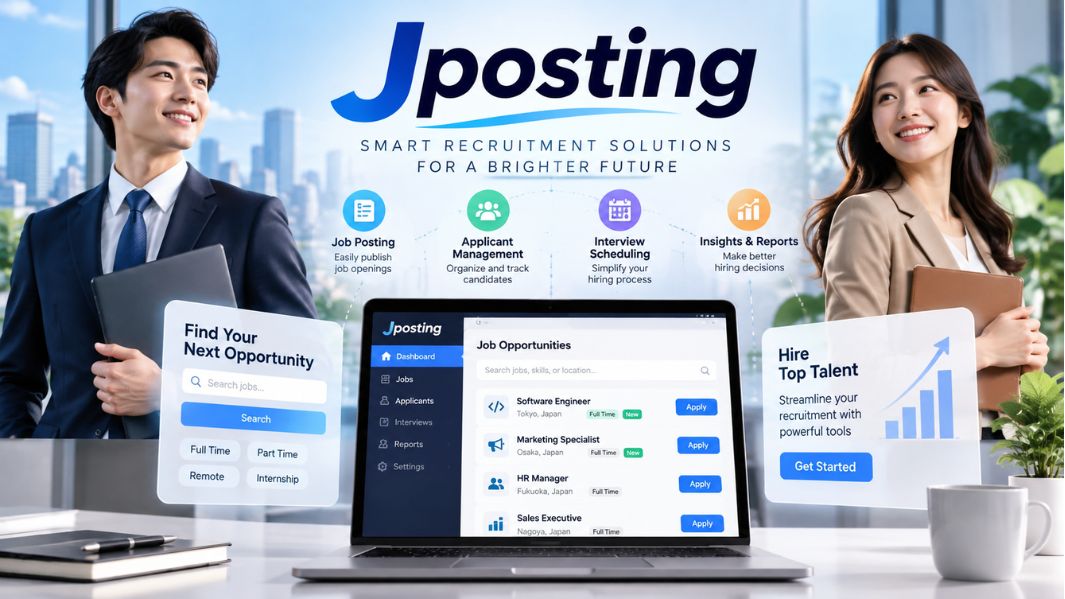
Finding the right employee has become increasingly challenging for businesses, while job seekers often struggle with complicated applications and lengthy recruitment procedures. Digital hiring technology has changed how companies advertise vacancies, collect applications, evaluate candidates, and communicate throughout the selection process. Jposting is a name associated with this transformation, particularly within Japan’s recruitment technology industry. Its history is connected to systems designed to simplify hiring administration and organize applicant information more effectively.
Unlike a traditional employment website that primarily displays available positions, Jposting has historical connections to recruitment management software that supports the hiring process behind the scenes. These systems help employers coordinate applications from different sources, organize interviews, and maintain recruitment records. Understanding this technology helps both organizations exploring digital recruitment solutions and individuals encountering unfamiliar application portals while searching for employment.
This article explains Jposting’s meaning, background, features, benefits, limitations, and practical importance in modern recruitment.
What Is Jposting?
Jposting is most clearly associated with JPOSTING, the name historically used by Japan Job Posting Service, a Japanese company specializing in recruitment management technology. The business developed solutions to help employers organize hiring activities, particularly through applicant tracking and recruitment administration systems.
The term can be confusing because it resembles the everyday expression “job posting,” which describes advertising employment opportunities. However, the documented JPOSTING business was connected to a much broader process than publishing vacancies. Its recruitment technology helped organizations manage applications, selection processes, and communication among hiring participants.
People may also use the spelling informally when discussing online job advertisements, although this is not a standardized industry definition. In a Japanese recruitment context, its historical connection to applicant tracking systems (ATS) and JobSuite technology is especially relevant.
The History and Background of Jposting
Jposting’s history is closely tied to the development of Japanese human resources technology. Japan Job Posting Service established its position in recruitment management with software designed to help companies receive and process employment applications.
An important development occurred in December 2017, when Japanese technology company NSD acquired Japan Job Posting Service as a subsidiary. In October 2018, Japan Job Posting Service and NM Systems merged, with the combined business operating under the name StellaS.
The corporate structure subsequently evolved. In April 2026, StellaS was renamed NSD Digital Solutions, continuing its association with human resources technology and the JobSuite product family.
These changes matter because older recruitment materials may use the JPOSTING or StellaS names, while newer product information identifies NSD Digital Solutions. Understanding this history helps readers distinguish between a historical business name, an active software product, and an individual employer’s application website.
How Jposting Recruitment Technology Works
Jposting’s recruitment management technology follows a structured process that begins when an employer creates or publishes an employment opportunity. Candidates may discover the vacancy through a company’s careers page, recruitment agency, or external employment platform. Once an application is submitted, the associated software helps the employer collect and organize the candidate’s information.
The next stage involves reviewing qualifications, evaluating experience, coordinating interviews, and updating application statuses. Instead of maintaining separate spreadsheets, email conversations, and disconnected records, a centralized system gives hiring staff a more organized view of recruitment activities.
JobSuite CAREER offers applicant aggregation, selection management, interview coordination, reporting, and connections with other recruitment services. The exact experience depends on the employer’s configuration and the functions being used.
Importantly, the software manages administrative processes; it does not guarantee employment or independently determine that every applicant is suitable.
Important Features of Jposting-Related Recruitment Systems
Centralized Applicant Management
One of the most valuable functions of modern recruitment software is organizing candidate information in one place. Employers often receive applications from company websites, job ads, and recruitment agencies. Managing these sources separately can create duplicated records and inconsistent information.
JobSuite CAREER supports centralized applicant management, letting recruitment teams review applications and track candidate progress. Its documented functions include identifying potentially duplicate applications and importing information from supported sources.
Interview Coordination and Candidate Communication
Recruitment often involves multiple people, including HR representatives, department managers, and interviewers. Without organized communication, arranging interviews and recording decisions can become unnecessarily complicated.
Recruitment management tools support scheduling activities, collecting evaluation feedback, and communicating with candidates. JobSuite CAREER also provides functionality for departmental users involved in selection decisions. When implemented effectively, these capabilities can reduce administrative effort.
Recruitment Reporting and Analysis
Hiring decisions become easier to evaluate when organizations understand how their recruitment processes perform. Modern systems can help teams examine application sources, candidate progression, and selection outcomes.
Recruitment analytics can reveal operational problems, such as lengthy interview processes or unusually high withdrawal rates. However, accurate interpretation remains essential because numerical reports alone cannot explain every candidate’s circumstances.
Jposting vs. Traditional Job Posting Websites
A traditional job board primarily helps employers promote vacancies and allows job seekers to discover opportunities. A recruitment management system performs a different function by organizing applications and coordinating hiring activities after a candidate expresses interest.
For example, a company might advertise an engineering position through several employment channels. Candidates apply through those channels or through the employer’s careers website. An applicant tracking system then helps recruitment staff bring relevant information together and monitor the selection process.
This distinction explains why Jposting-related technology should not automatically be described as a universal job marketplace. Its documented history is tied to recruitment infrastructure and employer-facing software.
Benefits of Jposting for Employers
Organizations using structured recruitment management technology can benefit from better coordination, especially when managing multiple vacancies at once. Centralized records let authorized hiring staff review relevant applications without repeatedly searching email inboxes or manually combining spreadsheets.
Another potential advantage is greater consistency. When recruiters follow defined selection stages, organizations can establish clearer responsibilities and maintain better records of hiring decisions. This becomes particularly important in larger companies where different departments participate in recruitment.
Automation and system integrations may also reduce repetitive administrative work. Nevertheless, efficient recruitment depends on more than purchasing software. Employers must establish appropriate hiring criteria, train staff, protect applicant information, and maintain respectful communication with candidates.
Benefits for Job Seekers
For job seekers, online recruitment systems offer a more convenient way to submit job applications. Depending on the employer’s setup, candidates may enter their personal information, upload resumes, and answer required application questions without submitting physical documents.
A well-designed application process can make vacancies easier to understand and help employers collect the information needed for selection. Standardized forms may also reduce confusion when candidates apply for different positions within an organization.
However, not every recruitment portal offers the same features. Some offer application-status information, while others rely on separate email communication. Applicants should follow the employer’s instructions rather than assume every Jposting-related page works the same way.
Is Jposting Safe and Legitimate?
The historical JPOSTING business has a documented corporate background, and JobSuite CAREER is an established recruitment management product. This provides a basis for recognizing the name within Japan’s human resources software industry.
However, a legitimate product name does not automatically prove that every website, advertisement, or recruitment message displaying that name is genuine.
Job seekers should confirm the opportunity on the employer’s official recruitment website, carefully review the application address, and avoid sending unnecessary sensitive documents. Requests for unusual upfront payments, passwords, or banking credentials should be treated as warning signs.
Applicant data protection matters because recruitment systems process personal information, employment histories, contact details, and supporting documents. Employers should evaluate security practices, privacy policies, access permissions, and data retention arrangements before adopting any hiring platform.
Challenges and Limitations of Digital Recruitment Systems
Although recruitment technology offers practical advantages, successful implementation requires careful planning. Employers may struggle to transfer existing candidate records, integrate different software products, or introduce unfamiliar procedures to hiring managers.
There is also a risk of making recruitment unnecessarily complicated. Long application forms, unclear instructions, and excessive automated communication can discourage qualified candidates.
Organizations must remember that a recruitment system should support human judgment rather than replace it. Candidates possess abilities and experiences that may not be fully represented by application forms or standardized selection criteria.
For this reason, responsible hiring technology should combine administrative efficiency with fairness, accessibility, transparent communication, and appropriate human oversight.
How Employers Can Choose the Right Recruitment System
Businesses considering recruitment management software should begin by examining their actual hiring requirements. A company recruiting a small number of employees may need different capabilities from an organization managing hundreds of applications across multiple departments.
Key considerations include application volume, user accessibility, reporting needs, security requirements, integration options, and available administrative support.
Employers evaluating JobSuite CAREER should review its currently supported functions and determine whether they match existing recruitment procedures. Features such as applicant aggregation, selection tracking, and communication tools may be valuable, but their usefulness depends on the organization’s needs.
A successful implementation should also include staff training, clear responsibilities, and measurable recruitment goals.
The Future of Jposting and Digital Hiring
The broader recruitment technology industry continues to evolve as businesses seek more coordinated and accessible hiring experiences. Automated administration, improved reporting, and integration across employment services will likely remain key areas of development.
Artificial intelligence may increasingly support certain recruitment tasks, but its use also raises questions about fairness, transparency, and accountability. Employers must consider how automated tools influence decisions and whether applicants receive appropriate opportunities for human review.
The continuing relevance of the JPOSTING history lies in its connection to organized digital hiring workflows. Although corporate names and software capabilities have changed, the underlying need remains the same: helping employers manage recruitment effectively while providing applicants with a professional experience.
Conclusion
Jposting represents an important name in the history of Japanese recruitment technology, particularly through its association with Japan Job Posting Service and the JobSuite family of human resources solutions. Its significance extends beyond publishing vacancies to the systems that organize candidate information, coordinate selection processes, and support recruitment administration.
The transition from Japan Job Posting Service to StellaS and then to NSD Digital Solutions shows how the business evolved while continuing to serve the human resources technology market.
For employers, the central lesson is that effective recruitment management requires reliable systems, clear processes, and responsible handling of applicant information. For job seekers, understanding these platforms makes unfamiliar online application experiences easier to navigate.
Ultimately, recruitment technology delivers the greatest value when it improves efficiency without sacrificing fairness, security, or meaningful human communication.
(FAQs)
1. What is Jposting used for?
Jposting is historically associated with Japanese recruitment management technology. Related systems help employers collect applications, organize applicant information, coordinate interviews, and manage selection procedures. The term may also be used informally when discussing job vacancy postings.
2. Is Jposting a job search website?
Jposting should not automatically be considered a conventional job board. The documented JPOSTING business was associated with recruitment management software. Candidates may encounter related technology when applying for positions through individual employers’ recruitment websites.
3. Who owns Jposting-related recruitment technology today?
Japan Job Posting Service merged into StellaS in October 2018. StellaS was renamed NSD Digital Solutions in April 2026. The JobSuite family of recruitment and human resources products is associated with NSD Digital Solutions.
4. What are the main advantages of Jposting-related systems?
The main advantages include centralized applicant records, improved hiring coordination, tracking of selection progress, and reduced repetitive administrative work. Actual benefits depend on the employer’s recruitment processes, staff training, and software configuration.
5. Can job seekers trust a Jposting application page?
The JPOSTING name has a legitimate corporate history, but applicants should independently verify each recruitment website. Check the employer’s official careers page, review privacy notices, and avoid suspicious payment requests.

Julie Hallam: The Untold Story of Jeremy Irons’ First Wife and Her Acting Career

Alizeh Keshvar Davis Jarrahy: The Remarkable Story of Geena Davis’s Daughter Who Inspired Change in Hollywood

Michael Ciminella: The Remarkable Life of Ashley Judd’s Father and Naomi Judd’s First Husband

Methatreams Explained: The Surprising Truth About Free Sports Streaming, Safety, and Legal Alternatives

Debra Bollman: The Remarkable True Story Behind Her Viral Nigel Hayes Moment

sosoactive: The Surprising Evolution of a Digital Media Platform and Its Online Influence

Atlanta Hawks vs Celtics Match Player Stats: Stunning 112–102 Victory and Complete Game Analysis

Milwaukee Bucks vs Lakers Match Player Stats: Thrilling 105–101 Result, Top Performers and Full Analysis

Atlanta Falcons vs 49ers Match Player Stats: Stunning McCaffrey Performance and Complete Game Breakdown

Tamil Students Association: The Powerful Role of Culture, Community, and Student Success

Everest Base Camp Trek vs Manaslu Circuit Trek: Routes, Difficulty, Costs, Altitude and Mountain Experience

Classroom 15x: The Ultimate Guide to Free Online Games, Features, Benefits, and Safe Gaming

Crackstube Explained: A Complete Guide to Its Features, Content, Safety, and Digital Publishing Platform

Provascin: A Complete Guide to Its Ingredients, Potential Benefits, Uses, and Safety

ABS Testauslösung: Bedeutung, Funktion, häufige Fehler und wichtige Sicherheitstipps

HMJones.net Explained: A Complete Guide to Business Loans, Funding Options, and Smarter Financial Decisions

Startup Booted Fundraising Strategy: A Powerful Guide to Smart Funding and Sustainable Business Growth

Pedal And Post Collapse: The Shocking Closure of Oxford’s Pioneering Green Delivery Company

Glorvix Com About Us: The Essential Guide to Its Services, Mission, and Company Background

Sajar Plastics Inc: The Remarkable Story Behind Its Advanced Plastic Manufacturing Technology
Julie Hallam: The Untold Story of Jeremy Irons’ First Wife and Her Acting Career
Alizeh Keshvar Davis Jarrahy: The Remarkable Story of Geena Davis’s Daughter Who Inspired Change in Hollywood
Michael Ciminella: The Remarkable Life of Ashley Judd’s Father and Naomi Judd’s First Husband
Methatreams Explained: The Surprising Truth About Free Sports Streaming, Safety, and Legal Alternatives
Debra Bollman: The Remarkable True Story Behind Her Viral Nigel Hayes Moment
sosoactive: The Surprising Evolution of a Digital Media Platform and Its Online Influence
Atlanta Hawks vs Celtics Match Player Stats: Stunning 112–102 Victory and Complete Game Analysis
Milwaukee Bucks vs Lakers Match Player Stats: Thrilling 105–101 Result, Top Performers and Full Analysis
Atlanta Falcons vs 49ers Match Player Stats: Stunning McCaffrey Performance and Complete Game Breakdown
Tamil Students Association: The Powerful Role of Culture, Community, and Student Success
-
 Blog3 months ago
Beyond the Cages: How an Artificial Zoo Could Redefine Wildlife Travel
-
 Destination Guides3 months ago
Beyond the Map: Discovering Haslhof in Italy and Bavaria
-
Adventure Travel3 weeks ago
Everest Base Camp Trek vs Manaslu Circuit Trek: Routes, Difficulty, Costs, Altitude and Mountain Experience
-
 Entertainment2 weeks ago
Classroom 15x: The Ultimate Guide to Free Online Games, Features, Benefits, and Safe Gaming