

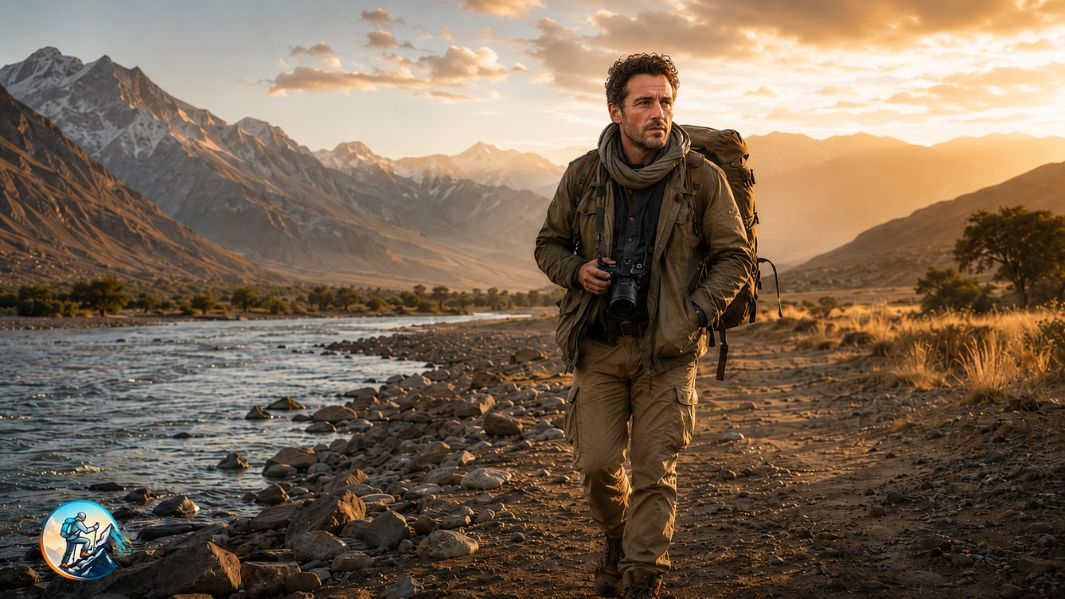
Adventure television often celebrates speed, danger, and scenery, but Levison Wood built his reputation by slowing down. The British explorer, author, photographer, and documentary maker travels on foot because walking removes barriers. It places him beside the farmers, guides, and families whose lives shape each route. Born in Staffordshire on 5 May 1982, Wood served in the British Army before turning long-distance exploration into human-centered travel storytelling.
This article explores how his expeditions transformed adventure journalism, what travelers can learn from his methods, and how to approach ambitious journeys with patience, preparation, and respect.
Why Levison Wood Walks Through the World
Wood became known after walking the length of the Nile, a journey of roughly 4,250 miles over nine months. He later crossed the Himalayas on foot, traveled through Central America, journeyed across the Caucasus, circumnavigated the Arabian Peninsula, and followed elephant migration routes through Botswana. These expeditions were severe, yet distance alone is not what made them memorable. Their strength came from conversations, hospitality, uncertainty, and cultural encounters between landmarks.
Walking changes the rhythm of a journey. A vehicle can carry someone through a region without creating meaningful contact, while traveling slowly makes weather, terrain, food, language, and local assistance impossible to ignore. Wood’s documentaries show that slow travel is not a trend. It is a practical way to understand how landscapes influence communities and borders affect ordinary people.
It also forces the traveler to accept discomfort and dependence. Meals may be basic, plans may change, and progress may rely on strangers. That vulnerability can create deeper respect, provided the visitor remains humble and does not treat local hardship as entertainment. The purpose is understanding, not collecting cheap dramatic stories.
What Levison Wood Teaches Travelers About Connection
The clearest lesson from Wood’s work is simple: arrive with curiosity rather than assumptions. His programs often enter places audiences associate with conflict or danger, yet the camera finds generosity, humor, resilience, and routine. That does not mean ignoring risks. It means refusing to reduce a country to its worst headlines.
For everyday travelers, this approach begins with small choices. Learn basic greetings, ask before photographing people, use local guides when appropriate, and leave time for unplanned conversations. A tightly controlled schedule may cover attractions, but it often produces fewer memories. Someone offering directions, tea, or shelter may reveal more about a destination than its most photographed monument.
Planning an Expedition Without Copying the Danger
Wood’s journeys are professionally researched and supported, so travelers should not imitate their hazardous parts without comparable experience. A responsible adventure plan starts with route research, seasonal weather, border requirements, health guidance, communications, insurance, and realistic daily distances. Remote travel also demands backup plans. A closed crossing, injury, extreme heat, or transport cancellation can turn confidence into vulnerability.
Divide the route into stages and identify food, water, accommodation, medical help, and exit points for each. Share the itinerary with a contact and establish check-in times. Carry navigation tools, but never rely on one phone or battery. Most importantly, recognize when turning back is intelligent. Courage is not stubbornness; sometimes it is changing the plan before conditions become unmanageable.
From Military Discipline to Empathetic Storytelling
Wood’s army background gave him experience with logistics, pressure, and difficult environments, but his public work is strongest when discipline supports empathy. His photography and writing focus on people in remote communities, borderlands, wildlife regions, and places affected by instability. This combination of endurance and observation lets the audience experience an expedition as more than a personal test.
Sir Ranulph Fiennes described him as “a great adventurer and a wonderful storyteller.” Storytelling matters because distances become empty statistics unless readers understand the lives encountered along the way. Wood turns geography into something personal: a river becomes a livelihood, a mountain pass becomes a cultural boundary, and a desert road becomes a meeting place.
How to Travel More Like an Explorer
Traveling like an explorer does not require crossing a continent. It requires attention. Choose one neighborhood and walk it carefully. Follow a river path through your city. Visit a market early, speak with independent shopkeepers, or take a slower train instead of the fastest connection. Keep a notebook and record sounds, conversations, smells, frustrations, and unexpected kindness. These details train the mind to notice rather than simply consume a destination.
My favorite idea in Wood’s approach is that adventure begins when certainty loosens its grip. Good preparation creates safety, but overplanning can remove discovery. Leave space for the road to surprise you.
Conclusion: The Journey Is Really About People
Levison Wood has helped redefine exploration for a modern audience. His expeditions are vast, but their emotional power comes from individual encounters. He reminds travelers that the world is not a collection of backdrops; it is a network of human lives, histories, and responsibilities.
The next meaningful adventure may be thousands of miles away or just beyond your usual route. Walk slowly, prepare carefully, listen generously, and let curiosity lead. The map can show where to go, but people give the journey its meaning.
You May Read Also: From Finance to Freedom: How Kiersten Rich Redefined Solo Female Travel