
Technology
Midasit: Transforming Modern Engineering Through Advanced Structural Design Software

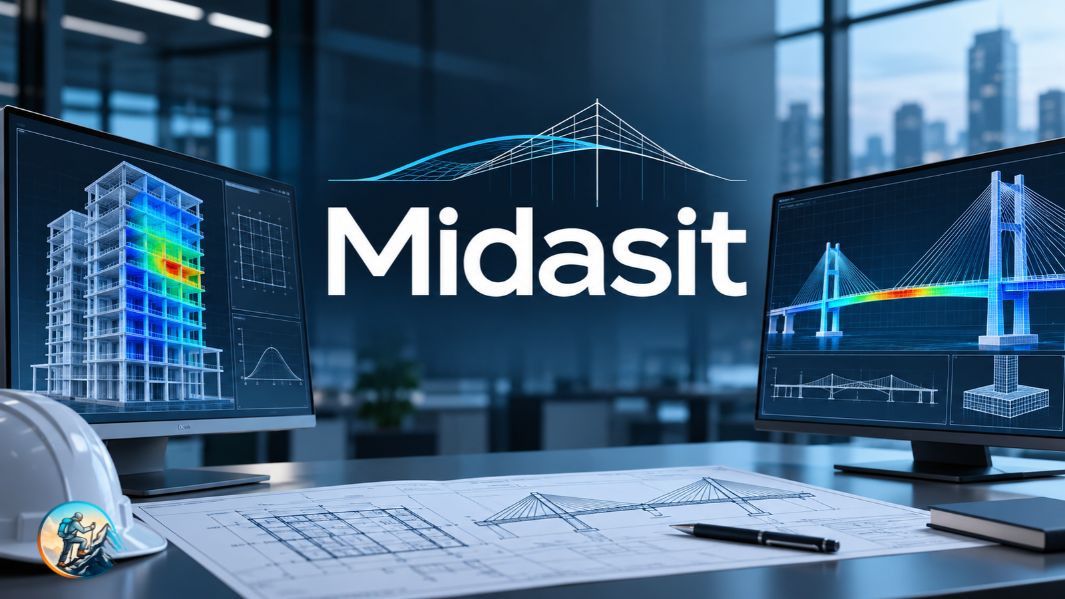
Modern engineering depends on accurate calculations, reliable structural analysis, and the ability to understand how buildings and infrastructure will behave under different conditions. Midasit, formerly MIDAS Information Technology Co., Ltd. (MIDAS IT), is a South Korean engineering software company that develops specialized solutions for structural, civil, geotechnical, and mechanical engineering.
The company provides software applications that help engineers build mathematical models, analyze structural behavior, evaluate loading conditions, and prepare technical designs. Its products serve professionals working on buildings, bridges, tunnels, foundations, and other engineering structures.
Midasit is particularly relevant because it brings sophisticated numerical analysis into practical engineering workflows. Rather than relying entirely on simplified calculations, engineers can use its software to examine complex structural systems, compare design alternatives, and identify potential engineering problems before construction begins.
What Is Midasit?
Midasit is an engineering technology company specializing in software development, structural analysis, and professional engineering solutions. Its software portfolio is designed to support technical work across several branches of engineering, particularly projects that require detailed structural modeling and numerical simulation.
The company develops tools based on established engineering principles, including the finite element method (FEM). This computational approach divides a complex structure or physical system into smaller elements that can be evaluated mathematically. Engineers can then study how the complete structure responds to applied forces, changing material properties, and environmental conditions.
Midasit products are not limited to drawing structures or producing three-dimensional models. Their central purpose is to help engineering professionals understand structural behavior and make technically informed design decisions. This distinction matters especially for infrastructure projects, where dependable analysis and careful verification are essential.
The History and Development of Midasit
The origins of Midasit can be traced to engineering software development activities that began in 1989 within South Korea’s POSCO Group. MIDAS Information Technology Co., Ltd. was formally established in September 2000, following the earlier development and commercial use of MIDAS engineering solutions.
As the company developed its software portfolio, it expanded beyond South Korea into international engineering markets. Its corporate history records overseas activities involving the United States, Japan, China, and other countries, reflecting the growing international reach of its engineering technology.
A significant part of this development involved creating specialized tools for different engineering disciplines. Software initially associated with structural analysis expanded into applications for bridge design, geotechnical engineering, mechanical analysis, and integrated modeling.
This progression illustrates how Midasit developed from an engineering software initiative into an international provider of technical applications. Its continued development has also involved improving graphical interfaces, expanding analysis functions, and supporting newer engineering design methods.
Major Engineering Software Products Developed by Midasit
Midasit is best understood through its engineering software portfolio. Different applications address different engineering problems, allowing professionals to choose tools that match a project’s technical requirements.
MIDAS CIVIL NX for Bridge Engineering
MIDAS CIVIL NX is a specialized structural analysis and design application associated with bridge engineering and civil infrastructure. Engineers can use it to model structures, define material properties, apply loads, and examine structural responses under different conditions.
One notable capability is construction-stage analysis. Bridges do not necessarily experience their most critical structural conditions only after completion. During construction, temporary supports, changing geometry, prestressing operations, and the sequence of load application can significantly influence structural behavior.
MIDAS CIVIL NX allows engineers to represent different construction stages and evaluate changes in forces, displacements, and boundary conditions. Its capabilities also extend to analyses involving dynamic loading, seismic effects, and specialized bridge configurations.
MIDAS GEN and GEN NX for Building Structures
MIDAS GEN is associated with structural analysis and design for buildings and other structural systems. It supports engineering work involving steel structures, reinforced concrete, dynamic response, and advanced structural assessment.
Its capabilities are relevant to projects where engineers must investigate the effects of gravity loads, lateral forces, and other structural actions. Seismic analysis is another important application because buildings in earthquake-prone regions require careful examination of their response to ground motion.
MIDAS GEN NX extends this product family with an updated working environment and features including advanced analysis, design standards, and integration capabilities. These functions help engineers manage detailed structural models while maintaining control over technical assumptions and results.
MIDAS GTS NX for Geotechnical Engineering
Geotechnical engineering involves understanding how soil, rock, and underground structures behave under different physical conditions. MIDAS GTS NX is a finite-element-based application developed for two-dimensional and three-dimensional geotechnical analysis.
Its applications include tunnel excavation, slope stability, underground construction, retaining structures, and foundation-related problems. These projects often require engineers to investigate interactions between the ground and the structures supported by or built within it.
By representing soil properties, ground conditions, and construction activities, engineers can use GTS NX to examine possible deformation and stress distributions. However, reliable results depend on appropriate ground investigation, suitable material models, and carefully selected input parameters.
MIDAS CIM for Infrastructure Modeling
MIDAS CIM focuses on three-dimensional information modeling for civil infrastructure, particularly bridge projects. It supports creating detailed models that represent the geometry and components of engineering structures.
An important aspect of CIM is its relationship with other MIDAS applications. Models can contribute to connected workflows involving structural analysis, design development, and technical documentation.
This approach is valuable because geometric information and engineering analysis are closely related. Better coordination between these activities can reduce unnecessary repetition and help engineering teams maintain consistency as a design develops.
MIDAS nGEN for Integrated Building Design
MIDAS nGEN is another application within the company’s building engineering portfolio. It combines structural modeling, analysis, design, and drawing-related processes within an integrated environment.
The software is intended to help engineers manage common building design activities, particularly those involving reinforced concrete structures. Its capabilities include processing structural information and generating design-related documentation.
For engineering practices handling repeated design tasks, integrated applications can improve workflow consistency. Nevertheless, generated calculations and drawings still require professional review to ensure they meet relevant project requirements.
How Midasit Software Supports Engineering Workflows
A typical engineering analysis begins with a representation of the structure being investigated. Engineers define the geometry, material properties, supports, connections, and expected loading conditions. These inputs form the basis of a numerical model.
MidasIT applications provide environments to develop and analyze these models. Once the necessary information is entered, the software applies mathematical procedures to calculate responses such as displacement, internal forces, stress, and deformation.
The engineer then interprets these results in the context of the project’s design criteria. If the analysis indicates that certain components experience excessive deformation or fail to meet relevant requirements, the design may need to be modified.
This is an iterative process. Structural dimensions, materials, support conditions, and other design characteristics may be revised before analysis is repeated.
The software helps perform calculations, but the engineer remains responsible for determining whether the model accurately represents the real structure.
Why Finite Element Analysis Matters
One of the important technical foundations behind many Midasit products is finite element analysis, commonly abbreviated as FEA.
Complex engineering structures cannot always be represented accurately using elementary calculations. Irregular geometry, complex support arrangements, nonlinear material behavior, and interactions between structural components may require more advanced computational methods.
Finite element analysis provides a framework for examining such problems through numerical approximation. Engineers divide a model into elements and use mathematical relationships to calculate its response under specified conditions.
This technique is widely relevant to structural and geotechnical engineering. It can help investigate localized stresses, deformation patterns, material interactions, and the behavior of complex structural assemblies.
Although FEA is powerful, results are not automatically correct. Mesh quality, boundary conditions, modeling assumptions, and material properties all influence the reliability of the analysis.
The Benefits and Limitations of Midasit
A major advantage of Midasit software is its specialization in engineering analysis. Rather than offering only general-purpose modeling functions, several applications address specific engineering disciplines and technical problems.
For bridge engineers, construction sequence modeling can provide information that simplified final-stage analysis may overlook. Building engineers can use advanced analysis tools to investigate structural behavior under complex loading conditions. Geotechnical engineers can examine ground deformation and soil-structure interaction through numerical modeling.
Another benefit is the availability of related applications for different engineering activities. Where supported, connected workflows can make it easier to move relevant model information between design and analysis processes.
These advantages must be considered alongside practical limitations. Specialized software requires technical training, accurate input information, and a clear understanding of engineering principles.
Consider software licensing, computing requirements, version compatibility, and support for applicable design codes. Engineers should confirm these details for the particular product and version they intend to use.
Most importantly, no engineering software can eliminate uncertainty from incomplete site information or incorrect assumptions.
Who Uses Midasit Software?
Midasit products are relevant to several professional groups within the architecture, engineering, and construction industry.
Structural engineers may use building analysis applications to investigate reinforced concrete and steel structures. Bridge engineers can apply specialized modeling and analysis tools to assess infrastructure under traffic, environmental, and construction-related actions.
Geotechnical engineers may use numerical simulation to evaluate excavation behavior, underground structures, slope stability, and ground interaction.
Engineering consultancies, infrastructure organizations, research institutions, and educational users may also benefit from software that supports advanced analysis and technical learning.
The best application depends on the engineering discipline, project complexity, and required calculations. Choosing a suitable tool is therefore a technical decision, not simply a matter of selecting the software with the most features.
Midasit and the Development of Digital Engineering
Engineering design has increasingly adopted connected digital workflows, detailed numerical models, and automated procedures for repetitive calculations and documentation.
MidasIT supports this development with products that enable structural modeling, computational analysis, and integration across engineering activities.
Features such as application programming interfaces, model conversion, and connected analysis environments can help engineering teams develop more consistent technical processes.
These developments do not replace professional engineering judgment. Instead, their value lies in allowing qualified engineers to investigate complicated problems, evaluate more design alternatives, and document their decisions more effectively.
The continued development of MIDAS software reflects the wider movement toward combining traditional engineering knowledge with increasingly capable computational tools.
Conclusion
Midas has established a significant presence in specialized engineering software, with applications addressing structural design, bridge engineering, geotechnical analysis, and infrastructure modeling.
Its development from engineering software activities beginning in 1989 to an internationally operating company demonstrates the continuing importance of computational tools in modern engineering practice.
Products such as MIDAS CIVIL NX, MIDAS GEN NX, MIDAS GTS NX, MIDAS CIM, and MIDAS nGEN provide different capabilities for modeling structures, examining physical behavior, and supporting technical design.
Their value ultimately depends on how effectively they are used. Accurate engineering analysis requires reliable data, sound assumptions, appropriate calculations, and qualified professional review.
For engineers working on complex buildings and infrastructure, Midasit represents an established collection of specialized tools that can support informed decisions throughout the engineering design process.

Midasit: Transforming Modern Engineering Through Advanced Structural Design Software

Celia Walden: The Remarkable Life, Journalism Career, Books and Marriage to Piers Morgan

Elena Ora: The Influential Creative Director and Manager Behind Rita Ora’s Global Success

Rhoda Walker: The Remarkable Life, Family Background and Influence of Graham Norton’s Mother

Katherine Mirren: The Untold Family Story, Teaching Career and Life of Helen Mirren’s Older Sister

Sandra Georgina West: The Remarkable Life, Family, and Influence of David Beckham’s Mother

Jackie Adams: The Inspiring Life, Family Background, and Influence Behind Victoria Beckham

How Much Mobile Data Do You Need in Japan for 7 or 14 Days?

Ciulioneros: The Truth Behind Its Meaning, Origins, History, and Growing Online Mystery

Zooville Explained: Understanding the Controversial Online Forum, Its Risks, and Digital Safety Concerns

Ronald Henry Brand: The Surprising Family Story of Russell Brand’s Father

Custom Wordle: The Ultimate Guide to Creating Fun and Challenging Word Puzzles

Aidan Keane: The Remarkable Story of Roy Keane’s Son, His Wedding, Wife and Family Life

Accessible Login Experiences: A Practical Checklist For Clearer, Safer Forms

Charlotte Searle: The Remarkable Story of Brendan Rodgers’ Wife, Her Career and Family Life

Park & Fly Long Term Parking: How to Book Early and Travel With Less Stress

Why Travelers Want Voice-to-Voice Translation Tools More Than Ever

Waste Bear Soulframe: Complete Quest Guide, Boss Fight Tips, and Bromius Pact Rewards

Blazertje: The Ultimate Guide to Effortless Style, Modern Fashion, and Everyday Elegance

Antarvafna: A Powerful Guide to Inner Awareness, Self-Discovery, and Emotional Balance
Midasit: Transforming Modern Engineering Through Advanced Structural Design Software
Celia Walden: The Remarkable Life, Journalism Career, Books and Marriage to Piers Morgan
Elena Ora: The Influential Creative Director and Manager Behind Rita Ora’s Global Success
Rhoda Walker: The Remarkable Life, Family Background and Influence of Graham Norton’s Mother
Katherine Mirren: The Untold Family Story, Teaching Career and Life of Helen Mirren’s Older Sister
Sandra Georgina West: The Remarkable Life, Family, and Influence of David Beckham’s Mother
Jackie Adams: The Inspiring Life, Family Background, and Influence Behind Victoria Beckham
How Much Mobile Data Do You Need in Japan for 7 or 14 Days?
Ciulioneros: The Truth Behind Its Meaning, Origins, History, and Growing Online Mystery
Zooville Explained: Understanding the Controversial Online Forum, Its Risks, and Digital Safety Concerns
-
 Destination Guides4 months ago
Beyond the Map: Discovering Haslhof in Italy and Bavaria
-
 Blog4 months ago
Beyond the Cages: How an Artificial Zoo Could Redefine Wildlife Travel
-

 Health1 month ago
How Dental Implant Quotes Are Built: A Practical Cost Guide for Maple Grove, Minnesota
-
 Adventure Travel2 months ago
Everest Base Camp Trek vs Manaslu Circuit Trek: Routes, Difficulty, Costs, Altitude and Mountain Experience