

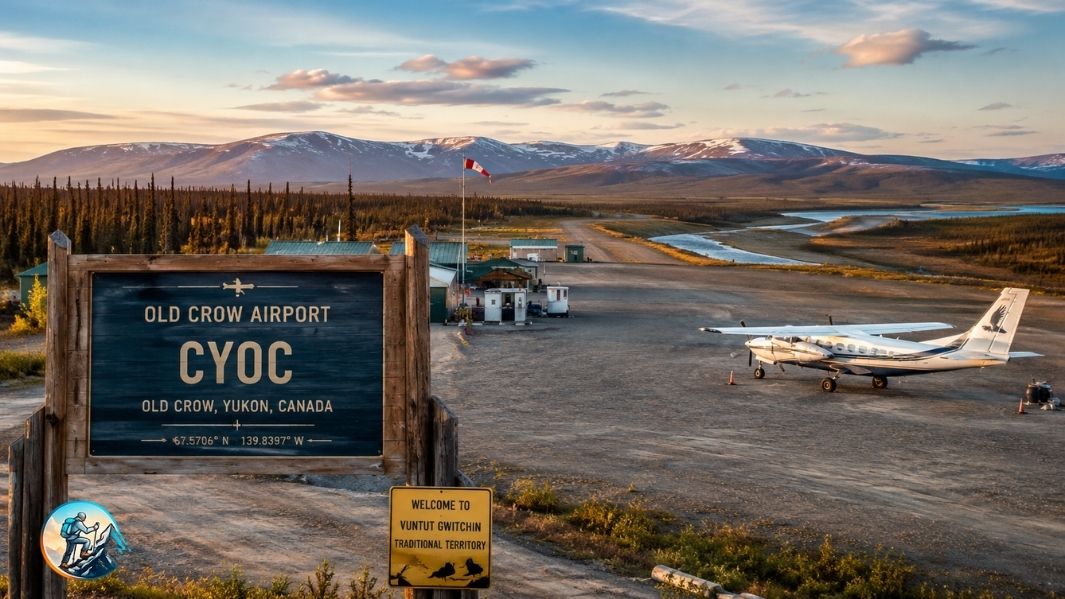
Some airports are merely transit points. CYOC is different. The ICAO code belongs to Old Crow Airport, the air gateway to Old Crow in northern Yukon, Canada. Because Old Crow is Yukon’s only community without road access, arriving by air is not simply convenient; it is part of understanding the place. The flight carries you over broad northern landscapes toward a Vuntut Gwitchin community shaped by the Porcupine River, seasonal change, and a long relationship with the land. For travelers who value remote Canada, Indigenous culture, and slow, respectful exploration, the journey can feel unusually meaningful.
Why CYOC Matters to Travelers
CYOC serves as a place where aviation is woven into everyday life. Old Crow sits near the meeting of the Crow and Porcupine rivers and is home to the Vuntut Gwitchin First Nation. Air service links the community with the rest of Yukon and the wider North, moving residents, visitors, food, mail, and essential supplies. That reality changes the traveler’s mindset. This is not a destination for arriving with a packed checklist and expecting big-city flexibility. It rewards preparation, patience, and an awareness that local needs come before sightseeing.
Travelers should think of CYOC as the first lesson in northern travel: weather matters, schedules can change, and backup plans are valuable. Build breathing room into connections, especially if another flight depends on your arrival. Keep medication, a warm layer, basic toiletries, and essential documents in your carry-on rather than assuming every bag will move exactly as planned.
Planning a CYOC Arrival Without Stress
Confirm your flight schedule close to departure and check baggage limits carefully. Remote routes may use smaller aircraft than travelers are accustomed to, so oversized luggage and heavy equipment require planning. Accommodation in Old Crow is limited compared with larger Yukon communities, so book early. Do not arrive assuming you can find a room, rental car, or late-night restaurant after landing.
Pack for rapid weather changes even in the brighter months. Layered clothing, a wind-resistant outer shell, sturdy footwear, insect protection in warmer periods, and a reusable water bottle are sensible basics. In winter, the margin for error narrows considerably, so visitors should prepare for severe cold and short daylight hours. A simple rule works well here: pack for the conditions you could meet, not just the forecast you hope for.
What to Experience Beyond CYOC
Old Crow’s strongest appeal is not a conventional list of attractions. It is a chance to learn about a living northern community and the surrounding landscapes. The John Tizya Center is an important starting point for understanding Vuntut Gwitchin history, culture, and the region’s relationship with Vuntut National Park. Opening arrangements can be limited, so confirm access before building your day around a visit.
The wider region is associated with the Porcupine Caribou Herd, wetlands, migratory birds, and vast wilderness. Vuntut National Park lies north of the community, but it is not a casual day-trip destination. Access demands serious planning, self-sufficiency, and current information about permits and operating conditions. According to the latest official tourism information, the park is listed as temporarily closed, so travelers should verify its status directly before making plans based on older guides.
CYOC, Culture, and Responsible Travel
Respect matters more here than collecting photographs. Ask before photographing people, private homes, cultural activities, or locally sensitive places. Follow community guidance, support local businesses when possible, and avoid treating Old Crow as an empty wilderness outpost. It is someone’s home, with traditions and routines that long predate modern tourism.
I would also resist over-scheduling. A walk, a conversation, changing light over the river, or time spent learning local history can carry more value than racing between planned activities. One travel thought fits Old Crow especially well: “The farther you travel from convenience, the more attention becomes part of the journey.” That attention is what turns a remote trip into a respectful one.
Best Time to Plan the Journey
The best season depends on what you want from Yukon travel. Summer offers long daylight and easier conditions for walking and outdoor exploration, while winter brings deep cold, snow, and the possibility of northern lights experiences. Shoulder seasons can be unpredictable. Whenever you travel, confirm accommodation, local services, tour availability, and weather shortly before departure.
CYOC is more than four letters on an aviation chart. It marks the threshold of one of Yukon’s most distinctive communities, a place reached by air and best approached with preparation, curiosity, and humility. If you travel to Old Crow expecting polished tourist infrastructure, you may miss its real character. Arrive ready to listen, adapt, and learn, and the journey north can become the rare kind of trip that stays vivid long after the flight home.
You May Read Also: Travel Smarter with Tracqueur: A Practical Guide to Tracking Your Journey