

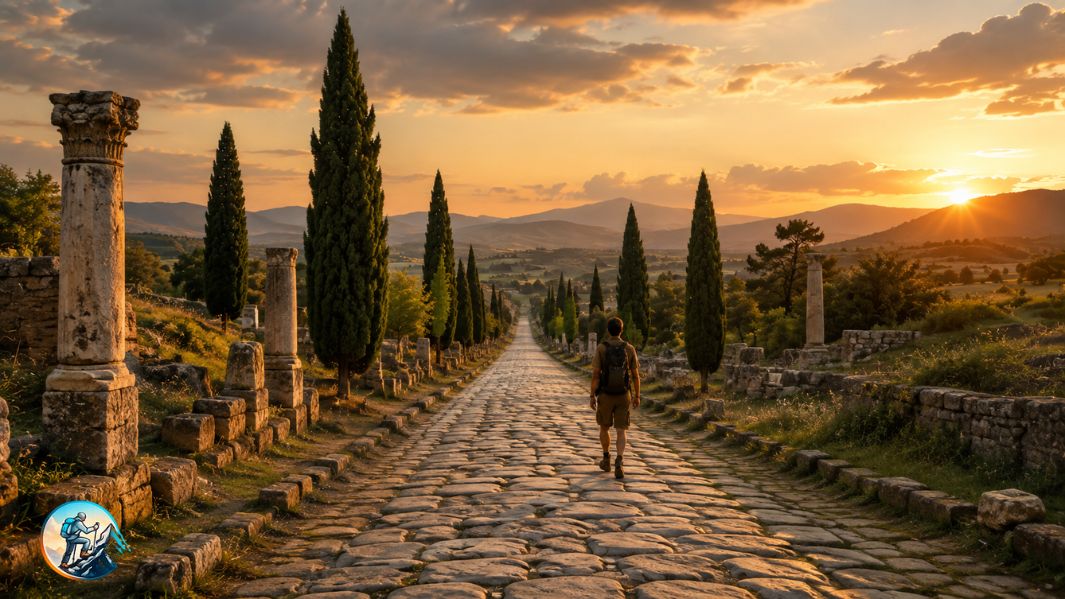
Cesta Roman is best understood as a travel phrase for the ancient Roman roads that connected cities, ports, military posts, and trading centers across an empire. Walking over worn stones, noticing wheel grooves, or following a straight path through countryside creates a connection with people who traveled before modern borders existed. It is a heritage experience found across Italy, Slovenia, Croatia, Spain, France, Britain, and other former Roman territories. The Roman road offers something quieter: history revealed one step at a time.
This article explores the meaning of Cesta Roman, the best places to experience surviving Roman roads, practical planning advice, important historical features, and responsible ways to enjoy these remarkable routes while protecting their ancient character.
Why Cesta Roman Still Captures Travelers
The Roman road network moved soldiers, messages, food, materials, and goods between distant settlements. Yet the most interesting detail for a visitor is how practical the engineering feels. Builders adapted foundations to local ground, raised surfaces for drainage, and added stonework, ditches, bridges, or culverts where conditions demanded them. Some routes influenced modern roads, while others survive as walking tracks beside fields and ruins. The celebrated Via Appia, begun in 312 BCE, remains the clearest example and is recognized as a UNESCO World Heritage property. Its story shows how a military route became a channel for trade, settlement, cultural exchange, and travel.
What Makes Cesta Roman Different from a Museum Visit?
A museum places history behind glass; Cesta Roman places it beneath your feet. You can study paving patterns, roadside tombs, milestones, foundations, and landscape changes while moving at a human pace. The experience encourages questions displays sometimes cannot: How heavy was a merchant’s load? Where did travelers find water? What did a distant city feel like after days on the road? Even a short surviving section can turn these questions into something physical. “A road remembers every traveler, even when their names are gone” is a fitting thought to carry along the route.
Where to Experience Cesta Roman
Rome is the natural starting point, especially the Appian Way, where ancient paving, ruins, countryside, and monuments create an accessible introduction. Beyond Italy, travelers can look for Roman routes near former provincial centers in Slovenia and Croatia, sections of Via Augusta in Spain, the eastern path of Via Egnatia, or preserved roads in Britain. The strongest itinerary focuses on one region rather than chasing famous names across several countries. Choose a base with an archaeological museum, a walkable road section, and nearby Roman sites. This creates context before the hike and helps you understand what might otherwise appear to be an ordinary line of stones.
Planning a Cesta Roman Walking Day
Start early in summer because exposed stone routes can become hot and offer limited shade. Wear supportive shoes with firm grip; polished or uneven paving can be slippery after rain. Carry water, sun protection, a charged phone, and an offline map because rural stretches may lack signs or mobile coverage. Check whether bicycles share the path, whether ruins require admission, and whether public transport operates late enough for your return. Spring and autumn offer comfortable temperatures and softer light for photography. Most importantly, avoid climbing fragile walls or removing stones. Respectful travel protects the route for the next visitor.
How to Read the Landscape
Do not expect every Roman road to resemble a perfect stone avenue. Depending on location, age, rebuilding, and local materials, remains may appear as raised earthworks, gravel surfaces, paving fragments, drainage lines, cuttings, or straight modern lanes. Look for repeated clues rather than one dramatic feature. An archaeological map or local guide can prevent misidentifying later roads as Roman. Nearby forts, gates, bridges, cemeteries, villas, and settlements often explain why the route passed through a particular landscape. I think this wider view makes the journey rewarding: the road becomes not an isolated relic, but the thread connecting an entire historical environment.
Responsible Heritage Travel on Cesta Roman
These routes are cultural assets, but many cross neighborhoods, farms, protected landscapes, and private property. Stay on marked trails, close gates, keep noise low, and follow local access rules. Support small museums, licensed guides, cafés, and family-run accommodation near the route; your spending can help communities preserve overlooked heritage. Photograph details without blocking narrow paths, and share accurate location information rather than encouraging shortcuts into restricted areas. Responsible travel is not a limitation. It deepens the experience by reminding us that ancient infrastructure survives within modern life.
Conclusion: Let the Old Road Set the Pace
Cesta Roman offers more than a lesson in engineering. It invites travelers to slow down, observe, and imagine Europe before trains, highways, and airports compressed distance. Plan one meaningful section, learn its local story, pack sensibly, and leave the stones exactly as you found them. The reward is not simply reaching a landmark. It is realizing that travel has always depended on connection, curiosity, and the courage to follow a road beyond the familiar.
You May Read Also: Beyond the Beach: Unforgettable Attractions Hilton Head Island Travelers Should Explore