
Celebrity
Celia María Cuccittini: The Remarkable Life of Lionel Messi’s Mother and Her Untold Family Story

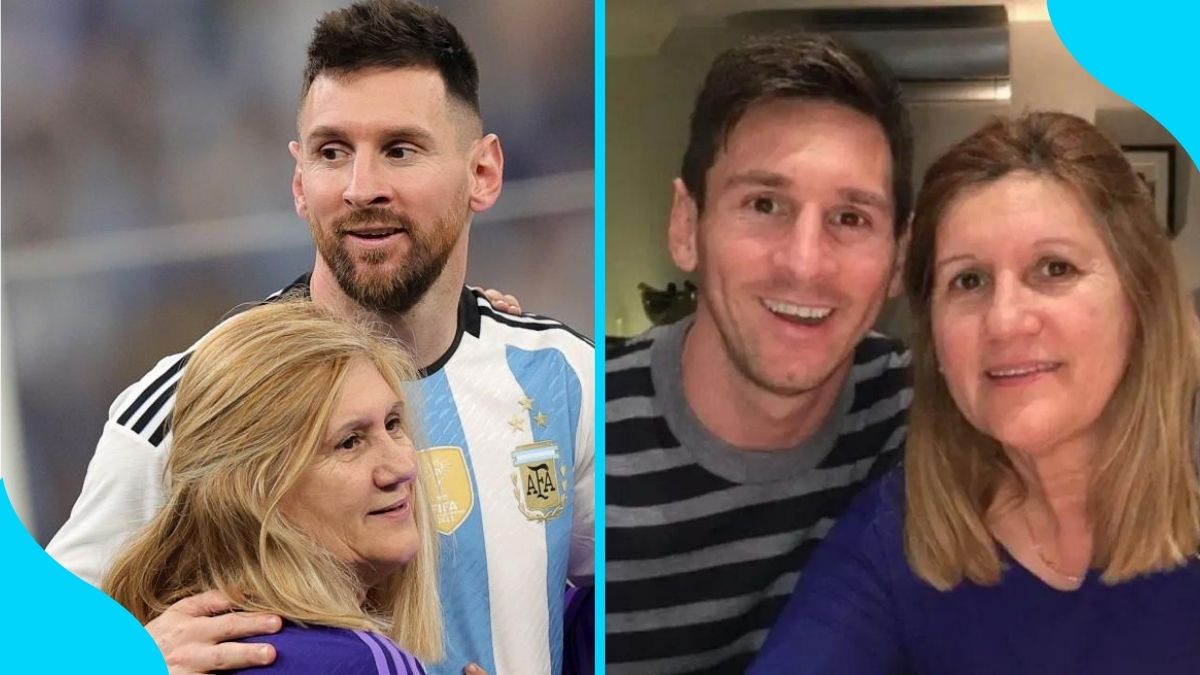
Behind Lionel Messi’s extraordinary achievements stands a family whose encouragement, sacrifices, and determination helped shape one of football’s greatest careers. Among those closest to him is Celia María Cuccittini, his mother, a woman who has largely preferred a quiet personal life despite her son’s worldwide recognition. Born on 23 January 1960 in Rosario, Argentina, Celia experienced the responsibilities of working-class family life long before international fame became part of her everyday surroundings.
Her story is not simply about raising a successful footballer. It is about motherhood, resilience, family responsibility, and emotional strength during a journey that brought unexpected opportunities and difficult decisions. While millions admire Messi for his remarkable performances, understanding his mother’s background offers another perspective on the family environment that supported his development.
This article explores Celia’s early life, marriage, four children, working years, role in Messi’s childhood, experiences during his move to Barcelona, and the family milestones that have shaped her life.
Quick Bio
| Detail | Information |
|---|---|
| Full Name | Celia María Cuccittini |
| Date of Birth | January 23, 1960 |
| Age | 66 years old (2026) |
| Birthplace | Rosario, Argentina |
| Nationality | Argentine |
| Known For | Mother of Lionel Messi |
| Profession | Former factory worker and domestic cleaner |
| Husband | Jorge Messi (1978–2026) |
| Children | Rodrigo, Matías, Lionel, María Sol |
| Famous Son | Lionel Messi |
| Public Profile | Mostly private |
Early Life and Childhood in Rosario, Argentina
Celia grew up in Rosario, a major Argentine city known for its industrial history, football culture, and strong neighborhood communities. Her childhood unfolded in an environment where ordinary families worked hard to maintain financial stability and build better opportunities for their children. She came from a modest background, and those early experiences helped establish the practical values that later became important in her family life.
Celia also met Jorge Messi in Rosario, who would become her husband and the father of their four children. The two knew each other from their younger years in the Las Heras neighborhood. Their relationship developed long before their family became associated with professional football. Unlike many relatives of internationally recognized athletes, Celia has shared relatively little publicly about her childhood education, personal ambitions, or daily life before marriage. Consequently, her early biography is best understood through the family’s established history rather than unsupported personal claims.
Marriage to Jorge Messi and Building a Family
Celia married Jorge Messi on 17 June 1978, beginning a partnership that lasted nearly five decades. The couple settled in Rosario and eventually welcomed four children: Rodrigo, Matías, Lionel, and María Sol. Their household reflected the responsibilities familiar to many working families, with both parents contributing to their children’s upbringing and future opportunities.
Jorge worked in the steel industry and eventually held a supervisory position, while Celia contributed through her own employment and domestic responsibilities. Their family life revolved around work, school, relatives, and the children’s interests. Football gradually became especially important as Lionel’s talent grew. However, their responsibilities extended to all four children, making it essential to balance individual ambitions with the needs of the wider household.
The couple remained closely connected through the remarkable changes Lionel’s career brought. Their long marriage became an important part of the family story, especially as Jorge later took responsibility for much of his son’s professional representation.
Her Working Life and the Sacrifices Behind Messi’s Success
Long before the Messi name became internationally famous, Celia worked to help support her household. Reports of her early employment describe her work in domestic cleaning and at a workshop producing magnetic components. These jobs were part of the family’s ordinary working-class life and provided extra income while the children were growing up.
Raising four children required organization, patience, and a willingness to make personal compromises. The family did not begin with the financial advantages later associated with Lionel’s career. Instead, the parents had to consider household expenses, education, and the practical demands of supporting a child with exceptional sporting potential.
Celia’s contribution should not be measured only through employment or her connection to football. Maintaining a family home while balancing work and parenting represented an important part of her responsibilities. Those years provide essential context for understanding why Messi’s later achievements carried such personal significance for his parents.
Supporting Lionel Messi During His Childhood Health Challenges
One of the most demanding periods in the Messi family’s early history came when Lionel was diagnosed with growth hormone deficiency during childhood. The condition required specialized medical attention and treatment, creating additional financial and emotional responsibilities for his parents.
For a young footballer already demonstrating considerable talent, access to treatment was especially important. His family sought ways to support both his health and his sporting development. Jorge took a prominent role in arranging opportunities and pursuing possible solutions, while Celia remained part of the family support system surrounding her son.
The situation eventually became closely tied to Lionel’s opportunity to join Barcelona, where they arranged support for his development and treatment. Although the family’s decisions are sometimes presented as an uncomplicated story of sacrifice and triumph, they involved genuine uncertainty at the time.
For Celia, these circumstances meant confronting the challenges of raising a child with medical needs while also considering a future that might require major changes to the family’s living arrangements.
The Difficult Decision to Move to Barcelona
When Lionel moved to Spain at the age of 13, the opportunity represented a turning point for the entire family. Barcelona offered a route into elite football, but pursuing that opportunity meant leaving behind familiar surroundings, relatives, friendships, and the life they had established in Argentina.
Celia initially accompanied Lionel to Spain. However, some family members found it difficult to adapt to the move, particularly his younger sister, María Sol. Celia eventually returned to Rosario with Lionel’s siblings, while Lionel remained in Barcelona with his father.
The separation affected the young footballer, who later discussed his homesickness and the challenges of adjusting to life away from much of his family. Although he believed staying in Barcelona offered the best chance to pursue his ambition, the decision required considerable determination.
For his mother, returning to Argentina did not mean reduced support. It reflected the competing responsibilities of caring for several children whose needs could not all be met in one place. The family’s willingness to maintain that arrangement became a meaningful chapter in Messi’s development.
A Special Relationship Between Mother and Son
Throughout his career, Lionel Messi has demonstrated a strong attachment to his family. His relationship with Celia is particularly evident in two well-documented personal gestures that attracted attention beyond the football pitch.
One is the portrait tattoo of his mother on his left shoulder blade, widely recognized as one of his earliest tattoos. It represents a personal acknowledgment of the woman who helped raise him through childhood and supported his development before professional success arrived.
Another memorable example occurred in January 2011, when Messi celebrated a Barcelona goal against Racing Santander by revealing an undershirt carrying the words “Feliz cumple mami”, meaning “Happy birthday, Mum.” The gesture attracted considerable publicity, and Spanish football authorities subsequently fined and cautioned him under rules governing messages displayed during goal celebrations.
These public moments offer an insight into their relationship without requiring speculation about private conversations. Despite living in different countries at times, Messi has continued to acknowledge the importance of his family.
How Celia Experienced Lionel Messi’s Worldwide Fame
As Lionel’s career developed at Barcelona, he became one of football’s most recognizable figures. He won numerous domestic and European titles, earned individual honors, and delivered historic international performances for Argentina. As a result, public curiosity about his parents and siblings also grew.
Celia never developed the same public-facing professional identity as her famous son. Although she has appeared at matches, celebrations, and occasional interviews, she has generally maintained a reserved approach to media attention.
Her public appearances have often reflected family support rather than an attempt to build an independent celebrity career. This distinction is important because being related to an internationally famous athlete does not automatically mean wanting constant recognition.
As Messi’s success changed the family’s circumstances, Celia remained recognized primarily for her role as his mother and as a longtime member of his closest support network.
The Emotional 2022 FIFA World Cup Victory
The 2022 FIFA World Cup in Qatar became one of the most memorable experiences in the Messi family’s history. Argentina defeated France in a dramatic final, securing its first men’s World Cup title since 1986 and allowing Lionel to fulfill a major ambition after years of international competition.
Celia attended the tournament and was photographed celebrating with her son following Argentina’s victory. Their embrace on the pitch provided a moving family moment during celebrations watched around the world.
The achievement carried particular significance because Messi had previously experienced painful defeats with Argentina, including the 2014 World Cup final. For relatives who had followed his career since childhood, winning the trophy represented the culmination of many years of effort and anticipation.
Interestingly, some social media videos circulated with incorrect descriptions of Messi embracing his mother. One widely shared clip actually featured Antonia Farías, a member of Argentina’s catering staff. Separate photographs correctly documented Messi celebrating with Celia. The distinction illustrates why accurate identification matters when discussing widely circulated sporting moments.
The Loss of Jorge Messi and Family Changes in 2026
The family experienced a significant personal loss when Jorge Messi died on 8 August 2026, aged 68, following a prolonged illness. His death marked the end of a marriage that had begun in 1978 and a partnership that had supported the family through extraordinary changes.
Jorge had played an important role in Lionel’s football career, particularly through his involvement in the move to Barcelona and his subsequent responsibilities as his son’s representative. Football organizations and clubs familiar with his contributions acknowledged his death.
For Celia, the loss represented a deeply personal change after nearly five decades of marriage. While public reporting confirmed the family’s bereavement, the details of her private grieving process remain personal and should not be treated as public knowledge.
Another major milestone followed on 6 October 2026, when Lionel made his final appearance for Argentina in a 3–0 victory over Benin. Celia attended the farewell occasion in Buenos Aires, witnessing another emotional chapter in her son’s sporting journey.
Her Private Life and Lasting Family Legacy
Despite her connection to one of the most celebrated athletes in modern history, Celia has retained a relatively private personal identity. Reliable public information about her everyday routine, financial arrangements, and personal activities remains limited.
Her significance in Lionel Messi’s story comes from something more substantial than public visibility. She belonged to the family that supported him through childhood, medical treatment, migration, international recognition, and changing personal circumstances.
Her experiences also highlight the shared responsibilities behind a sporting career. Lionel’s achievements required exceptional individual talent and commitment, but they developed within a family whose members made important decisions together.
Today, Celia’s public legacy remains strongly associated with family dedication, motherhood, resilience, and the extraordinary journey from Rosario to international football history.
Conclusion
Celia María Cuccittini has lived a remarkable life shaped by ordinary family responsibilities and extraordinary sporting achievements. From her working years in Rosario to supporting her son through medical challenges, separation, and international fame, she has remained an important figure in the Messi family.
Her story shows that sporting success grows out of a broader human experience of relationships, uncertainty, commitment, and personal sacrifice. Although Lionel Messi’s accomplishments are his own, the support he received from his parents remains essential to understanding his journey. Celia’s lasting recognition comes not from seeking celebrity status but from her place in the family history behind one of football’s most celebrated careers.
(FAQs)
1. Who is Celia María Cuccittini?
She is an Argentine woman best known as the mother of legendary footballer Lionel Messi. She raised four children with her husband, Jorge Messi, and supported her son’s development from childhood.
2. How old is Celia María Cuccittini?
She was born on 23 January 1960, in Rosario, Argentina. As of October 2026, she is 66.
3. Who was Celia María Cuccittini’s husband?
Her husband was Jorge Messi, who worked in the steel industry before becoming closely involved in Lionel’s professional football career. He died in August 2026 at 68.
4. How many children does Celia have?
She has four children: Rodrigo Messi, Matías Messi, Lionel Messi, and María Sol Messi.
5. Why does Lionel Messi have a tattoo of his mother?
Messi has a portrait of Celia on his left shoulder blade. The tattoo is widely understood as a personal tribute to his mother and their close family relationship.
6. Was Celia present at the 2022 World Cup final?
Yes. She attended Argentina’s World Cup triumph in Qatar and was photographed celebrating with Lionel after the victory over France.
You May Read Also: Kitty Donnelly: The Surprising Story of Johnny Vegas’ First Wife, Marriage and Life Beyond Fame

Tesla’s third-quarter results on 21 October: the complete guide to timings, numbers and talking points

Celia María Cuccittini: The Remarkable Life of Lionel Messi’s Mother and Her Untold Family Story

Kitty Donnelly: The Surprising Story of Johnny Vegas’ First Wife, Marriage and Life Beyond Fame

Clare Coogan: The Remarkable Life, Career and Family of Steve Coogan’s Daughter

Barry Winkleman: The Remarkable Life, Publishing Career and Family Behind Claudia Winkleman

John Playfair: The Remarkable Life of Prue Leith’s Husband and Former Fashion Designer

thealitekeepsafe.com: A Complete Guide to Its Features, Online Safety, Content, and Trustworthiness

Growth Navigate Funding: A Complete Guide to Smart Business Financing and Sustainable Growth

Almawadahit. com Explained: A Complete Guide to Its Content, Features, and Online Reputation

UK Supermarket Fruit Salmonella Recall: Major Safety Warning That Affected Six Leading Retailers

Everest Base Camp Trek vs Manaslu Circuit Trek: Routes, Difficulty, Costs, Altitude and Mountain Experience

Crackstube Explained: A Complete Guide to Its Features, Content, Safety, and Digital Publishing Platform

Classroom 15x: The Ultimate Guide to Free Online Games, Features, Benefits, and Safe Gaming

ABS Testauslösung: Bedeutung, Funktion, häufige Fehler und wichtige Sicherheitstipps

HMJones.net Explained: A Complete Guide to Business Loans, Funding Options, and Smarter Financial Decisions

Nomurano: Discover the Powerful Meaning Behind Modern Creativity, Design, and Intentional Living

Ruschek: The Fascinating History, Meaning, Origins and Legacy of a Rare European Surname

Provascin: A Complete Guide to Its Ingredients, Potential Benefits, Uses, and Safety

Nigel Mackintosh: The Remarkable Business Career, Family Heritage and Life of Millie Mackintosh’s Father

Mindset Energy: The Powerful Secret to Better Focus, Confidence, and Personal Growth
Tesla’s third-quarter results on 21 October: the complete guide to timings, numbers and talking points
Celia María Cuccittini: The Remarkable Life of Lionel Messi’s Mother and Her Untold Family Story
Kitty Donnelly: The Surprising Story of Johnny Vegas’ First Wife, Marriage and Life Beyond Fame
Clare Coogan: The Remarkable Life, Career and Family of Steve Coogan’s Daughter
Barry Winkleman: The Remarkable Life, Publishing Career and Family Behind Claudia Winkleman
John Playfair: The Remarkable Life of Prue Leith’s Husband and Former Fashion Designer
thealitekeepsafe.com: A Complete Guide to Its Features, Online Safety, Content, and Trustworthiness
Growth Navigate Funding: A Complete Guide to Smart Business Financing and Sustainable Growth
Almawadahit. com Explained: A Complete Guide to Its Content, Features, and Online Reputation
UK Supermarket Fruit Salmonella Recall: Major Safety Warning That Affected Six Leading Retailers
-
 Blog3 months ago
Beyond the Cages: How an Artificial Zoo Could Redefine Wildlife Travel
-
Adventure Travel2 weeks ago
Everest Base Camp Trek vs Manaslu Circuit Trek: Routes, Difficulty, Costs, Altitude and Mountain Experience
-
 Destination Guides3 months ago
Beyond the Map: Discovering Haslhof in Italy and Bavaria
-
Technology6 days ago
Crackstube Explained: A Complete Guide to Its Features, Content, Safety, and Digital Publishing Platform