

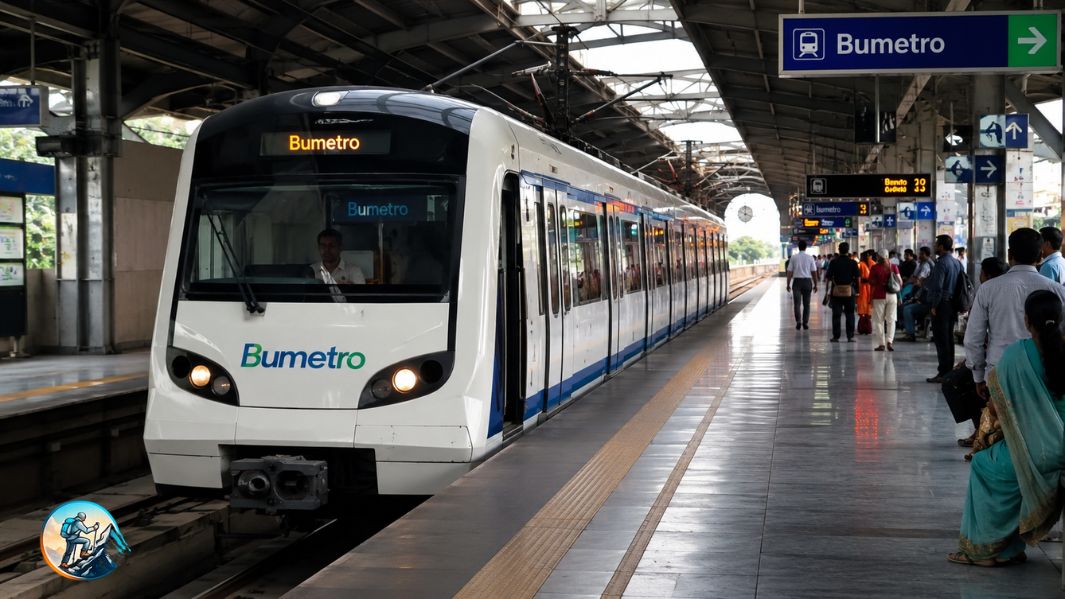
City travel can be exhilarating until transport becomes the hardest part of the day. Visitors often juggle metro maps, bus timetables, walking directions, and ride-hailing apps in places they barely know. That is why the idea associated with Bumetro has attracted attention. Recent online descriptions link the term to smart urban Mobility, in which several transport choices are integrated into a single planning experience. For travelers, the attraction is simple: less time decoding local systems and more time exploring. Yet there is an important reality check. Bumetro does not currently appear to have the independently verified footprint of a major international transport operator, so travelers should treat it as an emerging concept and not assume that every described feature or destination is available.
What Bumetro Means for Modern Urban Travel
The travel concept surrounding Bumetro closely resembles Mobility as a Service (MaaS). Instead of treating buses, trains, bicycles, taxis, and walking as separate choices, MaaS connects them into a single journey. Imagine arriving in an unfamiliar city and finding that the quickest route to the hotel combines metro, cycling, and walking. A multimodal journey planner can compare those pieces together rather than forcing you to research each one separately. This matters on short city breaks, when confusing tickets or missed connections can waste valuable time. Integrated travel tools matter because they can give visitors confidence beyond obvious tourist zones.
Why Bumetro Appeals to Independent Travelers
Independent travelers usually want flexibility without unnecessary uncertainty. A platform built around the Bumetro idea could compare travel time, fares, transfers, walking distance, and live disruption information. You might discover that an attraction is forty minutes away by car during rush hour but only twenty-five minutes by train-and-walk. Budget travelers could prioritize public transport, while visitors carrying luggage might choose routes with fewer transfers. Families and travelers with limited Mobility benefit most when accessibility details are accurate. The principle is to consider realistic alternatives and select the route that fits your budget, energy level, and comfort.
Using Bumetro Carefully Before and During a Trip
Because Bumetro is not clearly verified as a widely deployed service with an authoritative city-by-city coverage list, travelers should avoid relying on the name alone for an important journey. Before entering payment details or relying on a route, confirm that the service offers reliable local data, recognized transport partners, clear pricing, customer support, and transparent privacy information. Keep an official local transport app or website as a backup, especially for airport transfers, last trains, early departures, and connections you can’t miss. Route screenshots can help when mobile data disappears underground. A useful rule is: “Good travel technology should reduce uncertainty, not create a new kind of dependence.” That keeps convenience in perspective.
How Bumetro Planning Can Save Time and Money
The biggest advantage of integrated planning is the ability to compare. Instead of automatically booking a taxi, travelers can see whether public transport, walking, cycling, or shared Mobility offers a better balance. During peak traffic, rail may be faster. For a short central journey, walking may cost nothing and reveal streets you would otherwise miss. A shared bike can work well for waterfronts or parks, provided local rules and safe lanes make cycling sensible. Travelers should also compare the full cost, not just the headline fare. Booking fees, transfer charges, deposits, surge pricing, and separate tickets can change a route’s value. When possible, choose options that remain easy to understand if one connection fails.
Sustainable City Exploration Without Sacrificing Convenience
Bumetro-style travel also aligns with the growing interest in sustainable tourism. Walking, metro systems, buses, trams, and cycling can reduce reliance on private cars while creating a more street-level experience of a destination. The benefit is not merely environmental. Public transport often places travelers closer to ordinary city life: commuters heading home, neighborhood bakeries, local squares, and districts rarely seen in glossy itineraries. Choosing a greener route does not mean accepting inconvenience. The best travel decision combines timing, safety, affordability, and environmental impact. If an integrated planner makes those trade-offs clearer, it can encourage better choices without turning responsible travel into a lecture.
Conclusion: Is Bumetro Worth Watching?
Bumetro is best understood as a name associated with integrated urban travel, not an established transport network. Its appeal reflects a genuine traveler’s need: a clear way to compare multimodal transport options, costs, timings, and practical route choices. Until official coverage and features are easier to verify, use the concept intelligently rather than depend on assumptions. The future of city exploration will likely be increasingly connected, but the smartest traveler will still combine technology with local awareness, backup plans, and curiosity. If Bumetro develops into a verified, widely supported platform, its greatest success will be making complicated cities easier to navigate without removing the surprises that make travel memorable.
You May Read Also: Beyond the Highway: How Agtalk Can Inspire a Richer Rural Travel Experience