
Business
A Tee at $94 When the Next One Is $104

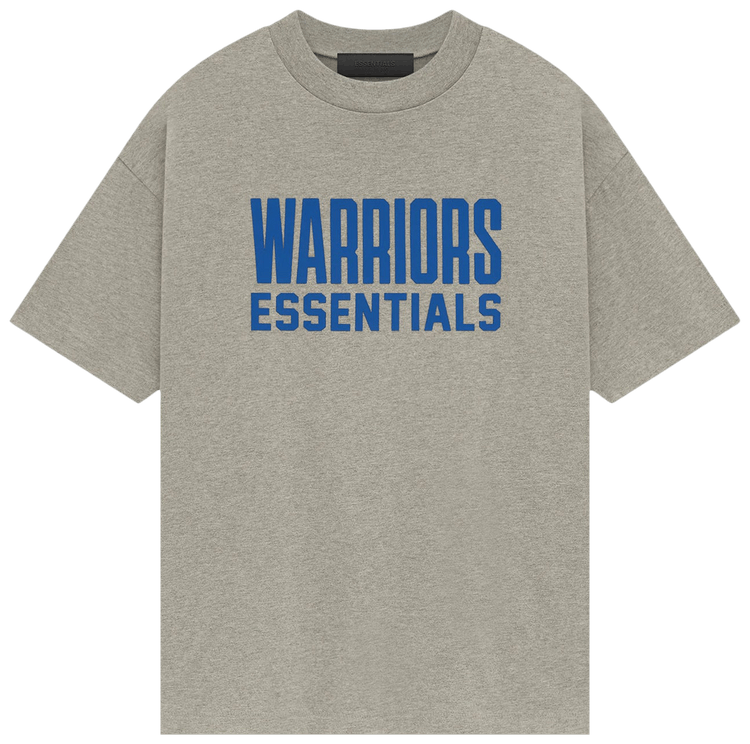
Eleven dollars. That is the entire distance between the cheapest t-shirt in this catalog and the priciest one, which was not what I expected before I started counting. Thirty shirts sit under t-shirts at Essentials Clothing, and they run from $93.50 at the bottom to $104.50 at the top, with nothing above and nothing below. No clearance rack. No single showpiece shirt priced like a jacket.
Where the thirty shirts actually land
Spread out, the pricing isn’t a ladder at all. It’s basically two piles with a couple of strays hanging off either end, and once you’ve seen that shape you kind of stop reading the numbers as a ranking.
| Price | How many sit there |
| $93.50 | 3 |
| $97.90 | 12 |
| $99.00 | 3 |
| $104.50 | 12 |
Twenty-four of the thirty sit at either $97.90 or $104.50, split exactly down the middle, twelve and twelve. The $6.60 between those two piles is less than lunch. And those three at $93.50 aren’t stripped-back versions of anything — one’s a plain gray that could pass for the most ordinary shirt in the whole category, and it doesn’t look any cheaper for costing less.
So what is the extra ten dollars buying?
Honestly, not much that you could point to in writing. The listings keep their detail thin — there is no fabric weight published on these pages, no stitch count, no paragraph telling you the $104.50 shirt is heavier than the $93.50 one. If a price gap meant something structural, the shop would say so, and it doesn’t.
What the price does seem to follow, loosely, is the print. Shirts with a bigger graphic across the chest, plus the odder colorways, tend to sit near the top of the band, and the flatter quieter ones mostly gather down at $97.90. It’s a pattern, though. Not a rule. I wouldn’t bet on it for any single listing.
So the decision you’re really making is a color-and-cut one wearing a price tag. Pick the shirt. The money follows either way.
Color is doing most of the deciding
Gray dominates this category in a way that gets slightly funny once you notice it — light gray, smoky gray, a gray-and-black, a classic gray, several logo prints on gray. Black runs a close second, in a core black, a dark black and a classic black that read differently in daylight than they do in a phone photo.
- Gray is the widest choice here and sits at every one of the four price points.
- Black appears in three or four distinct shades, which matters if you already own one.
- Earth colors are thin on the ground here — dark brown, sycamore, light beige, olive green, and not many of each.
- White turns up in a slim-fit cut, so it hangs differently from the boxier shape most of the rest use.
Want something that isn’t gray or black? Shop for that first and let the price land wherever it lands. The earth tones go quiet fast, and a sycamore or a light beige is not sitting beside four near-identical alternatives the way the grays are.
An eleven-dollar band is unusual, and here is the proof
Put the tees beside the rest of the store and that narrowness jumps out. Hoodies run $55 to $209 across a hundred and thirteen pieces — a $154 spread, and a real decision. Sweatshirts cover $88 to $121. Shorts, $88 to $109. Pants start at $104 and climb to $142.
So every other category asks you to think about budget. The t-shirts don’t, really. Eleven dollars across thirty options is close to a flat price, and I think that changes how you should shop them — you are not hunting a deal inside the category, because there isn’t one hiding in there.
A note on the crossed-out numbers
Most tee listings show a much larger figure struck through above the selling price, somewhere around $286 to $319. Read that as the listing’s own reference number, not as money saved — the only figure you’ll be charged sits in the $93.50 to $104.50 band.
Two shirts or one?
This is where a flat band gets genuinely useful. Two shirts at $97.90 come to $195.80, which is a few dollars under two of the $104.50 ones at $209. Mix one from each pile and you are at $202.40. Every combination of two lands within about thirteen dollars of every other combination of two.
So buying in pairs costs you nothing in flexibility. If you have been circling a black and a gray, the arithmetic will not settle it for you, and that is sort of the point.
Sizing, since the price won’t tell you
Most pieces in the store are listed S through XXL, though I would check the shirt you want rather than assuming, since the range is set per listing. There is no size chart published on these pages — no chest measurement, no body length — so the number on the tag is all you get.
On a shirt cut with extra room through the body, anyone wanting it closer to the frame tends to drop a size, and anyone wanting the shoulder seam to sit low goes up one. That is the whole of it, and I would rather say so plainly than invent inches nobody published.
Frequently Asked Questions
So why does the cheapest tee sit at $93.50 and not lower?
Because the category simply starts there. Only three shirts share that price, and the floor of the band is the floor of the catalog — there is no tier underneath it.
Did these prices change recently?
Yes. The whole store moved up by roughly ten percent not long ago, tees included, so any figure you remember from a few weeks back is out of date. The $93.50 to $104.50 band is what the listings show now.
Are the shirts unisex?
Twenty-one of the thirty are filed under both the men’s and women’s sections, so most of this category is being offered to either. A handful, including the slim-fit white, sit in the men’s listings only.
Is a $104.50 shirt better made than a $93.50 one?
Nothing on the pages says so. No fabric weight, no construction note, no comparison — so I would treat the gap as a difference in print and colorway until the shop publishes something that proves otherwise.
Thirty shirts, eleven dollars from end to end. Once that sinks in the shopping gets a lot simpler — just scroll for the color you actually want, check your size is listed on that particular shirt, and quit doing math the catalog has already flattened for you. Start with the gray if you own nothing here yet. It is the one shade this category will never run short of.

A Tee at $94 When the Next One Is $104

What Is the Average Cost of a Minibus?

Everest Base Camp, Annapurna Base Camp, and Langtang Valley Treks: A Practical Guide to Nepal’s Three Himalayan Experiences

Instablu: A Complete Guide to Its Features, Digital Marketing Insights, Benefits, and Online Safety

Purpose-Led Leadership: Practical Ways to Link Business Growth With Community Value

Midasit: Transforming Modern Engineering Through Advanced Structural Design Software

Celia Walden: The Remarkable Life, Journalism Career, Books and Marriage to Piers Morgan

Elena Ora: The Influential Creative Director and Manager Behind Rita Ora’s Global Success

Rhoda Walker: The Remarkable Life, Family Background and Influence of Graham Norton’s Mother

Katherine Mirren: The Untold Family Story, Teaching Career and Life of Helen Mirren’s Older Sister

Ronald Henry Brand: The Surprising Family Story of Russell Brand’s Father

Accessible Login Experiences: A Practical Checklist For Clearer, Safer Forms

Aidan Keane: The Remarkable Story of Roy Keane’s Son, His Wedding, Wife and Family Life

Charlotte Searle: The Remarkable Story of Brendan Rodgers’ Wife, Her Career and Family Life

Billie Henry: The Remarkable Life, Family Story and Private World of Dawn French’s Daughter

Martin O’Neill: The Remarkable Career, Major Achievements and Inspiring Celtic Comeback

Theresa Doyle: The Inspiring Story of Roy Keane’s Wife, Marriage, and Private Family Life

Gabrielle Haaland: The Remarkable Life of Erling Haaland’s Sister and Viral World Cup Sensation

FASB Staff Position: Essential Guide to Its Purpose, Importance, and Impact on Accounting

How to Choose the Right HR Support Model for a Growing Business
A Tee at $94 When the Next One Is $104
What Is the Average Cost of a Minibus?
Everest Base Camp, Annapurna Base Camp, and Langtang Valley Treks: A Practical Guide to Nepal’s Three Himalayan Experiences
Instablu: A Complete Guide to Its Features, Digital Marketing Insights, Benefits, and Online Safety
Purpose-Led Leadership: Practical Ways to Link Business Growth With Community Value
Midasit: Transforming Modern Engineering Through Advanced Structural Design Software
Celia Walden: The Remarkable Life, Journalism Career, Books and Marriage to Piers Morgan
Elena Ora: The Influential Creative Director and Manager Behind Rita Ora’s Global Success
Rhoda Walker: The Remarkable Life, Family Background and Influence of Graham Norton’s Mother
Katherine Mirren: The Untold Family Story, Teaching Career and Life of Helen Mirren’s Older Sister
-
 Destination Guides4 months ago
Beyond the Map: Discovering Haslhof in Italy and Bavaria
-
 Blog4 months ago
Beyond the Cages: How an Artificial Zoo Could Redefine Wildlife Travel
-

 Health1 month ago
How Dental Implant Quotes Are Built: A Practical Cost Guide for Maple Grove, Minnesota
-

 Entertainment2 months ago
Classroom 15x: The Ultimate Guide to Free Online Games, Features, Benefits, and Safe Gaming