

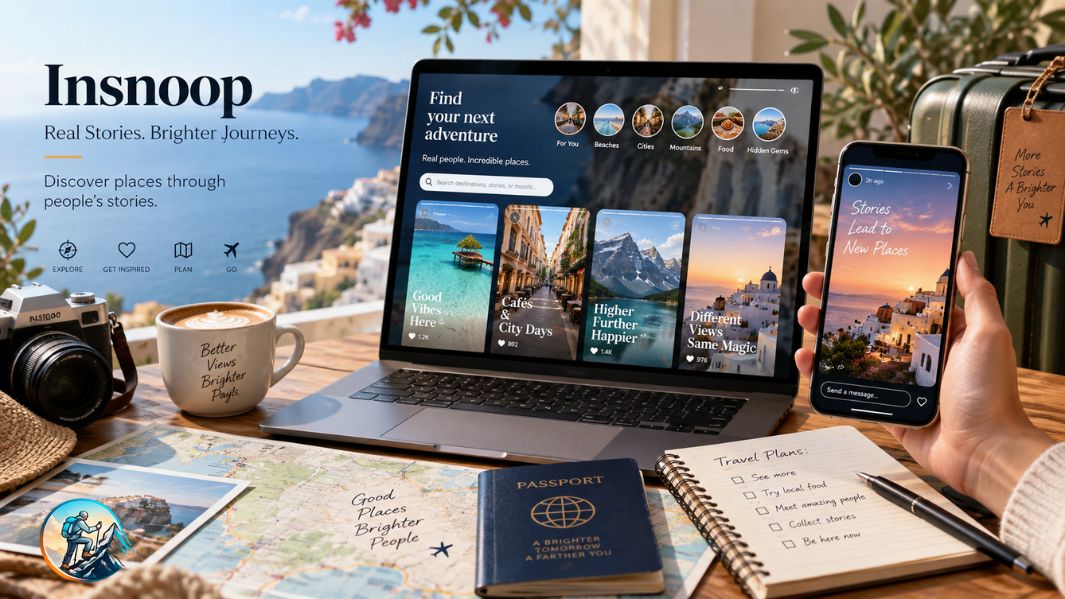
Travel planning no longer begins only with guidebooks. Many travelers now discover beaches, cafés, neighborhoods, viewpoints, and seasonal events through short social-media updates. Insnoop fits into that modern research habit by offering a browser-based way to view public Instagram Stories and Highlights without signing into an Instagram account. Its value is not in replacing maps or official tourism information. It is better treated as a lightweight inspiration tool that may help you see what a destination looks like through recent public posts.
How Insnoop Can Fit Into Travel Planning
A public story from a hotel may show whether its rooftop really has the view advertised. A restaurant’s recent updates may reveal dishes, crowd levels. Local tourism accounts may post festivals, weather changes, temporary closures, or seasonal scenery. With Insnoop, travelers can potentially browse this kind of public material from a web browser without logging into Instagram.
The sensible approach is to use those posts as supporting evidence rather than final proof. Social content can be old, selectively framed, promotional, or incomplete. If a story makes a place look appealing, confirm practical details through an official source before changing your itinerary. Always check opening hours, entry rules, transport schedules, visa requirements, ticket prices, and safety information independently.
Insnoop for Destination Inspiration Without Overplanning
One of Insnoop’s best uses is early-stage destination research. Suppose you are considering a weekend in Istanbul, Lisbon, Dubai, or Bangkok. Instead of building a rigid schedule immediately, you can look at public Stories from tourism boards, museums, cafés, hotels, tour operators, and neighborhood businesses. This gives you a visual sense of what is happening and may reveal places standard lists overlook.
I find this style of research most useful when it answers a simple question: “Would I actually enjoy spending time here?” A travel page can tell you what a destination offers, but recent public posts may show atmosphere—busy streets, quiet mornings, local food, or event energy. That emotional preview can help travelers choose between several equally attractive places.
Practical Ways Travelers Can Use Insnoop
Use public travel accounts to compare neighborhoods before booking accommodation. Check recent hotel or hostel updates to understand the surroundings, then verify the location and reviews elsewhere. Check public restaurant Stories for menus or seasonal specials, but confirm reservations directly. Follow destination-event accounts to spot exhibitions, concerts, markets, and festivals that overlap with your dates.
You can also use public Stories to plan travel photography. Recent posts may show sunrise light, viewpoint visibility, flowering seasons, snow coverage, or whether a famous location is under construction. Photographers can then make better timing decisions without assuming that a beautiful post represents everyday conditions.
Another useful habit is saving only the information you genuinely need. Too much social research can create itinerary anxiety. Choose a few possibilities, verify them, and leave room for discovery. J.R.R. Tolkien wrote, “Not all those who wander are lost.” Good planning should support curiosity in practice, not eliminate it.
Privacy, Safety, and Responsible Use
Third-party social viewers deserve caution. Insnoop says it works with public profiles and does not require an Instagram login, but travelers should still avoid entering passwords or sensitive personal information into unfamiliar services. Features and availability can change, so treat any third-party platform as optional.
Respect for creators matters too. Public availability does not mean content is free to republish. Do not copy a traveler’s photos, videos, or captions for commercial use without permission. Avoid using tools to intrude on individuals, track people, or build invasive personal profiles. Ethical travel research focuses on places, businesses, public events, and openly shared destination information.
What Insnoop Cannot Replace
Insnoop cannot replace official travel advice, live transport information, trusted maps, accommodation terms, weather alerts, or emergency guidance. A social Story may help you discover a mountain trail, but it cannot tell you whether that trail is currently safe. A beach video may look perfect while hiding strong currents, access restrictions, or poor weather expected later.
For every idea you collect, ask three questions: Is it current? Is it verified? Is it useful for my actual trip? That simple filter protects you from planning around attractive but unreliable content.
Conclusion
Insnoop can be a convenient travel-inspiration tool when used with realistic expectations. Its strongest role is helping travelers observe recent public social content, compare the feel of destinations, and discover timely ideas before a trip. The smartest approach is to combine that inspiration with official information, careful verification, and respect for privacy and copyright. Travel is richer when technology helps you notice possibilities without making every decision for you. Use social media to open the door, then explore responsibly and let the destination surprise you.
You May Read Also: Beyond the Booking Page: Team Aelftech.com and the Digital Roadmap for Travel Brands