
Travel
How to Build a Smarter New York City, New York Sightseeing Day


A rewarding day in New York City is less about collecting landmarks and more about creating a route that fits your interests, energy, budget, and pace. With dense streets, distinct neighborhoods, and many competing options, the best things to do in NYC are often the ones that work naturally together rather than requiring constant cross-town travel.
Start with a simple goal, then give yourself enough time to enjoy it. A plan built around one major experience, a few nearby discoveries, and deliberate breaks can feel far more memorable than an overloaded checklist that turns the city into a series of rushed arrivals.
1. Start With One Main Goal
Choose the experience that matters most before adding anything else. Your priority might be a skyline view, a museum collection, historic Lower Manhattan, Central Park, a food-focused afternoon, or a family-friendly outing. That main goal becomes the anchor for every later decision.
Then add two or three nearby stops that naturally fit the same mood. For example, a Midtown observation deck can lead into Bryant Park, the New York Public Library area, or a stroll toward Grand Central. A focused list leaves room for spontaneous storefronts, street scenes, public art, and photo stops that make the day feel personal.
2. Group Stops by Area
New York City rewards geographic planning. Crossing Manhattan, Brooklyn, Queens, or the waterfront repeatedly can consume time that would be better spent exploring. Pick one zone for the morning and a nearby zone for the afternoon.
- Midtown: architecture, theaters, major transit hubs, shopping, and indoor attractions.
- Lower Manhattan: waterfront views, historic streets, civic landmarks, and downtown museums.
- Central Park and the Upper West Side: green space, cultural institutions, and calmer walking routes.
- Brooklyn waterfront: bridges, skyline views, parks, and neighborhood restaurants.
- Queens: museums, diverse food options, and parks around Long Island City or Flushing.
3. Build a Realistic Schedule
Every sightseeing plan needs hidden time built in. Security screening, elevators, restrooms, ticket pickup, finding entrances, waiting for friends, and simply stopping to look around all affect the day. Avoid scheduling timed activities back-to-back in different neighborhoods.
A practical day structure
- Begin with one reserved or high-priority activity.
- Follow it with a nearby landmark, park, or short walking route.
- Take lunch close to the next part of the itinerary.
- Keep one afternoon activity flexible.
- End with dinner, a scenic walk, or a view rather than another demanding reservation.
4. Choose the Right Transportation
Walking is often the best way to understand a neighborhood, but it is not always the best choice for a long avenue-to-avenue transfer or a tired group. Subways can cover greater distances efficiently, buses can reduce walking, and taxis or ride services can be useful when time, weather, or mobility needs make transit less practical.
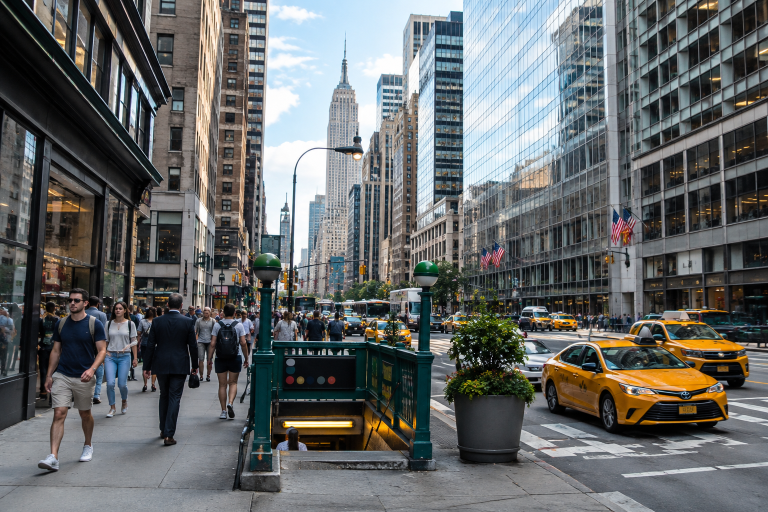
Before leaving, check MTA bus operations and route information to see whether a bus could simplify your route. Also allow for service changes, crowded platforms, and the fact that the closest subway entrance may not be the most convenient exit for your destination.
5. Mix Paid and Free Experiences
A balanced day does not require paying admission at every stop. Choose one or two ticketed experiences that genuinely match your interests, then surround them with public spaces, neighborhood walks, waterfront paths, parks, markets, and architectural details. Free stops can also create useful breathing room between reservations.
- Set a comfortable budget for attractions before booking.
- Confirm whether a timed entry is required.
- Use parks and public plazas as flexible buffers.
- Choose attractions based on personal interest, not just name recognition.
6. Plan for Weather and Crowds
Weather can change the best order for an entire day. On hot or humid days, do longer outdoor walks earlier. During rain, cold, or strong wind, shift toward museums, galleries, food halls, libraries, or other indoor stops. Keep a simple indoor option close to each outdoor priority, rather than redesigning the route from scratch.
Weekends, holidays, major events, and popular evening periods can also affect lines and street congestion. Checking conditions on the morning of your visit helps you decide whether to start outdoors, move a reservation earlier, or shorten a walking segment.
7. Include Rest and Food Breaks
Food is part of the route, not an interruption to it. Crossing the city for a single restaurant may be worthwhile for a dedicated food itinerary, but it can derail a general sightseeing day. Choose meals near your next activity, especially when you have a timed ticket later.
Plan a brief reset every few hours. A café, a bench in a park, a lobby with seating, or a casual snack stop can protect the rest of the day from fatigue. Comfortable shoes, water, and a charged phone are equally practical investments.
8. Make the Day Accessible
Accessibility planning should happen before reservations are finalized. Review entrances, elevator availability, seating, restrooms, curb cuts, transit access, and any communication accommodations offered by individual venues. Details can differ by building, entrance, and time of day.
The city’s recreation and culture resources for people with disabilities can help visitors identify accessible museums, parks, cultural institutions, and other activities across the five boroughs. Calling a venue directly can also clarify the most suitable arrival point for your group.
9. Use a Simple Backup Plan
A backup plan should stay close to your original route and preserve the day’s main purpose. If rain disrupts a park visit, switch to a nearby indoor cultural space or café. If a timed attraction becomes unavailable, replace it with a flexible neighborhood walk, market, or public waterfront area.
Do not create a second full itinerary. One reliable alternative is enough, making it easier to adapt without wasting time searching for options while standing on the sidewalk.
10. Final Checklist
- Confirm opening hours, entry rules, and reservations.
- Check the forecast and dress for the conditions.
- Review transit routes before departure.
- Save ticket details, addresses, and meeting points on your phone.
- Pack water, comfortable shoes, and a portable charger.
- Choose one nearby backup activity.
- Leave unplanned time for rest and unexpected discoveries.
A smarter New York City sightseeing day is not measured by how many famous places you can fit into one calendar block. It is measured by whether the route feels enjoyable from morning through evening. Build around one clear goal, stay local when possible, and leave room for the city to surprise you.

Ciulioneros: The Truth Behind Its Meaning, Origins, History, and Growing Online Mystery

Zooville Explained: Understanding the Controversial Online Forum, Its Risks, and Digital Safety Concerns

ext:asp intitle:cart: Complete Guide to Advanced Google Search, ASP Shopping Cart Pages, and Website Security

Martian Mallow: The Fascinating Story Behind the Forgotten 1990s Lip Smacker

Denise Lombardo: The Untold Story of Jordan Belfort’s First Wife, Marriage, Career, and Life After Divorce

Yulanda Simon: Biography, Marriage to Miguel A. Núñez Jr., Children, and Life Beyond Hollywood

How to Build a Smarter New York City, New York Sightseeing Day

Levapioli: Meaning, Uses, Types, and Everything You Need to Know

Ydym Meaning: What It Really Means in Texting, Welsh Language, and Online Conversations

Snapchat Story Viewer: Complete Guide to Viewing Stories, Privacy, Anonymous Viewing, and Online Safety

How Dental Implant Quotes Are Built: A Practical Cost Guide for Maple Grove, Minnesota

Ronald Henry Brand: The Surprising Family Story of Russell Brand’s Father

sosoactive: The Surprising Evolution of a Digital Media Platform and Its Online Influence

Custom Wordle: The Ultimate Guide to Creating Fun and Challenging Word Puzzles

Jill Rhodes: The Remarkable Untold Story of Sean Hannity’s Ex-Wife and Her Life Beyond Fame

Aidan Keane: The Remarkable Story of Roy Keane’s Son, His Wedding, Wife and Family Life

Methatreams Explained: The Surprising Truth About Free Sports Streaming, Safety, and Legal Alternatives

Samuel Bower: The Remarkable Story of Jamie Campbell Bower’s Talented Musician Brother

Atlanta Falcons vs 49ers Match Player Stats: Stunning McCaffrey Performance and Complete Game Breakdown

Accessible Login Experiences: A Practical Checklist For Clearer, Safer Forms
Ciulioneros: The Truth Behind Its Meaning, Origins, History, and Growing Online Mystery
Zooville Explained: Understanding the Controversial Online Forum, Its Risks, and Digital Safety Concerns
ext:asp intitle:cart: Complete Guide to Advanced Google Search, ASP Shopping Cart Pages, and Website Security
Martian Mallow: The Fascinating Story Behind the Forgotten 1990s Lip Smacker
Denise Lombardo: The Untold Story of Jordan Belfort’s First Wife, Marriage, Career, and Life After Divorce
Yulanda Simon: Biography, Marriage to Miguel A. Núñez Jr., Children, and Life Beyond Hollywood
How to Build a Smarter New York City, New York Sightseeing Day
Levapioli: Meaning, Uses, Types, and Everything You Need to Know
Ydym Meaning: What It Really Means in Texting, Welsh Language, and Online Conversations
Snapchat Story Viewer: Complete Guide to Viewing Stories, Privacy, Anonymous Viewing, and Online Safety
-
 Destination Guides4 months ago
Beyond the Map: Discovering Haslhof in Italy and Bavaria
-
 Blog4 months ago
Beyond the Cages: How an Artificial Zoo Could Redefine Wildlife Travel
-
 Health4 weeks ago
How Dental Implant Quotes Are Built: A Practical Cost Guide for Maple Grove, Minnesota
-
 Adventure Travel2 months ago
Everest Base Camp Trek vs Manaslu Circuit Trek: Routes, Difficulty, Costs, Altitude and Mountain Experience