

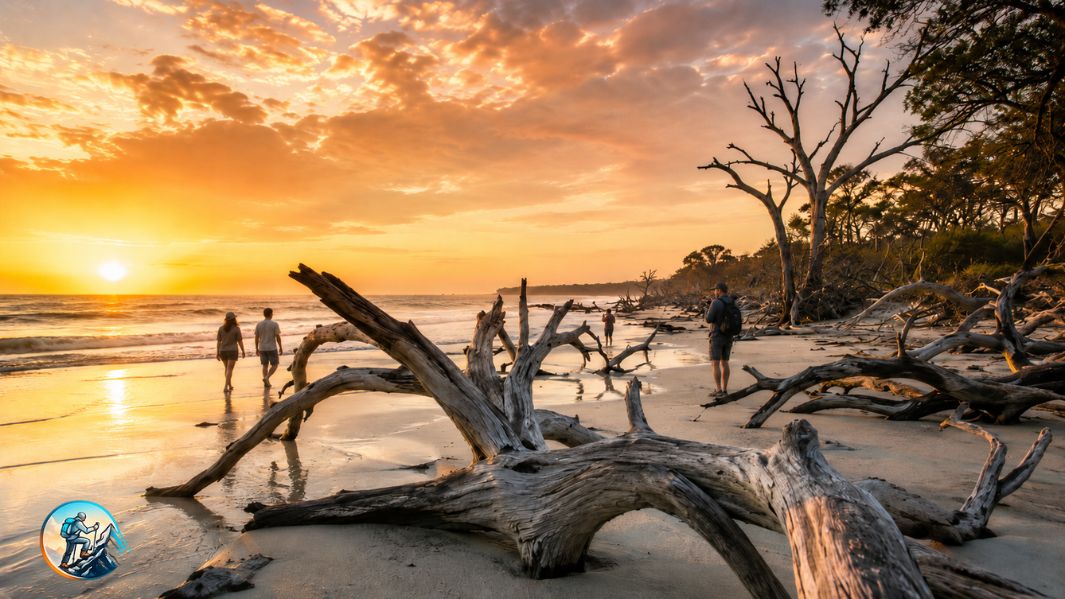
There are beaches you visit for soft sand, swimming, and umbrellas, and then there is Driftwood Beach. Set on the northern end of Jekyll Island, Georgia, this shoreline feels less like a conventional beach and more like an open-air sculpture gallery shaped by salt, wind, tides, and time. Giant weathered trunks and tangled roots rest across the sand, giving the coast a dramatic character that changes with every tide. What surprised me most about this place is how quiet it can feel even when other travelers are nearby. You naturally slow down, look closer, and start noticing light, texture, birds, water, and the remarkable shapes of the fallen trees.
Why Driftwood Beach Looks So Different
The signature trees are the result of coastal erosion along Jekyll Island’s northern shoreline. As water gradually wears away the edge of the maritime forest, roots become exposed, and trees eventually fall toward the beach. Saltwater, sun, and weather then bleach and reshape the wood, creating the twisted forms that make the landscape instantly recognizable. This is why Driftwood Beach never feels static. The sand shifts, tides move around the trunks, and different pieces become more or less visible over time. It is beautiful, but it is also a reminder that Georgia’s barrier islands are living landscapes rather than permanent postcards.
Best Time to Visit Driftwood Beach
For atmosphere and photography, sunrise is hard to beat. Early light comes across the Atlantic, turning wet sand into a reflective surface, while the trees become dark silhouettes against the sky. Arriving before sunrise also gives you time to walk slowly and choose a safe position without rushing. Low tide can reveal more walking space around the driftwood, while higher water may surround trunks and create dramatic reflections. Check the local tide schedule before your visit, especially if you plan to photograph the shoreline. Spring and autumn are particularly comfortable for exploring because temperatures are generally milder than peak summer heat.
Because the beach’s appeal depends on natural conditions, avoid planning your visit around a rigid photo checklist. Wind, cloud cover, tide height, and seasonal light can change the scene, making unexpected conditions more memorable.
Getting There, Parking, and What to Bring
Public parking is available near the beach access off Beachview Drive, but spaces can feel limited during popular sunrise periods and weekends. Jekyll Island requires a vehicle entry fee, so build that into your trip budget. From the access point, expect sand and natural terrain rather than a polished resort-style promenade. Wear comfortable footwear that you do not mind getting sandy or wet. Bring water, sunscreen, insect repellent, and a hat during warmer months. Photographers may want a wide-angle lens, lens cloth, and tripod, although recreational drones are not permitted on Jekyll Island.
The beach is pet-friendly, but dogs must remain under immediate control and on a leash. Families should also remember that the fallen trees can have sharp branches, slippery surfaces, and hidden gaps. Children can enjoy exploring, but this is a place where close supervision matters. I would treat Driftwood Beach primarily as a scenic walking and photography destination rather than as a typical swimming beach.
Photography Tips Without Losing the Experience
The easiest mistake is spending the entire visit looking through a camera. Take your photographs, but leave space to wander simply. For strong compositions, use the curved branches as natural frames around the horizon. Wet sand can add reflections, while a lower camera angle makes the roots appear even more dramatic. Sunrise creates warm contrast; cloudy weather produces softer, moodier scenes. If other visitors appear in your frame, wait rather than climbing over fragile or unstable wood for a cleaner shot. Respecting the landscape is more important than capturing a single perfect image.
A thought that fits this shoreline especially well is: “Some places ask you to do less and notice more.” Driftwood Beach is one of those places.
Is Driftwood Beach Worth Visiting?
Yes, especially if you enjoy nature photography, quiet coastal walks, unusual landscapes, or places that feel visually different from standard beach destinations. You do not need an entire day here. About 1 to 2 hours is enough for most visitors, although photographers may stay longer at sunrise or during changing tides. Pairing the visit with other Jekyll Island experiences can easily turn it into a relaxed day trip.
Final Thoughts
Driftwood Beach leaves an impression because it does not try to be perfect. The fallen trees, shifting sand, changing tide, and open Atlantic horizon create beauty from natural change. Arrive early, check the tide, walk carefully, and resist the urge to rush. The best memory may not be the photograph you take home, but the few quiet minutes when the shoreline feels completely still.
You May Read Also: A Smarter Way to Plan Trips with Voozon as Your Digital Travel Starting Point