

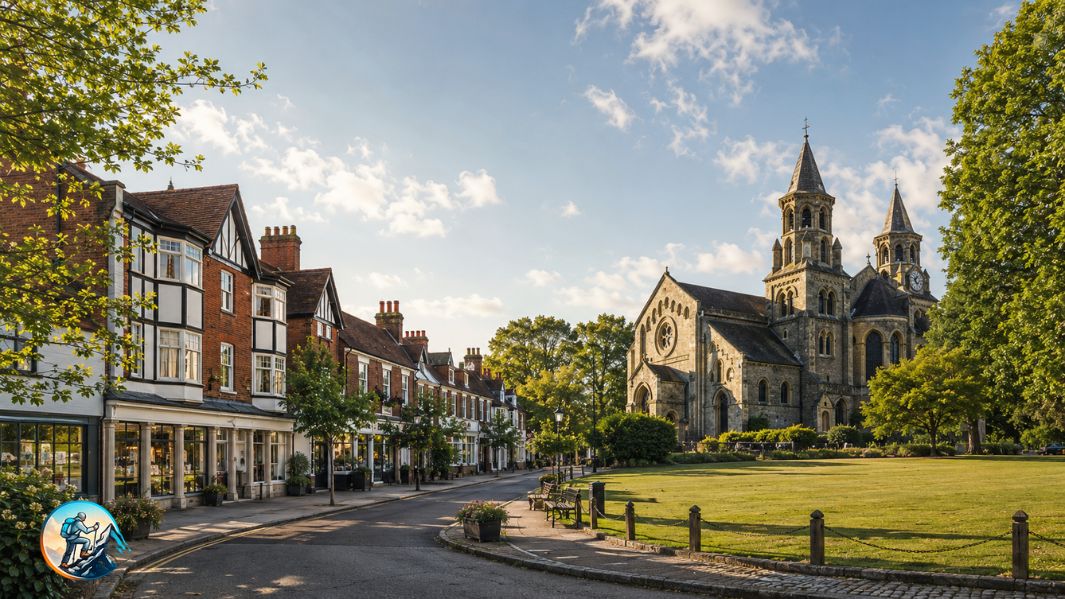
Claygate sits in Surrey’s Elmbridge borough, with a personality that feels more like a village than a suburb. For travelers who enjoy places where the pace drops, Claygate village, its leafy streets, shops, historic corners, and woodland make an appealing break from central London. It is not a destination built around attractions, and that is precisely its strength. You come here to walk, notice old brickwork, stop for coffee, and enjoy the feeling of having nowhere to be. I think Claygate works best when you resist overplanning and let the village reveal itself.
Why Claygate United Kingdom Is Worth Visiting
Claygate’s story reaches back centuries, while much of its character grew after the railway arrived in 1885. The village has long been associated with London Clay, brickmaking, and green surroundings, traces of which survive in local street names and architecture. Today, the most enjoyable starting point is The Parade, close to the station, where everyday village life gathers around shops and cafés. From there, walking toward The Green, the older heart of Claygate, gives visitors a clearer sense of how the settlement developed before the railway shifted activity westward. It feels lived in rather than staged for tourism.
Exploring Claygate United Kingdom on Foot
Walking is the easiest way to get to know Claygate. The local Heritage Trail links historic buildings, streets, open spaces, and reminders of the village’s brickmaking past. Highlights include The Green, Holy Trinity Church, Claygate Common, and Telegraph Hill, where a semaphore station once formed part of a communication chain between London and Portsmouth. You do not need to complete every section to enjoy it; even a short loop can mix village architecture with woodland and quieter residential lanes. Comfortable shoes are useful after rain, especially on softer paths. My advice is simple: keep your phone in your pocket for a while and pay attention to details.
What to See, Eat, and Enjoy
The Green is a natural pause point, especially if you like traditional village scenes framed by mature trees and older buildings. Holy Trinity Church, built in the nineteenth century, adds another layer of local history, while Claygate Common and nearby woodland provide space for an easy nature break. Around The Parade and Hare Lane, visitors can find places for coffee, lunch, baked treats, and casual meals. Rather than chasing a checklist, combine a leisurely meal with a walk. Claygate rewards curiosity: an old façade, a garden, or a quiet side street can become the most memorable part of your visit.
Getting to Claygate and Moving Around
Claygate railway station is on The Parade and is managed by South Western Railway, with services connecting the village to London Waterloo and other points on the network. That makes Claygate particularly convenient for a day trip from London without requiring a car. The station also connects with local buses, while cycle storage and parking are available. Once you arrive, most central sights are best reached on foot. Travelers with reduced mobility should check the current station accessibility details before departure, as step-free access arrangements vary by platform. Always check live train times on the day, especially at weekends when engineering work can affect journeys.
Best Time to Visit and Practical Tips
Spring and early autumn are especially pleasant for Surrey walks, when greenery, mild temperatures, and changing colors make outdoor wandering comfortable. Summer suits café stops and longer daylight walks, while winter can offer a quieter atmosphere if you dress for damp weather. Claygate is compact, so half a day is enough for a relaxed first visit, although a full day allows time for lunch and longer woodland sections. Carry a light waterproof layer, avoid assuming every path will be paved, and check restaurant opening hours if you have a particular place in mind.
A Simple Claygate Day Trip Plan
Arrive in the morning, begin with coffee near The Parade, then walk toward The Green before following part of the Claygate Heritage Trail. Continue toward Holy Trinity Church and choose a woodland section or Claygate Common depending on the weather. Return for lunch, browse local shops, and leave the afternoon flexible rather than rushing onward. If the ground is wet, shorten the countryside portion and spend more time around the village center. “Travel does not always need distance; sometimes it simply needs attention.” Claygate is a good place to test that idea.
Final Thoughts
Claygate will not overwhelm you with famous landmarks, but it can offer something many busy itineraries miss: calm, character, and room to notice a place properly. For visitors seeking quiet places near London, gentle heritage, local food, and green walking, this Surrey village is an easy, rewarding choice. Come for a few hours, move slowly, and let the ordinary details become the reason you remember it.
You May Read Also: Travel Smarter With a Durag: The Practical Style Essential for Every Journey