
Blog
Halcare: Essential Guide to Cream Uses, Ingredients, Benefits, and Skin Care Safety

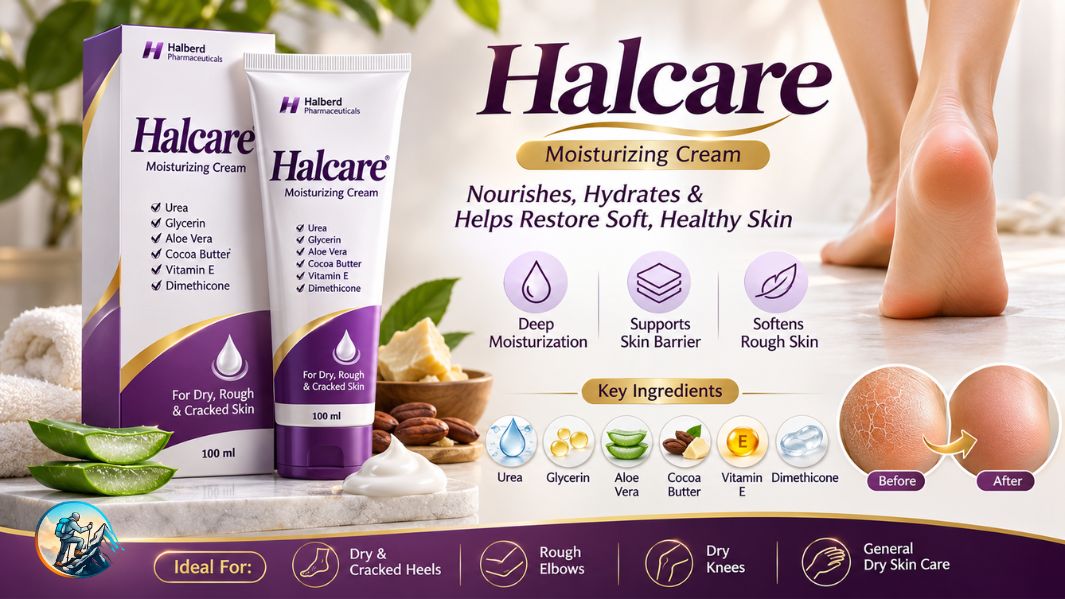
Healthy skin requires regular attention, particularly when dryness, roughness, and environmental conditions begin affecting its natural protective barrier. Halcare is a topical moisturizing cream associated with Halberd Pharmaceuticals, an Indian pharmaceutical company. Its formulation includes several familiar skincare ingredients, including glycerin, urea, aloe vera, cocoa butter, and dimethicone. These substances are commonly found in products designed to support hydration and improve the condition of dry skin.
However, understanding the difference between moisturizing benefits and medical treatment claims is essential when choosing a skincare product.
This article explores Halcare Cream, its ingredients, potential skincare benefits, practical applications, safety considerations, and the important factors consumers should consider before purchasing or using it.
What Is Halcare?
Halcare is a topical skincare cream included in the product catalogue of Halberd Pharmaceuticals. Its published ingredient formulation combines moisturizing agents, skin-conditioning substances, and ingredients that help reduce moisture loss from the skin’s surface.
The product is also listed by the Indian pharmacy retailer Tata 1mg as a 100 ml cream marketed by Halberd Pharmaceuticals. This confirms that Halcare is an identifiable commercial skincare product rather than simply an unfamiliar health-related name appearing online.
The formulation is particularly relevant to discussions about dry skin, rough heels, and skin hydration, although the publicly available manufacturer information does not establish every condition for which the finished product has been clinically tested.
Halcare should therefore be understood primarily as a moisturizing skincare formulation unless specific medical indications are confirmed through its official packaging or appropriate regulatory documentation.
Understanding the Main Ingredients in Halcare Cream
One of the most important aspects of evaluating any skincare cream is examining its ingredients. Halcare contains several substances commonly used in moisturizing formulations, each contributing different properties.
Urea and Glycerin for Moisture Retention
Urea is a naturally occurring component of the skin’s moisturizing system. In skincare products, it helps attract and retain water within the outermost layer of the skin. Depending on its concentration, urea may also help soften rough or thickened skin. However, Halcare’s publicly listed formulation does not specify the exact concentration of urea, making it inappropriate to assume a particular exfoliating strength.
Glycerin is another widely used humectant. It helps draw moisture into the skin’s outer layer and supports hydration. Together, ingredients such as urea and glycerin can contribute to the moisture-retaining properties expected from a moisturizing cream.
Aloe Vera, Cocoa Butter, and Vitamin E
Halcare also contains aloe vera, cocoa butter, and vitamin E. Aloe vera is frequently included in skincare products for its skin-conditioning properties, while cocoa butter acts as an emollient that can help soften dry skin.
Vitamin E is commonly incorporated into cosmetic formulations because of its antioxidant properties. Its presence does not, however, prove that a finished product can reverse skin aging or repair every form of damage.
These ingredients help explain why Halcare belongs to the category of moisturizing and skin-conditioning products.
Dimethicone and Petroleum-Based Ingredients
The published formulation additionally includes dimethicone, light liquid paraffin, and white petroleum jelly. These ingredients are used in skincare because they can form a protective layer that limits moisture loss.
Dimethicone is a silicone-based skin protectant commonly found in moisturizers, while petroleum-derived ingredients are valued for their ability to support the skin’s moisture barrier.
Halcare also contains zinc oxide and other formulation ingredients, including preservatives and perfume. The complete ingredient combination matters more than any single highlighted substance.
What Are the Potential Benefits of Halcare?
Halcare’s ingredient profile suggests several possible skincare benefits, particularly for individuals concerned about ordinary dryness and rough skin texture.
Supporting Hydration in Dry Skin
Dryness develops when the skin loses moisture faster than it can retain it. Environmental conditions, frequent washing, harsh cleansing products, and individual skin characteristics can all contribute to this problem.
Moisturizing ingredients such as glycerin and urea can help maintain water within the skin’s surface layers. Meanwhile, dimethicone and petrolatum-based ingredients may reduce moisture loss.
This makes Halcare Cream relevant to consumers looking for a moisturizing product. Nevertheless, the benefits of individual ingredients should not be confused with clinical proof of the finished cream’s effectiveness.
Improving the Feel of Rough Skin
Rough skin may develop around the heels, elbows, knees, and other areas exposed to friction or repeated pressure. Emollient ingredients can help the skin feel softer and more comfortable.
A suitable moisturizing routine may gradually improve the appearance of ordinary dryness. More substantial thickening, painful cracks, or persistent skin changes may require examination by a healthcare professional.
Supporting the Skin’s Protective Barrier
The outer skin barrier helps limit moisture loss and protects underlying tissues from environmental exposure. When that barrier becomes dry or irritated, the skin may feel uncomfortable and appear flaky.
Regular moisturizing is one practical way to support barrier function. Halcare contains ingredients commonly used for this purpose, although individual results depend on skin condition, product tolerance, and proper application.
Is Halcare Suitable for Dry and Cracked Heels?
Dry heels are a common concern because the feet experience pressure, friction, and frequent contact with footwear. Over time, inadequate moisture and mechanical stress can contribute to thickened skin and superficial cracking.
Creams containing moisturizing agents such as urea, glycerin, and emollients are often considered for dry heel care. Halcare’s formulation includes these ingredients, which explains its relevance to this type of skincare.
However, an important distinction exists between dry, intact skin and deep heel fissures. A moisturizer may help manage ordinary dryness, but it should not automatically be applied to bleeding cracks, infected areas, or open wounds without medical guidance.
People experiencing persistent heel pain, swelling, redness, or worsening cracks should seek professional assessment instead of relying exclusively on cosmetic moisturizers.
Halcare and Diabetic Foot Care: Important Considerations
Foot care requires particular attention among individuals living with diabetes. Diabetes can affect circulation, nerve sensation, and the skin’s ability to maintain normal moisture levels. These changes may increase vulnerability to unnoticed injuries and complications.
Moisturizing dry, intact skin is part of general diabetic foot care, but Halcare is not a treatment for diabetes, diabetic neuropathy, or diabetic foot ulcers.
Anyone with diabetes should discuss unfamiliar foot products with an appropriate healthcare professional, especially when circulation problems, reduced sensation, previous ulcers, or other complications are present.
Daily foot inspection remains essential. Moisturizer should generally be kept away from the spaces between the toes because excess moisture can encourage fungal problems.
An open sore, unexplained swelling, spreading redness, or a foot injury that does not heal requires prompt medical attention.
How to Use Halcare Cream Carefully
Using a moisturizing cream correctly can influence comfort and results. Before applying Halcare, consumers should examine the product packaging and follow the manufacturer’s instructions.
For ordinary moisturizing, creams are generally applied to clean skin. Dermatologists often recommend moisturizing shortly after washing, when the skin remains slightly damp, because this helps reduce moisture loss.
A small amount may be sufficient for a limited area, although the appropriate quantity and frequency should follow the specific product directions.
People using Halcare for the first time should consider testing a small area of intact skin before more extensive application. This is particularly important for individuals who have experienced reactions to fragranced skincare products.
Avoid contact with the eyes, and do not apply the cream to open wounds or irritated areas without suitable medical advice.
Consistency is important in a general moisturizing routine, but more frequent application does not necessarily produce better results. If the product causes discomfort, its use should be discontinued.
Possible Side Effects and Skin Reactions
Even products containing familiar moisturizing ingredients can cause unwanted reactions in certain individuals.
Possible symptoms of sensitivity include redness, itching, burning, stinging, or a skin rash. These reactions may depend on personal allergies, the condition of the skin, and the concentration of ingredients.
Halcare’s published ingredient information includes perfume, which is especially relevant because fragrance can irritate sensitive skin or trigger contact allergies in susceptible users.
Urea-containing products may also cause temporary stinging, particularly when applied to damaged or severely irritated skin.
Consumers should stop using the product if irritation develops. Persistent or significant reactions should be assessed by a healthcare professional. Severe symptoms, including swelling of the face or difficulty breathing, require urgent medical attention.
The absence of published product-specific clinical safety data means that individual tolerability should not be assumed.
How Halcare Differs From an Ordinary Body Lotion
Moisturizers are available in several forms, including lotions, creams, and ointments. Their differences often relate to ingredient combinations, texture, and the amount of moisture they help retain.
Lightweight lotions are often preferred for large body areas, while richer creams and ointments may be more suitable for particularly dry patches.
Halcare includes a combination of humectants, emollients, and moisture-protective ingredients, making its formulation potentially useful for dry skin care.
However, its exact texture, absorption rate, and moisturizing performance cannot be established from the ingredient list alone.
A fragrance-free alternative may be more appropriate for people with sensitive or fragrance-reactive skin. The best product is not necessarily the one containing the greatest number of ingredients but the one that suits the user’s needs and is well tolerated.
Halcare Price, Availability, and Purchasing Considerations
Halcare Cream appears in the Indian pharmaceutical market, including a 100 ml retail listing associated with Halberd Pharmaceuticals.
Pricing and availability may vary depending on the retailer, location, and stock conditions. Consumers should check current product information rather than relying on older prices found in articles.
Before buying, verify the manufacturer’s name, package integrity, ingredient information, batch number, expiry date, and seller reliability.
It is also worth distinguishing Halcare from similarly spelled brands, including HaloCare, which is used by unrelated healthcare service providers. Similar names do not establish a business or product connection.
Buyers outside India should verify whether the product is legitimately available in their country and whether its labeling meets local requirements.
When Should You Consult a Dermatologist?
Not every case of dry skin requires medical treatment. Many people experience temporary dryness that improves with gentle cleansing, appropriate moisturizers, and reduced exposure to irritating products.
Nevertheless, persistent or worsening symptoms deserve further attention.
A dermatologist can help assess problems involving severe itching, repeated cracking, unexplained discoloration, inflammation, or skin changes that fail to improve with ordinary skincare.
Certain conditions, including eczema, psoriasis, fungal infections, and contact dermatitis, may resemble straightforward dryness but require a different approach.
Using Halcare or another moisturizer without understanding the underlying problem could delay appropriate treatment.
Professional diagnosis is especially important when skin symptoms involve pain, infection, bleeding, or complications associated with diabetes.
Frequently Asked Questions About Halcare
1. What is Halcare Cream used for?
Halcare contains ingredients commonly used to moisturize, soften, and condition dry skin. Its formulation suggests potential usefulness for everyday dry skin care, but specific medical treatment claims should be confirmed through reliable product documentation.
2. Who markets Halcare Cream?
Halcare is listed in the product catalogue of Halberd Pharmaceuticals, an Indian pharmaceutical company. Tata 1mg also identifies Halberd Pharmaceuticals as the marketer of its listed Halcare Cream.
3. Can Halcare help with dry heels?
Its moisturizing ingredients may be useful for ordinary dry, rough heels. However, deep cracks, bleeding, infections, or diabetic foot complications require appropriate medical attention rather than moisturizer alone.
4. Does Halcare contain urea?
Yes. Urea appears in the ingredient information published by Halberd Pharmaceuticals. The publicly available listing does not specify its concentration, so the strength of its moisturizing or exfoliating action should not be assumed.
5. Is Halcare safe for sensitive skin?
Halcare contains commonly used skincare ingredients, but its formulation also includes perfume. People with sensitive skin or known fragrance allergies should exercise caution, check the packaging, and seek professional advice if necessary.
Conclusion
Halcare is a moisturizing skincare cream with a formulation that combines urea, glycerin, aloe vera, cocoa butter, dimethicone, petroleum-based ingredients, and other skin-conditioning substances. These ingredients are widely associated with maintaining hydration, softening rough skin, and supporting the skin’s natural protective barrier.
Its composition makes it relevant to discussions about dry skin and routine foot care, but consumers should distinguish the established properties of individual ingredients from unverified treatment claims about the complete product.
Choosing an appropriate moisturizer involves more than examining its advertised benefits. Product authenticity, ingredient tolerance, correct application, and individual skin conditions all deserve attention.
Ultimately, Halcare Cream may be considered as part of an ordinary moisturizing routine, provided it is suitable for the individual and used according to its labeling. Persistent skin problems, open wounds, and diabetic foot complications should always receive appropriate professional medical care.

Ciulioneros: The Truth Behind Its Meaning, Origins, History, and Growing Online Mystery

Zooville Explained: Understanding the Controversial Online Forum, Its Risks, and Digital Safety Concerns

ext:asp intitle:cart: Complete Guide to Advanced Google Search, ASP Shopping Cart Pages, and Website Security

Martian Mallow: The Fascinating Story Behind the Forgotten 1990s Lip Smacker

Denise Lombardo: The Untold Story of Jordan Belfort’s First Wife, Marriage, Career, and Life After Divorce

Yulanda Simon: Biography, Marriage to Miguel A. Núñez Jr., Children, and Life Beyond Hollywood

How to Build a Smarter New York City, New York Sightseeing Day

Levapioli: Meaning, Uses, Types, and Everything You Need to Know

Ydym Meaning: What It Really Means in Texting, Welsh Language, and Online Conversations

Snapchat Story Viewer: Complete Guide to Viewing Stories, Privacy, Anonymous Viewing, and Online Safety

How Dental Implant Quotes Are Built: A Practical Cost Guide for Maple Grove, Minnesota

Ronald Henry Brand: The Surprising Family Story of Russell Brand’s Father

sosoactive: The Surprising Evolution of a Digital Media Platform and Its Online Influence

Custom Wordle: The Ultimate Guide to Creating Fun and Challenging Word Puzzles

Jill Rhodes: The Remarkable Untold Story of Sean Hannity’s Ex-Wife and Her Life Beyond Fame

Aidan Keane: The Remarkable Story of Roy Keane’s Son, His Wedding, Wife and Family Life

Methatreams Explained: The Surprising Truth About Free Sports Streaming, Safety, and Legal Alternatives

Samuel Bower: The Remarkable Story of Jamie Campbell Bower’s Talented Musician Brother

Atlanta Falcons vs 49ers Match Player Stats: Stunning McCaffrey Performance and Complete Game Breakdown

Accessible Login Experiences: A Practical Checklist For Clearer, Safer Forms
Ciulioneros: The Truth Behind Its Meaning, Origins, History, and Growing Online Mystery
Zooville Explained: Understanding the Controversial Online Forum, Its Risks, and Digital Safety Concerns
ext:asp intitle:cart: Complete Guide to Advanced Google Search, ASP Shopping Cart Pages, and Website Security
Martian Mallow: The Fascinating Story Behind the Forgotten 1990s Lip Smacker
Denise Lombardo: The Untold Story of Jordan Belfort’s First Wife, Marriage, Career, and Life After Divorce
Yulanda Simon: Biography, Marriage to Miguel A. Núñez Jr., Children, and Life Beyond Hollywood
How to Build a Smarter New York City, New York Sightseeing Day
Levapioli: Meaning, Uses, Types, and Everything You Need to Know
Ydym Meaning: What It Really Means in Texting, Welsh Language, and Online Conversations
Snapchat Story Viewer: Complete Guide to Viewing Stories, Privacy, Anonymous Viewing, and Online Safety
-
 Destination Guides4 months ago
Beyond the Map: Discovering Haslhof in Italy and Bavaria
-
 Blog4 months ago
Beyond the Cages: How an Artificial Zoo Could Redefine Wildlife Travel
-
 Health4 weeks ago
How Dental Implant Quotes Are Built: A Practical Cost Guide for Maple Grove, Minnesota
-
 Adventure Travel2 months ago
Everest Base Camp Trek vs Manaslu Circuit Trek: Routes, Difficulty, Costs, Altitude and Mountain Experience