
Business
Temporary Occupation Permit: The Essential Guide to Safe and Legal Building Occupancy

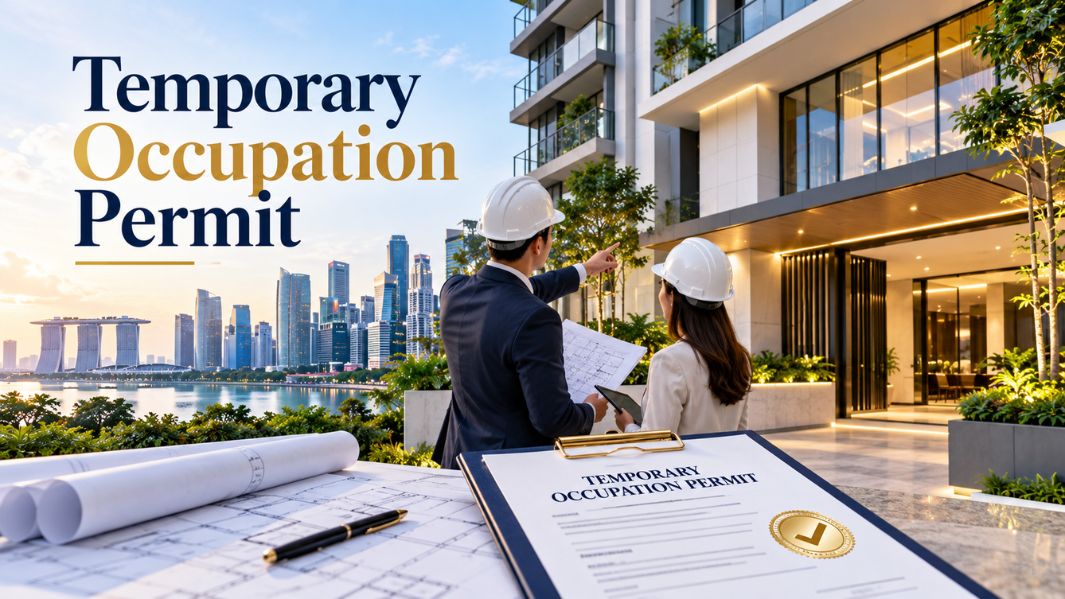
Completing a building project is a major achievement, but finishing construction does not automatically mean that people can legally move into the property. Before a newly constructed building can be occupied, it must meet key regulatory requirements to confirm it is fit for use. In Singapore, one of the most significant approvals in this process is the Temporary Occupation Permit (TOP), which allows qualifying buildings to be occupied before all final statutory completion requirements are met.
The permit matters to property developers, homeowners, construction professionals, and buyers of newly built residential units. It marks a significant stage in a development’s progress because it confirms that the relevant authority has accepted the building, or an approved part of it, as suitable for occupation. However, obtaining this approval does not necessarily mean that every outstanding administrative or technical matter has been resolved.
Understanding how the permit works can help property owners avoid misunderstandings about completion dates, building safety, legal occupancy, and the responsibilities that remain after construction.
What Is a Temporary Occupation Permit?
A Temporary Occupation Permit is an official approval issued by Singapore’s Building and Construction Authority (BCA) that permits occupation of a building, or part of a building, once the necessary conditions are met. It applies when a development is considered suitable for occupation, even though certain outstanding matters must still be addressed before the BCA can confirm full statutory completion.
The term temporary can be confusing. It does not mean the building is intended for short-term use or that residents are only permitted to stay there briefly. Instead, it refers to an intermediate regulatory stage between construction completion and the issuance of the final Certificate of Statutory Completion (CSC).
For example, a residential development may have completed its essential building works, established safe access, and obtained the clearances needed for occupation. However, other outstanding technical or administrative requirements may still need attention. If the relevant conditions are met, the authority may allow residents to occupy the property while the remaining matters are resolved.
The permit therefore provides a regulated transition from construction to actual building use without treating every outstanding requirement as a reason to prevent occupation.
Why Is a Temporary Occupation Permit Important?
This permit matters beyond a construction milestone. It helps protect building occupants while giving developers a structured process to bring completed properties into use. Without the necessary occupancy approval, a newly constructed building generally cannot be legally occupied under Singapore’s building control framework.
One of its primary purposes is to support building safety and regulatory compliance. Before approval is granted, applicants must address requirements for structural works, safe access, essential facilities, and other applicable building standards. The authorities may also require supporting documents, declarations, and technical clearances.
For property buyers, TOP issuance often indicates that a residential project has reached the stage where units may be prepared for handover. Nevertheless, receiving the permit and receiving the keys to an individual unit are not necessarily the same event. Actual handover depends on the purchase agreement, the developer’s arrangements, and other relevant conditions.
For developers, the permit supports the transition from construction management to property occupation while keeping outstanding obligations identifiable.
Temporary Occupation Permit Requirements in Singapore
Approval requires meeting requirements that vary by the type, size, design, and use of the development. A small landed residential property and a large mixed-use development may have different technical considerations. However, the underlying objective remains the same: the building must be suitable for its intended occupation.
Structural Safety and Completed Building Works
A key consideration is whether the relevant building works are properly completed and whether the development meets applicable safety requirements. This includes essential structural elements, access routes, barriers, stairways, and other features necessary for safe building use. Outstanding work that creates unacceptable risks to occupants can prevent approval.
A building may appear finished from the outside while still having unresolved issues that affect its suitability for occupation. For that reason, visual completion alone is not sufficient evidence that the regulatory requirements have been met.
Fire Safety and Essential Facilities
Fire protection arrangements are another important consideration. Depending on the development, requirements may cover emergency access, evacuation provisions, fire protection systems, and approvals administered by the Singapore Civil Defense Force.
Essential services and facilities must also satisfy applicable requirements. These may involve drainage, sanitation, ventilation, lifts, accessibility, and other systems needed for the building’s intended use. The precise requirements depend on the nature of the development rather than a single universal checklist.
Clearances From Relevant Authorities
The application may require clearances from government agencies responsible for different aspects of a development. These can include the Urban Redevelopment Authority (URA), Public Utilities Board (PUB), National Environment Agency (NEA), Land Transport Authority (LTA), and other relevant authorities.
Not every agency clearance applies identically to every project. The appointed professionals must determine which requirements apply and obtain the necessary approvals before the application can proceed.
How to Apply for a Temporary Occupation Permit
In Singapore, the project’s appointed Qualified Person (QP) submits the formal application, not an individual buyer or tenant. The QP coordinates the required professional declarations, documentation, and regulatory submissions.
Step 1: Review Construction Readiness
The application process begins with determining whether the building is ready for occupation. The project team must review the completed works, identify relevant deficiencies, and confirm that essential safety and compliance requirements have been addressed.
Applying prematurely can create unnecessary delays, especially if inspections reveal incomplete safety features, poor site access, or other conditions that make occupation unsuitable.
Step 2: Prepare Supporting Documents
The appointed professional gathers the required certificates, declarations, technical records, and agency clearances. Depending on the project, these may include certificates confirming the supervision and completion of building works, relevant test reports, and records for installed systems.
Accurate documentation matters because incomplete or inconsistent submissions can delay the authority’s assessment.
Step 3: Submit the Application and Arrange Inspections
The QP submits the application through the appropriate BCA process. Depending on the development and applicable procedures, the authority may require a site inspection or another accepted inspection arrangement.
BCA provides different inspection approaches, including standard inspections and certain express or virtual arrangements, subject to the authority’s acceptance and the project’s circumstances.
Step 4: Address Outstanding Issues
If the assessment identifies requirements that must be resolved before occupation, the project team must complete the necessary corrective work or provide the requested information.
A permit is not automatically granted simply because an application has been submitted. The authority must be satisfied that the conditions for lawful occupation have been met.
Step 5: Receive the Approval
Once the relevant requirements are met and the application is accepted, the authority may issue a Temporary Occupation Permit for the building or the specified part of the development. Occupation must remain within the scope and conditions of the approval.
How Long Does Temporary Occupation Permit Approval Take?
Processing time matters for developers planning property handovers and buyers preparing to move into newly completed homes.
According to BCA’s published service standard, BCA generally processes a complete TOP application within seven working days. Accepted express applications may be processed faster, subject to applicable requirements and fees.
However, these service standards should not be confused with the total time required to make a development ready for approval. Obtaining technical clearances, correcting defects, scheduling inspections, and assembling documentation may take additional time.
Developers should therefore avoid assuming that submitting an application guarantees an immediate approval or a specific move-in date.
Temporary Occupation Permit vs Certificate of Statutory Completion
Although the two approvals are closely related, they serve different purposes in Singapore’s building control system.
Feature: Temporary Occupation Permit (TOP) vs Certificate of Statutory Completion (CSC)
Main purpose Permits occupation when qualifying conditions are met Confirms statutory completion.
Development status Certain permissible outstanding matters may remain All applicable statutory requirements must be fulfilled.
Occupation Permitted within the approved scope Permitted following final statutory approval
Regulatory stage Intermediate occupancy approval Completion approval
Issuing authority BCA BCA
The key distinction is that TOP allows occupation before full statutory completion, whereas CSC confirms the development has met the requirements for final approval.
A developer receiving TOP is not automatically released from responsibility for outstanding statutory matters. Developers must continue to address those obligations in accordance with the applicable requirements.
Can a Building Be Occupied Before TOP Is Issued?
As a general rule, a building in Singapore that has undergone building works requiring occupancy approval cannot be occupied merely because construction appears complete. You must obtain the appropriate TOP or CSC, subject to the exceptions provided under the Building Control Act.
Moving into a property without the required approval may create legal and practical difficulties. Apart from regulatory concerns, occupants may face unresolved safety issues, incomplete building facilities, or uncertainty about whether the premises are ready for their intended use.
Prospective occupants should confirm that the necessary approval has actually been issued rather than relying only on an estimated completion date or verbal assurance.
What Is a Partial Temporary Occupation Permit?
Large developments are sometimes completed in stages. Rather than waiting for every part of a project to reach the same stage, a developer may seek approval for a completed portion that meets the relevant conditions.
A partial TOP allows an approved part of a development to be occupied while work continues elsewhere, provided the authority is satisfied that the arrangement meets applicable requirements.
For example, a multi-block residential development may have one completed block while construction continues on another. Approval for the completed portion may be possible if suitable access, essential services, and necessary safety arrangements are established.
However, receiving partial approval does not mean that occupants can freely access unfinished or unapproved areas. The permit’s scope and conditions remain important.
What Should Homebuyers Check After TOP Approval?
For someone buying a newly completed property, TOP issuance is encouraging, but it should not replace a careful inspection of the unit.
Buyers should confirm the status of the relevant occupancy approval, understand the developer’s handover arrangements, and inspect the property when access is provided. Pay particular attention to water leakage, electrical fittings, windows, doors, flooring, plumbing, ventilation, and other visible defects.
Record and report any problems through the appropriate process. The applicable defects liability period and the developer’s obligations depend on the purchase agreement and relevant legal requirements; TOP itself should not be treated as the universal starting date for every buyer’s defect-reporting rights.
It is also sensible to clarify whether common facilities are ready, whether renovation work is permitted, and what practical arrangements apply during the initial occupation period.
Common Misunderstandings About Temporary Occupation Permits
One common misunderstanding is that obtaining a TOP means a construction project is fully completed in every regulatory respect. In reality, authorities can issue the approval while certain permissible outstanding requirements remain unresolved.
Another misconception is that “temporary” means occupants must leave after a short, fixed period. Instead, the approval identifies a stage in the regulatory process and should be understood according to its actual conditions.
Some buyers also assume that TOP guarantees a defect-free home. It does not. A property may satisfy the requirements for occupation while still having artistry defects that need correction through the appropriate contractual arrangements.
Finally, do not confuse a TOP with a planning approval, land ownership document, renovation permit, or permission to erect a temporary structure. These serve different legal purposes and follow different approval processes.
Frequently Asked Questions
1. What does a Temporary Occupation Permit mean?
It is official approval that allows a qualifying building, or part of a building, to be occupied before final statutory completion is certified.
2. Who issues a Temporary Occupation Permit in Singapore?
The Building and Construction Authority (BCA) issues the permit under Singapore’s building control framework.
3. Can residents move in after TOP approval?
Yes, occupation is generally permitted within the approved scope. However, actual key collection and handover remain subject to the applicable contractual and practical arrangements.
4. Is a Temporary Occupation Permit the same as CSC?
No. TOP permits occupation at an intermediate regulatory stage, while the Certificate of Statutory Completion confirms compliance with the requirements for final statutory completion.
5. Can TOP be issued for only part of a development?
Yes. A partial TOP may be issued for a qualifying portion of a development, provided the relevant conditions are satisfied.
6. Does TOP guarantee that a property has no defects?
No. Occupancy approval does not guarantee that every artistic or cosmetic defect has been eliminated. Buyers should still inspect their units and report defects appropriately.
7. How long does a TOP application take to process?
BCA’s published service standard is generally seven working days after a complete application is submitted. Additional time may be necessary for inspections, clearances, or corrective work.
Conclusion
A Temporary Occupation Permit plays an essential role in Singapore’s construction and property approval system. It allows suitable buildings to transition from construction to lawful occupation while maintaining regulatory oversight of outstanding matters before final statutory completion.
For developers, understanding the application process helps improve planning, documentation, and coordination with the relevant authorities. For homeowners and property buyers, understanding what TOP means provides greater clarity on building readiness, handover expectations, and the importance of a proper property inspection.
Ultimately, view the permit as an important occupancy milestone rather than proof that every aspect of a development is complete. Understanding that distinction enables everyone involved to make better-informed decisions about the safety, legality, and practical readiness of a newly constructed property.

Barry Winkleman: The Remarkable Life, Publishing Career and Family Behind Claudia Winkleman

John Playfair: The Remarkable Life of Prue Leith’s Husband and Former Fashion Designer

thealitekeepsafe.com: A Complete Guide to Its Features, Online Safety, Content, and Trustworthiness

Growth Navigate Funding: A Complete Guide to Smart Business Financing and Sustainable Growth

Almawadahit. com Explained: A Complete Guide to Its Content, Features, and Online Reputation

UK Supermarket Fruit Salmonella Recall: Major Safety Warning That Affected Six Leading Retailers

Tracey Knievel: The Remarkable Untold Story of Evel Knievel’s Daughter and Her Life Beyond Fame

Jeremy Yaffe: The Remarkable Untold Story of Alan Arkin’s First Wife and Her Life Beyond Hollywood

Solica Casuto: The Fascinating Story of Andy Griffith’s Second Wife and Her Private Life

Tara Beane: The Remarkable Family Story Behind Billy Beane’s Moneyball Legacy

Everest Base Camp Trek vs Manaslu Circuit Trek: Routes, Difficulty, Costs, Altitude and Mountain Experience

Crackstube Explained: A Complete Guide to Its Features, Content, Safety, and Digital Publishing Platform

Classroom 15x: The Ultimate Guide to Free Online Games, Features, Benefits, and Safe Gaming

ABS Testauslösung: Bedeutung, Funktion, häufige Fehler und wichtige Sicherheitstipps

HMJones.net Explained: A Complete Guide to Business Loans, Funding Options, and Smarter Financial Decisions

Nigel Mackintosh: The Remarkable Business Career, Family Heritage and Life of Millie Mackintosh’s Father

Nomurano: Discover the Powerful Meaning Behind Modern Creativity, Design, and Intentional Living

Provascin: A Complete Guide to Its Ingredients, Potential Benefits, Uses, and Safety

Ruschek: The Fascinating History, Meaning, Origins and Legacy of a Rare European Surname

Mindset Energy: The Powerful Secret to Better Focus, Confidence, and Personal Growth
Barry Winkleman: The Remarkable Life, Publishing Career and Family Behind Claudia Winkleman
John Playfair: The Remarkable Life of Prue Leith’s Husband and Former Fashion Designer
thealitekeepsafe.com: A Complete Guide to Its Features, Online Safety, Content, and Trustworthiness
Growth Navigate Funding: A Complete Guide to Smart Business Financing and Sustainable Growth
Almawadahit. com Explained: A Complete Guide to Its Content, Features, and Online Reputation
UK Supermarket Fruit Salmonella Recall: Major Safety Warning That Affected Six Leading Retailers
Tracey Knievel: The Remarkable Untold Story of Evel Knievel’s Daughter and Her Life Beyond Fame
Jeremy Yaffe: The Remarkable Untold Story of Alan Arkin’s First Wife and Her Life Beyond Hollywood
Solica Casuto: The Fascinating Story of Andy Griffith’s Second Wife and Her Private Life
Tara Beane: The Remarkable Family Story Behind Billy Beane’s Moneyball Legacy
-
 Blog3 months ago
Beyond the Cages: How an Artificial Zoo Could Redefine Wildlife Travel
-
Adventure Travel2 weeks ago
Everest Base Camp Trek vs Manaslu Circuit Trek: Routes, Difficulty, Costs, Altitude and Mountain Experience
-
 Destination Guides3 months ago
Beyond the Map: Discovering Haslhof in Italy and Bavaria
-
Technology6 days ago
Crackstube Explained: A Complete Guide to Its Features, Content, Safety, and Digital Publishing Platform