

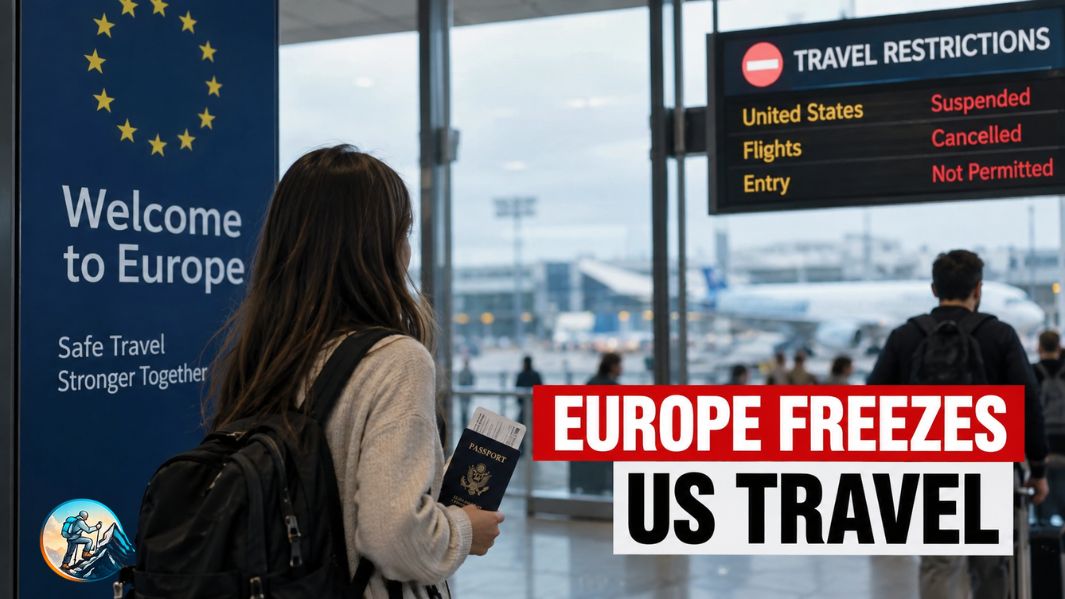
If you are an American traveler seeing worrying headlines, ‘Europe Freezes US Travel’ might make it seem like borders are closing. That is not the case. Europe has not banned U.S. tourists. Instead, many European countries are changing how they handle short visits from outside the EU. New digital border checks and travel-authorization rules mean you need to prepare more carefully. Europe is still open, but being unprepared can make your trip more stressful.
Europe Freezes US Travel: What the Phrase Actually Means
The dramatic phrase actually refers to stricter digital border controls, not a total freeze on Americans. The Entry/Exit System (EES) now works at Schengen borders and tracks when many non-EU short-stay travelers enter and leave. Instead of just stamping passports, it uses travel documents, biometric images of travel documents, and fingerprints. For U.S. visitors, this means your first arrival at an airport, port, or land border may feel different.
The rule allowing 90 days within any 180 days for short visa-free stays in the Schengen area still applies. However, digital records now make it easier for authorities to track your entries and exits. If you visit several Schengen countries, be sure to count your days carefully rather than assuming each country resets your 90-day limit.
Why Europe Freezes US Travel Is Trending
The phrase gets a lot of attention because it taps into real traveler concerns about border rules, biometric checks, and confusion over ETIAS. But ETIAS and EES are not the same. EES works at the border, while ETIAS is a separate pre-travel authorization for visa-exempt visitors. As of September 2026, ETIAS is not active yet. The European Union plans to launch it in the last quarter of 2026, but the exact date is still unknown.
If you see a website claiming that all Americans must already have an ETIAS before flying to Europe, be careful. Check the requirements close to your departure date instead of paying a third party just because a viral post says you need a new permit.
What American Travelers Should Expect at European Borders
The main change you might notice is extra processing during your first EES registration. You may need to show your passport and give biometric information at the border. Later crossings could be faster since the system can check your data. Still, busy times can mean longer waits, especially for families, groups, or travelers with tight connections.
It is a good idea to allow extra time on your first day. Try not to book a non-refundable train right after your international flight, keep your accommodation details handy, and be clear about the purpose and length of your trip. Border officials still make the final entry decision.
EES, ETIAS and the UK ETA Are Different
A common mistake is thinking of ‘Europe’ as one big immigration zone. The Schengen area, the European Union, and the United Kingdom each have their own visitor systems. EES is for short-stay border crossings in certain European countries. When it launches, ETIAS will be a pre-travel authorization for eligible visa-exempt travelers visiting those destinations.
The UK ETA is different. If you are traveling to London, Edinburgh, or anywhere else in the United Kingdom, you usually need the UK’s electronic travel authorization unless you qualify for an exemption. It is safer to check the rules for each country before you go, rather than assuming a single approval covers your entire trip.
How to Prepare Without Overcomplicating Your Trip
Begin by checking the passport you plan to use and make sure it is valid well before you leave. Look up the entry rules for every country on your trip, especially if you are visiting both Schengen and non-Schengen places. Keep both digital and paper copies of important reservations, allow enough time for connections, and count your Schengen days if you have been there in the last six months.
Europe is still a great place to visit if you want to see big cities, coastlines, mountain towns, and cultural sites all in one trip. The rules are getting more digital, but that does not mean they are less welcoming.
It is always wise to remember: “Good journeys begin with good information.” This is especially true when a viral phrase can make a simple border update seem like Europe is closing its doors.
Final Takeaway: Europe Is Changing Entry, Not Closing the Door
The ‘Europe Freezes US Travel’ trend is really a reminder to prepare, not a reason to cancel your trip. Americans can still visit Europe, but it is important to know about EES biometric checks, keep an eye out for the ETIAS launch, follow the Schengen 90/180-day rule, and remember that the UK’s ETA is separate. Taking a few minutes to plan can help you avoid confusion at the border. Europe’s streets, museums, coastlines, and cafés are still open—you just need to know which digital steps to take first.
You May Read Also: Beyond the Podium: How Debate Travel Turns Competition Into an Unforgettable Journey