
Technology
203 Area Code: Complete Guide to Connecticut’s Location, History, Time Zone, and Phone Numbers

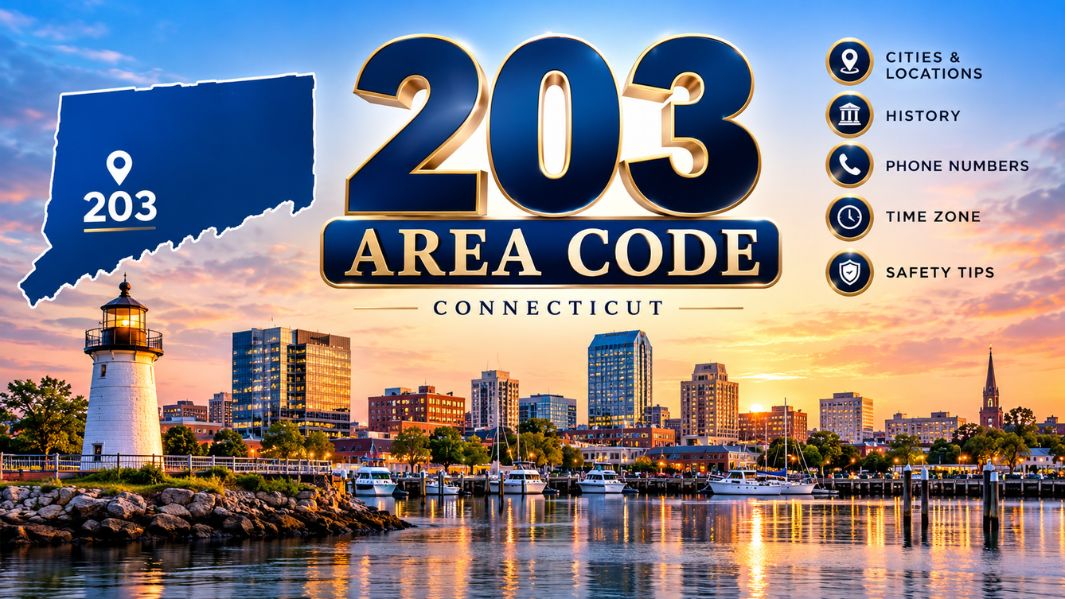
The 203 area code is one of the oldest telephone area codes in the United States, serving southwestern and south-central Connecticut. It connects residents, businesses, government offices, and organizations across important communities, including Bridgeport, New Haven, Stamford, Waterbury, and Danbury. Introduced in 1947, this telephone code has remained an important part of Connecticut’s communications system despite major changes in population, technology, and telephone services. Today, it operates alongside the 475 area code, allowing more telephone numbers to serve the same geographic region.
Understanding an area code can help when you receive unfamiliar calls, contact local businesses, relocate to another state, or establish a professional telephone presence. Although an area code indicates a number’s original geographic assignment, it cannot always identify the caller’s current location. Modern mobile services, number portability, and internet-based calling have made telephone numbers more flexible than they were in the past.
This article explains the 203 area code location, its history, major cities, time zone, dialing requirements, relationship with area code 475, and essential information about identifying suspicious telephone calls.
What Is the 203 Area Code?
The 203 area code is a geographic telephone numbering code assigned to Connecticut within the North American Numbering Plan (NANP). It covers the state’s southwestern and south-central portions, including several densely populated cities, coastal communities, and suburban towns. When the North American Numbering Plan standardized telephone numbers in 1947, Connecticut received 203 as its original statewide area code. As demand increased, the numbering region was eventually divided, and additional codes were introduced.
Today, telephone numbers beginning with 203 are commonly associated with residents, institutions, healthcare facilities, educational establishments, and businesses in southern Connecticut. The code is not limited to one city or telephone provider. Both traditional landline and mobile telephone services may use it, while internet-based telephone providers can also supply numbers associated with this region.
Where Is the 203 Area Code Located?
The 203 area code is located in Connecticut, United States, primarily covering Fairfield County and New Haven County. Its geographical coverage includes coastal communities along Long Island Sound, cities in the Naugatuck Valley, and suburban areas near the New York state border. This region is economically and geographically important because it connects major Connecticut population centers with the broader New York metropolitan area.
The service area includes established residential neighborhoods, commercial districts, universities, hospitals, and industrial communities. Although telephone numbering boundaries don’t always match municipal boundaries exactly, the code is strongly associated with southwestern Connecticut. It is especially familiar in communities where businesses have kept longstanding telephone numbers in use for decades.
Major Cities Covered by the 203 Area Code
Several important Connecticut cities and towns are served by area code 203. Each contributes to the region’s economy, cultural life, and telecommunications network.
Bridgeport: As Connecticut’s largest city by population, Bridgeport is one of the major communities associated with this telephone code. Its residential neighborhoods, commercial activity, and public institutions drive substantial telecommunications demand.
New Haven: Known for Yale University, New Haven is an important educational, medical, and cultural center. Many local businesses, healthcare providers, and organizations use telephone numbers in the 203 area code.
Stamford: Near New York City, Stamford is a major business and financial center. Its corporate offices, professional services, and residential communities make reliable telephone connectivity especially important.
Norwalk: This coastal city has a mixture of residential areas, commercial establishments, and waterfront attractions. Local service providers and organizations commonly use numbers associated with the region.
Danbury: Located in western Connecticut, Danbury serves as a regional center for shopping, employment, healthcare, and residential communities.
Waterbury: Historically recognized for its manufacturing heritage, Waterbury remains an important urban center with local businesses, public services, and educational institutions.
Other communities associated with the numbering area include Greenwich, Fairfield, Westport, Milford, Stratford, Shelton, and West Haven. Together, these cities and towns illustrate the diversity of the region covered by this telephone code.
History of the 203 Area Code
The 203 area code dates back to 1947, when the original North American telephone area codes were established. At that time, Connecticut operated under a single area code, making statewide telephone numbering relatively straightforward. As residential populations grew and businesses added more telephone lines, demand for additional numbers increased.
A major development occurred in 1995, when Connecticut introduced area code 860 through a geographic split. The new code took over much of northern and eastern Connecticut, including the Hartford region. Meanwhile, 203 continued serving southwestern and south-central communities. This division helped distribute available telephone numbers across the state’s growing communications network.
Another significant change arrived on 12 December 2009, when area code 475 entered service as an overlay of 203. Instead of splitting the existing region again, telecommunications authorities introduced an additional code that covered the same territory. This approach increased available numbering capacity while letting existing customers keep their established telephone numbers.
What Is the Difference Between Area Codes 203 and 475?
The main difference between 203 and 475 is their introduction date, not their geographic coverage. Area code 203 has served Connecticut since 1947, while 475 was introduced in 2009 to provide additional telephone numbering capacity. Both codes now serve the same geographic area, so neighboring homes or offices may have different area codes even when located on the same street.
This arrangement is known as an area code overlay. It allows telecommunications providers to assign additional numbers without requiring every existing customer to change their telephone number. An older business may keep a 203 number, while a newly established nearby company receives a 475 number. Neither code automatically indicates a better-quality telephone service, a more prestigious address, or a different local calling region.
What Time Zone Does the 203 Area Code Use?
The entire geographic region associated with the 203 area code follows the Eastern Time Zone (ET). Like the rest of Connecticut, it observes Eastern Standard Time during the colder months and Eastern Daylight Time during daylight saving time.
During Eastern Standard Time (EST), the region is five hours behind Coordinated Universal Time (UTC−5). During Eastern Daylight Time (EDT), it is four hours behind UTC (UTC−4).
This distinction matters when scheduling business meetings, customer service calls, medical appointments, or conversations with people living outside the United States. International callers should also remember that daylight saving time changes can affect the time difference between Connecticut and their own country.
How to Call a 203 Area Code Number
Calling a telephone number with the 203 prefix is straightforward once you understand the correct dialing format. In Connecticut, callers must use ten-digit dialing, including the three-digit area code followed by the seven-digit local telephone number.
For example, a telephone number may be written as (203) 555-0123. This is an illustrative example using a reserved fictional-number range, rather than a particular business or person’s contact information.
When placing certain domestic long-distance calls, callers may need to dial the number with a leading 1, depending on their telephone service and network requirements. For international calls to the United States, the general format is +1 203, followed by the seven-digit local number. The +1 represents the country calling code used by the United States and other participating North American numbering territories.
It is also worth distinguishing dialing format from call charges. Sharing an area code does not necessarily determine whether a call is free, local, or subject to additional charges. Telephone plans, service providers, and applicable calling arrangements determine the actual cost.
Why Is Ten-Digit Dialing Required?
Connecticut required ten-digit dialing because multiple area codes began serving overlapping geographic areas. When both 203 and 475 operate within the same region, dialing only seven digits may not clearly identify the intended telephone number.
Connecticut introduced mandatory ten-digit dialing in November 2009. This requirement allows the telephone network to distinguish numbers that share the same seven-digit sequence but use different area codes. It also supports the efficient allocation of telephone numbers as population and communications requirements change.
For residents and businesses, this means saved contacts, automated dialing equipment, alarm systems, and other devices that place telephone calls should contain complete telephone numbers. Emergency services remain an important exception: callers can still dial 911 directly for emergencies.
Is the 203 Area Code Safe or a Scam?
The 203 area code is legitimate and not, by definition, associated with fraud. Millions of ordinary telephone interactions involve geographic area codes, and legitimate calls can originate from Connecticut businesses, individuals, medical offices, schools, and public organizations. However, receiving a call that displays a familiar area code does not guarantee that the caller is trustworthy.
One common problem is caller ID spoofing, where an individual or automated calling system displays a telephone number that does not accurately represent the origin of the call. Some scammers deliberately use nearby area codes to make their calls appear local. This practice can encourage recipients to answer because they assume the caller is from their community.
Treat unexpected requests for banking credentials, account passwords, verification codes, gift card payments, or urgent money transfers with caution. If someone claims to represent a bank, government agency, or familiar business, contact that organization independently using its official telephone number rather than the number displayed during the incoming call.
Can You Identify Who Is Calling From a 203 Number?
A telephone number beginning with 203 can indicate its geographic numbering assignment, but it does not reveal the caller’s identity. Telephone number portability lets individuals keep numbers when switching eligible service providers, and mobile customers may keep their original numbers after relocating.
Some telephone providers offer caller identification and spam detection services that can help users assess unfamiliar calls. Reverse telephone lookup services may provide additional information, although their records can be incomplete, outdated, or inaccurate.
If an unfamiliar number repeatedly contacts you without leaving a legitimate message, consider using your phone’s blocking or call-screening features. Avoid publishing private information about an unknown caller based solely on an unverified telephone lookup.
Benefits of Having a 203 Area Code for Businesses
For businesses operating in southwestern Connecticut, maintaining a local telephone number can offer practical advantages. Customers searching for nearby services may recognize the area code and understand that it is associated with their region. This can help professional service providers, retail establishments, healthcare practices, contractors, and other customer-facing organizations.
An established number can also support continuity. Customers who have saved a company’s contact information can keep reaching it even if the business changes offices or telephone service providers, provided number portability and service arrangements allow the transition.
Modern business telephone systems may also provide features such as voicemail, call forwarding, automated reception, and internet-based calling. These functions can help organizations manage communications across multiple locations while retaining a familiar Connecticut number.
Nevertheless, an area code alone does not prove that a business maintains a physical office in Connecticut. When those details matter, customers should verify a company’s actual address and credentials.
Can You Get a New 203 Area Code Phone Number?
You may be able to get a new telephone number with the 203 prefix through a mobile carrier, traditional telephone company, or eligible internet-based telephone service. However, availability depends on the provider’s number inventory and the specific telephone exchange or service location.
Because 203 is an established numbering code, providers may offer a 475 number when suitable 203 numbers aren’t available. Both codes serve the same geographic territory, so receiving 475 does not mean that a customer has been assigned to a different part of Connecticut.
Anyone seeking a particular area code should check directly with their chosen provider before activating a new account. Businesses considering a telephone number for long-term advertising should also ask about number portability and account ownership arrangements.
Conclusion
The 203 area code is an established part of Connecticut’s telecommunications history, serving important cities and communities across the state’s southwestern and south-central regions. Since its introduction in 1947, it has adapted to significant changes in telephone technology, population growth, and business communication requirements. The introduction of area code 475 in 2009 expanded the region’s telephone numbering capacity while preserving existing numbers.
For residents, businesses, and international callers, understanding this area code makes it easier to recognize Connecticut telephone numbers, follow the correct dialing procedures, and communicate across time zones. Modern telephone numbers do not always reveal where a caller is physically located. By combining basic knowledge of geographic area codes with sensible telephone security practices, users can communicate more confidently and identify suspicious calls more effectively.
(FAQs)
1. Which state uses the 203 area code?
The 203 area code belongs to Connecticut, USA. It primarily serves southwestern and south-central Connecticut, including Bridgeport, Stamford, New Haven, Waterbury, and Danbury.
2. Is the 203 area code in New York?
No. The code is assigned to Connecticut, although some communities in its coverage area are close to New York City and have strong economic ties to the New York metropolitan region.
3. What area code overlaps with 203?
Area code 475 overlaps with 203. Both serve the same geographic region in Connecticut, and callers generally use 10 digits when placing local calls.
4. Can a 203 phone number be used outside Connecticut?
Yes. Mobile number portability and internet-based telephone services may allow a person or business to retain a Connecticut number while living or operating elsewhere. The area code therefore does not guarantee the caller’s current physical location.
5. Is receiving a call from a 203 number dangerous?
Not necessarily. The code is legitimate, and many genuine callers use it. However, scammers can manipulate caller ID information, so always independently verify unexpected requests for sensitive information or payments.

Barry Winkleman: The Remarkable Life, Publishing Career and Family Behind Claudia Winkleman

John Playfair: The Remarkable Life of Prue Leith’s Husband and Former Fashion Designer

thealitekeepsafe.com: A Complete Guide to Its Features, Online Safety, Content, and Trustworthiness

Growth Navigate Funding: A Complete Guide to Smart Business Financing and Sustainable Growth

Almawadahit. com Explained: A Complete Guide to Its Content, Features, and Online Reputation

UK Supermarket Fruit Salmonella Recall: Major Safety Warning That Affected Six Leading Retailers

Tracey Knievel: The Remarkable Untold Story of Evel Knievel’s Daughter and Her Life Beyond Fame

Jeremy Yaffe: The Remarkable Untold Story of Alan Arkin’s First Wife and Her Life Beyond Hollywood

Solica Casuto: The Fascinating Story of Andy Griffith’s Second Wife and Her Private Life

Tara Beane: The Remarkable Family Story Behind Billy Beane’s Moneyball Legacy

Everest Base Camp Trek vs Manaslu Circuit Trek: Routes, Difficulty, Costs, Altitude and Mountain Experience
Crackstube Explained: A Complete Guide to Its Features, Content, Safety, and Digital Publishing Platform

Classroom 15x: The Ultimate Guide to Free Online Games, Features, Benefits, and Safe Gaming

ABS Testauslösung: Bedeutung, Funktion, häufige Fehler und wichtige Sicherheitstipps
HMJones.net Explained: A Complete Guide to Business Loans, Funding Options, and Smarter Financial Decisions

Nomurano: Discover the Powerful Meaning Behind Modern Creativity, Design, and Intentional Living

Nigel Mackintosh: The Remarkable Business Career, Family Heritage and Life of Millie Mackintosh’s Father

Provascin: A Complete Guide to Its Ingredients, Potential Benefits, Uses, and Safety

Ruschek: The Fascinating History, Meaning, Origins and Legacy of a Rare European Surname

Mindset Energy: The Powerful Secret to Better Focus, Confidence, and Personal Growth
Barry Winkleman: The Remarkable Life, Publishing Career and Family Behind Claudia Winkleman
John Playfair: The Remarkable Life of Prue Leith’s Husband and Former Fashion Designer
thealitekeepsafe.com: A Complete Guide to Its Features, Online Safety, Content, and Trustworthiness
Growth Navigate Funding: A Complete Guide to Smart Business Financing and Sustainable Growth
Almawadahit. com Explained: A Complete Guide to Its Content, Features, and Online Reputation
UK Supermarket Fruit Salmonella Recall: Major Safety Warning That Affected Six Leading Retailers
Tracey Knievel: The Remarkable Untold Story of Evel Knievel’s Daughter and Her Life Beyond Fame
Jeremy Yaffe: The Remarkable Untold Story of Alan Arkin’s First Wife and Her Life Beyond Hollywood
Solica Casuto: The Fascinating Story of Andy Griffith’s Second Wife and Her Private Life
Tara Beane: The Remarkable Family Story Behind Billy Beane’s Moneyball Legacy
-
 Blog3 months ago
Beyond the Cages: How an Artificial Zoo Could Redefine Wildlife Travel
-
Adventure Travel2 weeks ago
Everest Base Camp Trek vs Manaslu Circuit Trek: Routes, Difficulty, Costs, Altitude and Mountain Experience
-
 Destination Guides3 months ago
Beyond the Map: Discovering Haslhof in Italy and Bavaria
-
Technology6 days ago
Crackstube Explained: A Complete Guide to Its Features, Content, Safety, and Digital Publishing Platform