
Technology
Master Information Block: The Essential Guide to Understanding 4G and 5G Network Communication

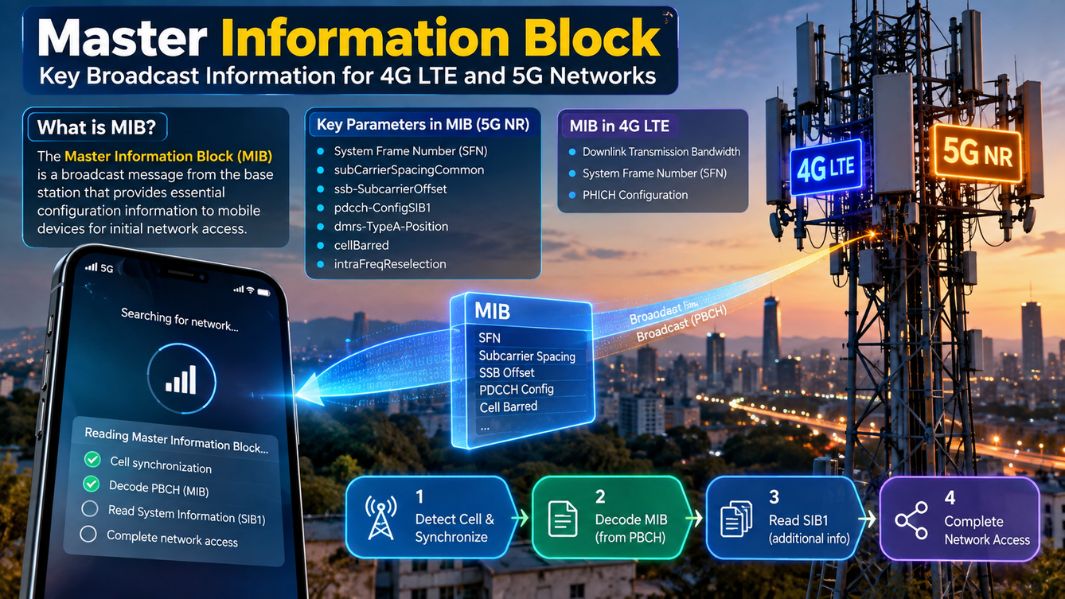
Modern mobile communication depends on complex technologies working together to provide reliable connectivity, faster data transmission, and efficient network performance. One key component is the Master Information Block (MIB), which helps mobile devices get essential information about a cellular network before establishing a connection. Although most smartphone users never encounter this technical term, it plays an important role in how devices discover available networks and prepare for communication. From traditional 4G LTE systems to advanced 5G New Radio (NR) technology, the MIB provides fundamental configuration details that support the initial stages of network access. Understanding this component offers valuable insight into how cellular infrastructure operates and why properly configured broadcast information matters for mobile connectivity.
What Is a Master Information Block?
A Master Information Block is a small broadcast system-information message that a cellular base station sends to provide mobile devices with essential configuration details. It is part of the system information a device needs to identify and access a cellular network. In telecommunications, a mobile device is commonly called User Equipment (UE), while the network infrastructure includes base stations that transmit wireless signals. When a device searches for cellular service, it must first identify a suitable cell and obtain specific information before proceeding with further access procedures. The MIB supports this early stage by delivering a limited set of critical parameters. It does not contain every configuration required for a complete connection. Instead, it provides foundational details that allow the device to interpret additional broadcast information and continue the network access process.
Why Is the Master Information Block Important?
The Master Information Block’s importance becomes clearer when you consider how many mobile devices try to access cellular networks throughout the day. Smartphones, tablets, industrial sensors, and other connected equipment must identify network cells and understand their basic operating configurations. Without the necessary broadcast information, a device may detect a cellular signal but still be unable to complete the access procedure correctly. The MIB supports this process by communicating essential parameters in a compact, standardized format. Its design helps devices obtain fundamental information without requiring the network to establish a dedicated connection with every nearby device. This approach is especially useful in environments where many devices are searching for connectivity at the same time. By broadcasting critical configuration details, cellular networks can support more efficient initial access and system-information acquisition.
How Does the Master Information Block Work?
The Master Information Block operates via broadcast rather than through a communication session with an individual device. In 5G New Radio, the MIB is carried on the Physical Broadcast Channel (PBCH), which forms part of the Synchronization Signal and PBCH Block, commonly called the SSB. When a device begins searching for a network, it first synchronizes using signals transmitted by the base station. These signals help the device detect the cell and establish the timing and identity information needed for further processing. The device can then decode the PBCH to obtain the MIB and associated broadcast information. After successfully interpreting this information, it can locate additional system information, particularly System Information Block 1 (SIB1), where applicable. This sequence supports the transition from merely detecting a network signal to understanding the configuration required for attempting network access.
Key Components of the Master Information Block in 5G
The 5G Master Information Block contains several carefully defined information elements, each serving a particular purpose in network operation. One important element is the System Frame Number (SFN), which helps the device establish its position within the network’s radio-frame timing structure. The MIB carries part of this number, while the PBCH transmission provides additional information needed to determine the complete frame number. Another important field is subCarrierSpacingCommon, which indicates the common subcarrier spacing used for specified initial-access and broadcast procedures. Its interpretation depends on the relevant frequency range and operating configuration.
The ssb-SubcarrierOffset field indicates the frequency-domain relationship between the synchronization block and the resource-block grid. Meanwhile, pdcch-ConfigSIB1 helps determine the control-channel configuration for obtaining SIB1 or provides related frequency-position information when SIB1 is not present. Other fields include dmrs-TypeA-Position, which indicates a reference-signal position, and cellBarred, which communicates whether the cell is barred for applicable cell-selection procedures. The intraFreqReselection field provides information relevant to cell reselection under specified conditions. Together, these elements let the device make key decisions in the early stages of cellular communication.
Master Information Block in 4G LTE Networks
The Master Information Block also plays an essential role in 4G Long-Term Evolution (LTE) networks, although its contents differ from those used in 5G. In LTE, the MIB is transmitted over the Physical Broadcast Channel and traditionally includes downlink transmission bandwidth, the System Frame Number, and the Physical Hybrid ARQ Indicator Channel (PHICH) configuration. The bandwidth information allows the device to understand the configured downlink resource-block allocation, while the frame-number information supports radio-frame synchronization. PHICH configuration provides information associated with the channel used for hybrid automatic repeat request feedback in traditional LTE operation. These parameters reflect LTE’s radio architecture and its initial cell-access requirements. While LTE and 5G share the general concept of broadcasting essential information, their MIB structures are not interchangeable because the underlying radio technologies have different configuration requirements.
Difference Between MIB and System Information Blocks
A common point of confusion involves the difference between the Master Information Block and other System Information Blocks (SIBs). Although these messages belong to the broader system-information framework, they perform different functions. The MIB provides a small collection of essential parameters required during the earliest stages of cell acquisition. SIB1 provides more detailed information used to determine whether a cell is suitable for access and how to obtain additional system information. Depending on the radio technology, system information can include network identification, cell-selection parameters, access-related configurations, and scheduling details. In 5G NR, SIB1 also contains important information about common serving-cell configuration. A useful way to understand the relationship is to think of the MIB as the first set of technical instructions that helps a device find and interpret the next information it needs. Both message types support successful network access, but neither should replace the other.
Role of the Master Information Block in 5G Network Access
In 5G networks, initial access involves several coordinated procedures that must occur in the correct order. A mobile device starts by searching for synchronization signals and identifying potential serving cells. After synchronizing, it attempts to decode the PBCH and recover the MIB. This information helps the device understand essential aspects of the cell’s operating configuration and determine how to proceed with acquiring additional system information. When SIB1 is available, the device uses relevant information to locate and decode it. The device then evaluates further cell-selection and access requirements before attempting random access when appropriate. The MIB is an important starting point, but receiving it does not automatically authorize a device to connect or establish full communication. Authentication, registration, access control, and other procedures occur through additional stages of network operation.
How MIB Supports Network Efficiency and Reliability
Cellular networks must provide basic operating information to devices without creating unnecessary signaling overhead. The Master Information Block achieves this objective through a compact broadcast format that includes only selected critical parameters. Instead of transmitting an extensive configuration message during the first stage of synchronization, the network supplies essential information that supports further processing. This arrangement is particularly valuable in high-density communication environments, where many devices may be attempting to discover or reconnect to network cells. Because the MIB is broadcast, multiple devices can obtain the information without requiring separate individual messages. However, the overall reliability of this process still depends on factors such as radio coverage, interference, synchronization accuracy, and correct network configuration. The MIB contributes to efficient network discovery, but successful communication also requires reliable transmission of subsequent control and system-information messages.
Common Problems Related to Master Information Block Decoding
Although the Master Information Block is designed for reliable initial reception, decoding can still fail under poor radio conditions. Weak signal strength, severe interference, and synchronization problems may prevent a device from correctly recovering the broadcast information. If the device cannot decode the PBCH successfully, it may be unable to obtain the necessary MIB parameters and continue with the expected access procedure. Network configuration problems can also interfere with system-information acquisition, particularly when broadcast parameters are inconsistent with other relevant configurations. For telecommunications engineers, investigating these issues typically involves examining synchronization performance, PBCH decoding results, signal quality measurements, and system-information configuration. Importantly, the MIB doesn’t cause every connection failure. A device may decode it successfully and still encounter problems while obtaining SIB1, completing random access, registering with the network, or maintaining radio connectivity.
Master Information Block and Modern Telecommunications Testing
Testing the Master Information Block is an important part of verifying cellular network equipment and device compatibility. Telecommunications engineers use specialized test equipment, network simulators, and protocol-analysis tools to evaluate whether the network transmits and devices interpret broadcast information correctly. In 5G NR testing, engineers may examine the SSB, PBCH decoding performance, system-frame timing, and the relationship between MIB parameters and subsequent system-information acquisition. These assessments help identify configuration mismatches and radio-performance problems that could interfere with device access. Testing is also relevant when introducing new network equipment, adjusting cell configurations, or evaluating device implementations. Since the MIB appears early in the access procedure, an error affecting its transmission or interpretation can prevent later procedures from being reached. Reliable initial broadcasting therefore plays an important role in overall network validation.
The Future of Master Information Block Technology
As cellular communication evolves, the Master Information Block remains a key example of how wireless networks organize essential signaling information. Developments in 5G technology, including more advanced radio deployments, network optimization, and diverse connected-device applications, create ongoing demands for efficient initial access. Network operators must balance performance, coverage, resource utilization, and device compatibility while keeping fundamental system information accessible. Future telecommunications standards may refine broadcasting and initial-access procedures, though specific changes depend on the requirements standards organizations adopt. The underlying principle is likely to remain important: devices need a reliable way to discover a cell and obtain basic configuration details before attempting more complex network operations.
Frequently Asked Questions
1. What is the main purpose of a Master Information Block?
The Master Information Block provides essential broadcast configuration information that helps mobile devices understand basic cell parameters and proceed with the initial stages of cellular network access.
2. Is the Master Information Block used in both 4G and 5G?
Yes. Both 4G LTE and 5G NR use a Master Information Block, but the message contents differ because the technologies have different radio architectures and initial-access requirements.
3. Which channel carries the Master Information Block?
The MIB is carried on the Physical Broadcast Channel (PBCH) in both LTE and 5G NR. In 5G, the PBCH is part of the Synchronization Signal Block.
4. What happens if a device cannot decode the MIB?
If a device cannot decode the MIB, it may be unable to obtain essential configuration information required to continue the normal cell-acquisition process. The device may attempt reception again or search for another suitable cell.
Conclusion
The Master Information Block is a fundamental component of modern cellular communication, supporting the early stages of network discovery, synchronization, and system-information acquisition. Although it carries relatively little information, its role is significant because mobile devices rely on essential broadcast parameters before progressing toward network access. From LTE to 5G NR, the MIB demonstrates how carefully structured system information helps cellular technologies operate efficiently and consistently. Its connection to synchronization signals, broadcast channels, and other System Information Blocks makes it an important topic for telecommunications students, engineers, and technology professionals. Understanding how the Master Information Block works provides a clearer picture of the processes that occur when a mobile device discovers a network and prepares to establish wireless connectivity.

Emma Poppy Deyes: The Inspiring Story of Poppy Deyes, Her Career, Family, and Lifestyle Brand

Laura Sherriff: The Inspiring Story of Craig Phillips’ Wife, TV Presenter and DIY Entrepreneur

Classroom 15x: The Ultimate Guide to Free Online Games, Features, Benefits, and Safe Gaming

Crackstube Explained: A Complete Guide to Its Features, Content, Safety, and Digital Publishing Platform

Nomurano: Discover the Powerful Meaning Behind Modern Creativity, Design, and Intentional Living

Instagram Video Downloader: The Ultimate Guide to Saving Instagram Videos Safely and Easily

Provascin: A Complete Guide to Its Ingredients, Potential Benefits, Uses, and Safety

Tikcotech Explained: Powerful Features, Digital Tools, Benefits, and Everything You Should Know

Cristher: A Complete Guide to Premium Outdoor Lighting, Innovative Design, and Architectural Solutions

HMJones.net Explained: A Complete Guide to Business Loans, Funding Options, and Smarter Financial Decisions
Nomurano: Discover the Powerful Meaning Behind Modern Creativity, Design, and Intentional Living
Crackstube Explained: A Complete Guide to Its Features, Content, Safety, and Digital Publishing Platform

Everest Base Camp Trek vs Manaslu Circuit Trek: Routes, Difficulty, Costs, Altitude and Mountain Experience

Mindset Energy: The Powerful Secret to Better Focus, Confidence, and Personal Growth

iProwess: Discover the Innovative Audio Brand Combining Smart Sound, Lighting, and Modern Technology
Instagram Video Downloader: The Ultimate Guide to Saving Instagram Videos Safely and Easily

Plan Better Family Adventures With Thomsonkids.com: Ideas for Easier, Happier Travel
HMJones.net Explained: A Complete Guide to Business Loans, Funding Options, and Smarter Financial Decisions

Discover Europe Differently: How European Active Projects Are Reshaping Modern Travel
Provascin: A Complete Guide to Its Ingredients, Potential Benefits, Uses, and Safety
Emma Poppy Deyes: The Inspiring Story of Poppy Deyes, Her Career, Family, and Lifestyle Brand
Laura Sherriff: The Inspiring Story of Craig Phillips’ Wife, TV Presenter and DIY Entrepreneur
Classroom 15x: The Ultimate Guide to Free Online Games, Features, Benefits, and Safe Gaming
Crackstube Explained: A Complete Guide to Its Features, Content, Safety, and Digital Publishing Platform
Nomurano: Discover the Powerful Meaning Behind Modern Creativity, Design, and Intentional Living
Instagram Video Downloader: The Ultimate Guide to Saving Instagram Videos Safely and Easily
Provascin: A Complete Guide to Its Ingredients, Potential Benefits, Uses, and Safety
Tikcotech Explained: Powerful Features, Digital Tools, Benefits, and Everything You Should Know
Cristher: A Complete Guide to Premium Outdoor Lighting, Innovative Design, and Architectural Solutions
HMJones.net Explained: A Complete Guide to Business Loans, Funding Options, and Smarter Financial Decisions
-
Technology15 hours ago
Crackstube Explained: A Complete Guide to Its Features, Content, Safety, and Digital Publishing Platform
-
Blog15 hours ago
Nomurano: Discover the Powerful Meaning Behind Modern Creativity, Design, and Intentional Living
-
 Blog2 months ago
Beyond the Cages: How an Artificial Zoo Could Redefine Wildlife Travel
-
Adventure Travel1 week ago
Everest Base Camp Trek vs Manaslu Circuit Trek: Routes, Difficulty, Costs, Altitude and Mountain Experience