

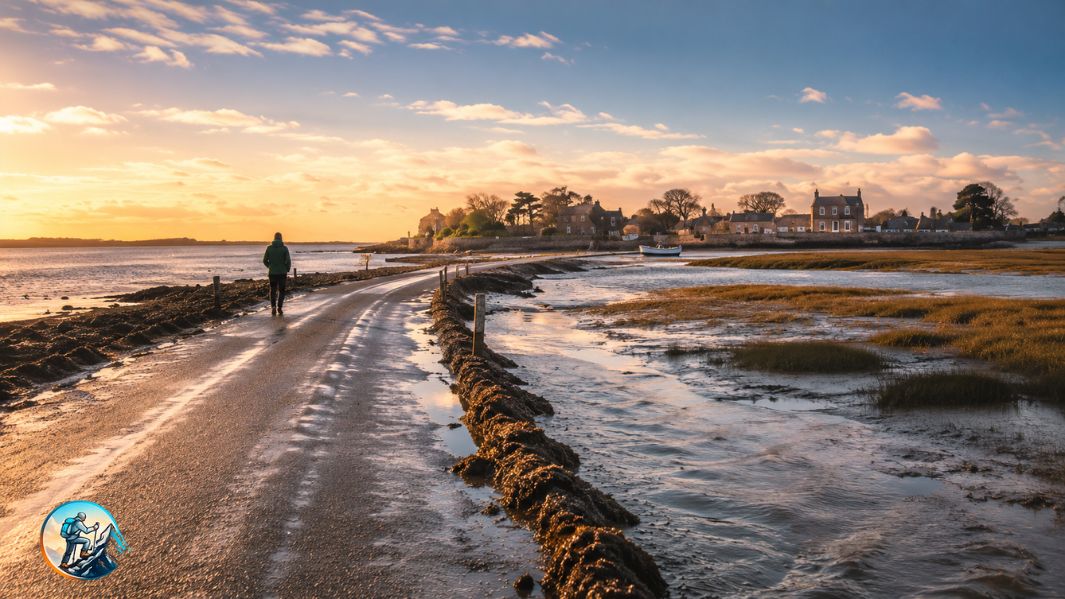
Sunderland Point feels less like a conventional day trip and more like a landscape shaped by water, weather, and silence. Set where the River Lune estuary opens into Morecambe Bay, this tiny Lancashire settlement rewards travellers who enjoy atmospheric walks, maritime history, birdlife, and places that refuse to hurry. The journey itself is memorable: the village’s only road crosses salt marsh and can disappear beneath the tide, making careful planning part of the adventure.
Why Sunderland Point Lancs Is Worth Visiting
The first thing you notice is the sky. It seems enormous above the mudflats, shingle, weathered boats, and long waterfront terraces. There are no amusement arcades, souvenir stalls, or noisy attractions competing for attention. Instead, Sunderland Point offers Georgian architecture, open estuary views, shifting reflections, and a strong sense of seclusion. It suits walkers, photographers, birdwatchers, history enthusiasts, and couples seeking a peaceful escape near Lancaster and Morecambe.
Planning a Safe Visit Around the Tide
How to Reach Sunderland Point Lancs Without Getting Stranded
Driving from Overton involves crossing a narrow tidal causeway, which is frequently submerged at high tide. Check current Heysham tide times immediately before travelling, read the warning signs, and consider wind and weather conditions, as predicted heights are not guaranteed. Never drive through standing or moving seawater, even when another vehicle has crossed. Build a generous safety margin rather than trying to beat the tide.
An alternative is to park near Potts Corner, Middleton Sands, and approach on foot along the western shore, but this route can also be affected by high tides. Wear waterproof walking boots, carry a charged phone, and tell someone your plan. The village has public toilets, but no shops or refreshment outlets, so bring water, snacks, and any medication you may need.
Allow two or three hours for a visit, longer if you plan to walk the shoreline route or wait safely for the causeway to reopen. Wheelchair and pushchair users should expect rough shingle, mud, gates, and uneven paths rather than a fully accessible promenade. Families should keep children close beside tidal channels. Carry out all litter, avoid picking plants, and never approach livestock or resting birds for photographs.
A Harbour Village Shaped by Trade
Sunderland Point developed during the early eighteenth century as an outport for Lancaster when larger vessels struggled with silting farther up the Lune. Historic warehouses, houses, quay remains, and elegant terraces still hint at that commercial period. Today, much of the settlement forms a conservation area, and its restrained character is central to the experience. Walk slowly, avoid blocking lanes or gateways, and remember that the waterfront buildings are private homes, not a film set.
Visiting Sambo’s Grave With Respect
The walk to Sambo’s Grave is one of the best-known reasons people visit, yet it should never be treated as a casual photo stop. The memorial recalls a young Black man connected with eighteenth-century maritime trade who died after arriving at the port. Surviving accounts are limited, and some details remain uncertain, but the site speaks powerfully about Lancaster’s links to colonial commerce and enslavement. Pause quietly, read the memorial, and leave the place undisturbed.
Walking, Wildlife, and Photography
A gentle circuit around the peninsula reveals salt marsh, mudflats, old sea defences, coastal fields, and changing views towards Glasson Dock and the bay. The ground may be muddy, uneven, or slippery, so ordinary trainers are not always suitable. Keep dogs under close control around livestock and birds, follow marked paths, and avoid disturbing wildlife feeding or roosting.
For photography, low tide exposes textured channels and grounded boats, while higher water creates cleaner reflections beside the terraces. Morning and late afternoon usually provide softer light, although dramatic cloud can be equally rewarding. A telephoto lens helps capture wading birds without approaching them. My strongest advice is to stop chasing photographs occasionally and simply listen; wind, water, and distant calls are part of the place.
Best Time to Visit Sunderland Point
Spring and early autumn balance manageable temperatures, active birdlife, and softer light. Summer can be beautiful, but exposed sections offer little shade. Winter brings stark skies and solitude, along with stronger winds, mud, and a greater need for warm, waterproof clothing. Whatever the season, tide and weather matter more than the date.
“Some journeys become memorable because the landscape asks us to slow down.”
A Lancashire Escape That Stays With You
Sunderland Point is not about ticking off attractions. Its appeal lies in attention: watching water reclaim the road, reading history in stonework, and recognising how closely a community can live with the sea. That is the main takeaway: arrive prepared, behave respectfully, and give yourself time. You may leave with muddy boots, salt on your coat, and a renewed appreciation for Britain’s quieter coastal edges.
You May Read Also: After Dark in Bares Americana: A Smart Traveler’s Guide to Local Nights